






 Portuguese
  Spanish


The new United Nations survey shows that the oceans are warming faster, sea levels are rising, and marine ecosystems are reaching critical points
A scientific assessment with significant environmental impact was recently released by the United Nations, attracting international attention. The third edition of the World Ocean Assessment concluded that the oceans are warming and rising faster than at any other time in recorded history. The document compiles five years of work, involved 600 scientists, and resulted in 1,352 pages covering the period from 2018 to 2023. This survey shows that coral reefs are nearing collapse, while Arctic ice may disappear in summers within one or two decades.
Scientific review reveals increasing pressure on the oceans
Since the industrial era, the oceans have absorbed more than 90% of the excess heat generated by burning fossil fuels. They have also retained about 30% of the CO2 emitted by human activities, reinforcing the central role of the seas in the planet’s climate regulation. In just the five years evaluated by the report, about 16% of all ocean heat recorded since 1955 was accumulated. Warmer water expands and, combined with the melting of glaciers and ice sheets, accelerates sea level rise. The annual rate has more than doubled, from less than two millimeters before 2015 to 4.3 millimeters in 2023.
Arctic may be ice-free as early as the 2030s
The report analyzed all available emission scenarios, including the most optimistic ones, in which the world drastically reduces greenhouse gases. In all of them, the Arctic Ocean is expected to be ice-free in September by the middle of this century. In the most pessimistic projections, this condition could occur as early as the 2030s. Ian Butler, a marine ecologist based in Australia and co-coordinator of the assessment’s expert group, stated that an ice-free Arctic for part of the year is already a possibility considered for the next 10 or 20 years. This scenario could also open historically inaccessible maritime routes and intensify disputes between the United States, Russia, and China.
-
Scientists Discover Antidepressants in Hammerhead Sharks, Revealing Hidden Path of Pharmaceuticals to Brazilian Waters

-
Warm water hidden deep in the ocean has been moving towards Antarctica for 20 years, potentially accelerating glacier melting from below.
-
U.S. Offers Nearly $200,000 to Combat Invasive Mussels Threatening Waterways and Hydroelectric Plants
-
Cigarette Butts Pollute Brazilian Beaches, Sparking Debate on Coastal Environmental Protection Measures


Changes at the poles amplify global alert
At the opposite pole, Antarctic sea ice has also begun to concern scientists. The coverage had grown slowly between 1979 and 2015 but has shown a sharp decline since 2016. This change indicates that both poles are moving in the same direction of accelerated ice loss. The report treats the ecological crisis and geopolitical dispute as parts of the same process, as the physical transformation of the oceans alters routes, economic interests, and international strategies.
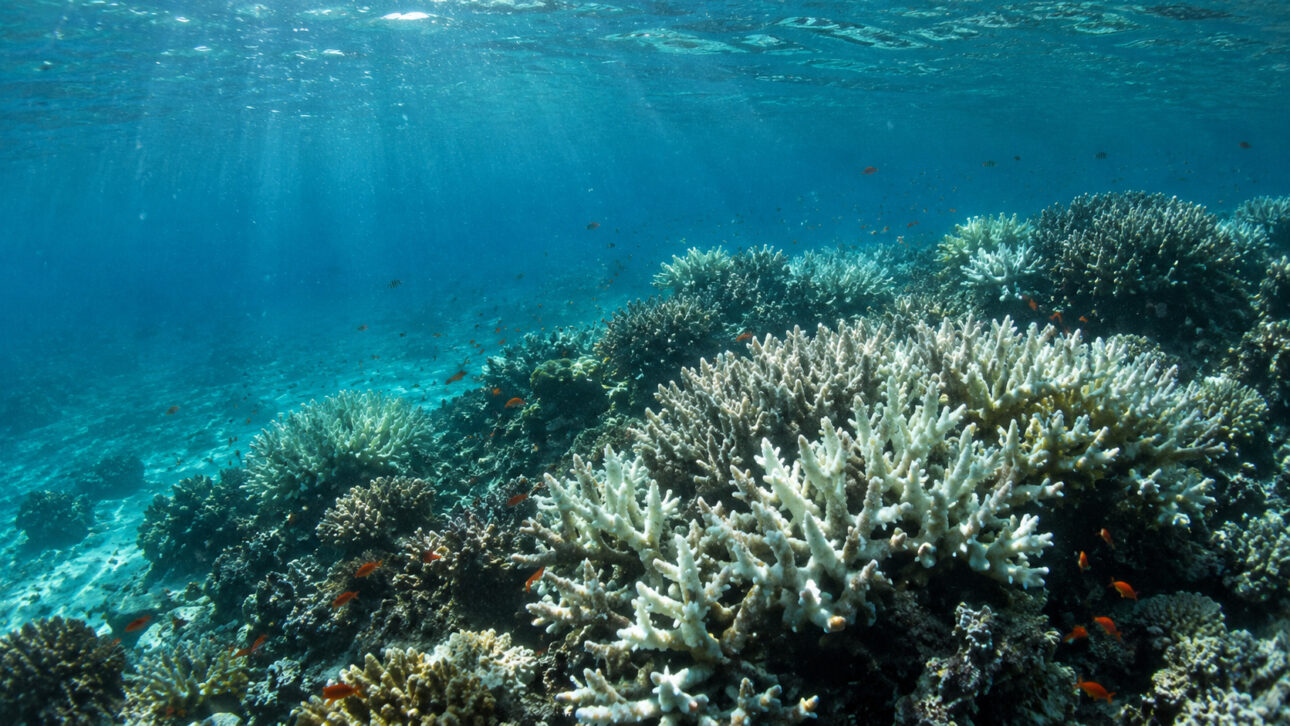
Coral reefs face risk of disappearance
The Global Assessment of the Oceans estimates that 90% of coral reefs may disappear if global warming exceeds 1.5°C above pre-industrial levels. Marine heatwaves and storms have occurred at intervals shorter than the time needed for these ecosystems to recover. Many fish species have already migrated to cooler or deeper waters. Others, however, have nowhere to go, increasing the risk of irreversible losses to marine biodiversity.
Plastic and deep-sea mining concern specialists
Each year, 52.1 million tons of plastic waste reach the ocean. This material fragments into about 24.4 trillion microplastic particles, spread across marine environments worldwide. More than 4,000 species are already affected, a number that tends to grow as research progresses. The report also raised concerns about deep-sea mining. No commercial extraction has started yet, but exploration is in an advanced stage. The concern is that heavy machinery will suffocate marine life and that noise will disrupt migration routes.
Ocean monitoring enters the center of the discussion
The publication of the report comes at a time of concern over the possible removal of scientific instruments from deep waters in the United States. These instruments have been monitoring the effects of climate change on marine environments for over a decade. According to Ian Butler, the deep ocean monitoring system is an essential part of the global understanding of the seas. The removal of these instruments would leave a significant gap in long-term ocean science.
The UN’s Alert for a New Relationship with the Seas
The UN Secretary-General, António Guterres, declared that humanity cannot continue treating the ocean as limitless. The assessment reinforces that the new relationship with the seas needs to be based on science, international law, and shared responsibility. This alert places the oceans at the center of environmental, economic, and geopolitical discussions for the coming decades.
Do you believe that countries are prepared to protect the oceans before polar ice, coral reefs, and marine ecosystems surpass critical points?


