Portuguese
  Spanish


A New Technology Promises to Revolutionize Police Training, Making Them More Prepared and Effective in Critical Moments, with Innovative and High Solutions
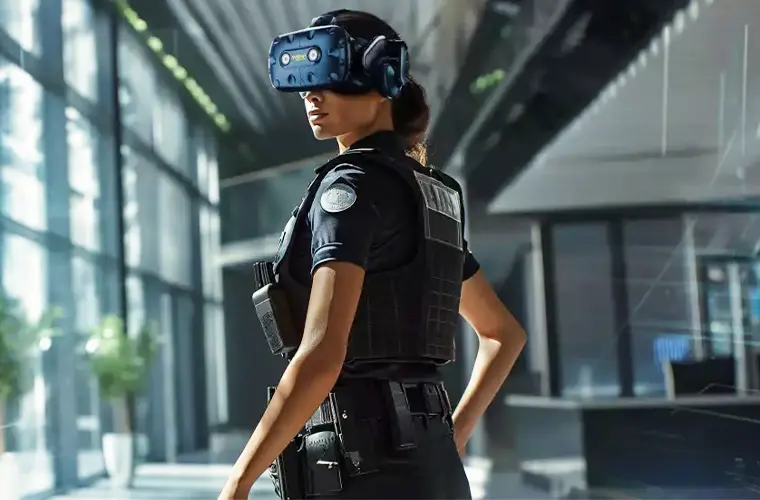
In the dim light of a training room, a police officer puts on a virtual reality (VR) headset with AI. In seconds, he is not just observing a scenario but living it. The simulation presents a man in apparent distress, shouting and walking erratically.
It is up to the officer to decide: escalate the situation or calm the crisis. This type of training, which uses cutting-edge technology, promises to change the way officers handle mental health crises.
With interactions between police and individuals in psychiatric crises increasing, innovative solutions are urgent. A recent study published in Criminal Behaviour and Mental Health, led by researchers at Florida Atlantic University (FAU), showed that VR training better prepares police for these scenarios, improving decision-making and empathy.
-
Brazilian Researcher Develops Protein Supplement from Tilapia Waste, Combining Innovation and Sustainability with Economic Potential

-
Women in São Paulo Unknowingly Tracked by Coin-Sized Tags Hidden in Cars and Belongings, Raising Stalking Concerns
-
Near a $750 million AI data center in Brazil, a resident’s well runs dry, leaving her unable to afford the $25,000 needed for repairs.

-
16-Year-Old from Brazil’s Sertão Wins Young Scientist Award for AI Predicting Rainfall with 94.5% Accuracy to Aid Farmers


Traditionally, police training is conducted in classrooms or simple simulations. However, these methods often do not reflect the pressure and complexity of real situations.
VR technology allows police officers to experience more realistic scenarios, enhancing their ability to apply de-escalation strategies in controlled environments.
The Study and Its Results
In the study conducted by FAU, police officers participated in simulations with virtual characters portraying symptoms of schizophrenic psychosis. The training was evaluated for its ability to increase empathy and the effectiveness of agents’ decisions. The results were impressive:
- Realistic Engagement: 75% of officers reported that the experience felt authentic. Many stated that the interactions were so natural that they could be in a real situation.
- Enhanced Empathy: By experiencing multiple perspectives, including that of a person in crisis, officers developed a greater understanding of the challenges faced by those living with mental disorders.
- New Techniques: 57% of participants reported learning strategies they believe will be useful in their daily work, such as maintaining a safe distance and employing active listening.
Disorientation and Empathy
Interestingly, some officers felt disoriented during their initial virtual interactions. According to Dr. Lisa M. Dario, the study’s lead, this initial confusion had a positive impact. “Disorientation often led to higher levels of empathy. This moment of disruption can open the officer’s mind to better understand the other’s perspective,” she explained.
This approach is especially useful in psychiatric crises, where communication and patience play crucial roles. By immersively simulating these situations, training helps agents develop practical and emotional skills.
The Challenges of Implementation
Despite the transformative potential, the adoption of VR faces obstacles. One of the main challenges is cost. High-quality VR systems require significant investments, which may be unfeasible for small police departments. Additionally, there is a lack of infrastructure and technical training in many locations.
However, experts argue that the benefits outweigh the costs. Reducing incidents of use of force and improving the relationship between police and the community can lead to long-term savings by decreasing expenses on lawsuits and restoring public trust.
Mental Health and Policing
According to the Treatment Advocacy Center (TAC), people with severe mental illnesses are 16 times more likely to be killed during police interactions. This highlights the urgency of improving training and increasing resources to address mental health crises.
Although VR offers a promising tool, experts caution that it does not replace broader policies. Advocates are calling for increased investment in mental health services, mobile crisis teams, and laws making psychiatric crisis training mandatory for all police officers.
Better Police Training
Training in virtual reality is more than a technological innovation. It represents a paradigm shift in policing. By focusing on empathy, communication, and de-escalation, the approach has the potential to save lives and transform how the police deal with one of the most complex challenges of modern society.
Although there is still a long way to go, initiatives like this show that with the right tools, it is possible to create a safer environment for everyone involved.