






 Portuguese
  Spanish





Brazilian Scientist Develops Polylaminin After Decades of Research on Extracellular Matrix and Initiated Clinical Phase in 2025
A scientific trajectory built over decades has placed polylaminin at the center of national biomedical research.
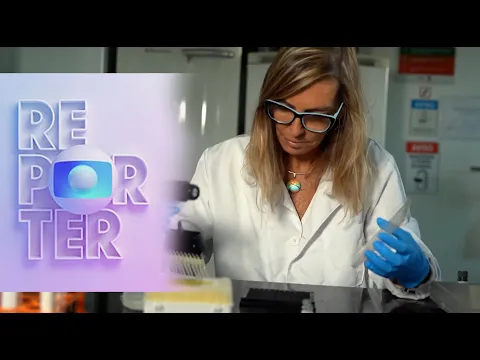
The biologist Tatiana Lobo Coelho de Sampaio, a professor at Federal University of Rio de Janeiro (UFRJ) since 1995, developed the substance after years of investigation into laminins and extracellular matrix.
Moreover, according to UFRJ itself, the studies culminated in the authorization from Anvisa in 2025 to initiate phase 1 in humans.
Academic Research Consolidates Scientific Basis of Polylaminin
Initially, Tatiana graduated in biology from UFRJ, where she also completed her master’s and doctorate.
Subsequently, she did a postdoctoral fellowship in the United States and Germany, expanding her work in biochemistry and cell biology.
Since then, she has been coordinating research at the Extracellular Matrix Biology Laboratory at the Institute of Biomedical Sciences.
During this period, the study of laminins was deepened, leading to the creation of polylaminin, a polymerized form of this protein.

Polylaminin Emerges as an Experimental Structure for Neural Regeneration
Polylaminin acts as a biological support that promotes the reconnection of damaged neurons.
Thus, the substance was developed to be applied directly to areas of the spinal cord with damage.
According to the University, the expectation is to stimulate neural regeneration in cases of spinal cord injury.
However, this is an experimental treatment, still under clinical evaluation.
-
Welder Discovers 16th-Century Diamond Ring in England After 7 Hours with Metal Detector; Gold Jewel Linked to Edward I Pattern Auctioned for £17,000

-
Former Merchant Marine Captain Invents Fuel-Free Barrier, Removes 20,000 Tons of Trash from Chennai Rivers
-
14-Year-Old Maxim Harris Turns School Project into Anti-Rage Gaming Accessory, Sells 1,000 Units Across 46 U.S. States, Donates 20% of Profits to Charity
-
Brazilian Health Agency Approves First Oral Medication for Cancer Patients




Advances Presented Before Clinical Phase
After about 25 years of research, preliminary results indicated partial recovery of movement in evaluated patients.
This data was released in 2025 and drew the attention of the national scientific community.
Then, based on these findings, Anvisa authorized the start of phase 1, a stage focused on safety assessment.
In this initial phase, a restricted group of volunteers with acute spinal cord injuries began to be monitored.
Clinical Stage Evaluates Safety and Tolerability
Phase 1 does not aim to prove definitive efficacy.
Instead, it seeks to analyze possible adverse effects and treatment tolerance.
Only after this stage, if the results are considered safe, will further phases be authorized.
Therefore, any broad application still depends on additional validations.
Scientific Impact and Necessary Caution
The research conducted by Tatiana Coelho de Sampaio positions Brazil in the international debate on regenerative medicine.
At the same time, experts emphasize that developing a treatment requires rigorous steps.
Therefore, although the initial data is promising, there is still no indication for broad clinical use.
Timeline of the Research
- 1995 – Tatiana’s start at UFRJ as a professor and researcher.
- Following decades – Consolidation of studies on laminins and extracellular matrix.
- 2025 – Release of preliminary results and Anvisa’s authorization for phase 1.
Current Scientific Landscape
Polylaminin represents an advancement in the research line of neural regeneration.
However, development follows strict technical and regulatory protocols.
Thus, the next results of the clinical phase will be crucial to assess the continuity of the study.
What expectations should guide the public debate: enthusiasm for initial results or caution until the conclusion of clinical stages?








Pretendo consultar a Dr Tatiana
Ffs she, not he