






 Portuguese
  Spanish


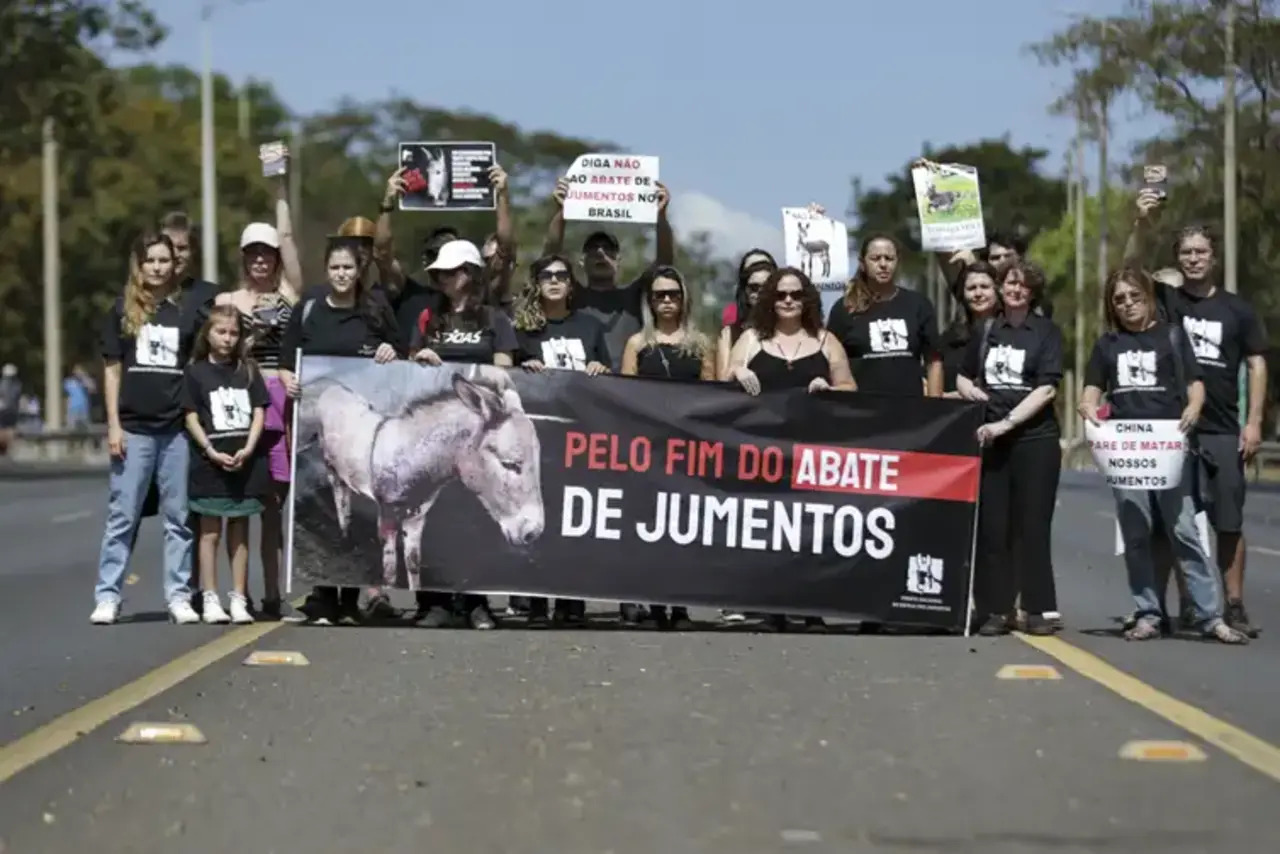


Demand for Collagen from China Accelerates Slaughter in Brazil; Experts Warn That Donkeys May Disappear from the Country Before 2030
The population of donkeys in Brazil has suffered a drastic decline in recent decades. According to estimates from the National Front for Donkey Defense, over one million animals were slaughtered between 1996 and 2025. The total number of donkeys dropped from 1.37 million to just over 78,000. This represents a 94% reduction.
This decline is directly linked to China’s demand for collagen found just beneath the skin of donkeys. The product, known as ejiao, is used in traditional Chinese medicine.
The substance has no proven efficacy but is marketed with promises to treat various health issues, from anemia to sexual impotence.
-
Brazilian Startup Turns Coffee Grounds into Plant-Based Leather, Cutting Water Use by Over 50 Times for High-Impact Sustainable Fashion

-
Eco Invest Auction Aims to Unlock $10 Billion in Investments, Focusing on Green Fertilizers, Critical Minerals, Batteries, and AI for Clean Industry in Brazil

-
Half of Brazilians Prefer Lower Taxes with Private Health and Education, While 44% Opt for Higher Taxes for State-Provided Services, Datafolha Survey Reveals

-
Brazil’s Most Expensive Toll Rises to R$ 40.60 on Route from São Paulo to the Coast, Nearly Matching Bus Fare to Santos




Increased Pressure on Donkeys
In Brazil, three slaughterhouses have licenses from the Federal Inspection Service (SIF) to slaughter donkeys. All are located in Bahia.
However, researchers and animal rights advocates assert that the process is not tracked. There is no control over diseases or assurance that the animals are not being mistreated.
Professor Pierre Barnabé Escodro, from the Federal University of Alagoas (UFAL), is one of the leaders in the movement for the conservation of the species. He states, according to a report by BBC Brasil, that if the current pace of slaughter continues, donkeys “would not reach 2030” in Brazil.
According to Escodro, “producing donkeys for slaughter is not profitable; it is extractivism.” The animals are being slaughtered at a faster rate than they can reproduce. This has put the species at risk of extinction.
National Event Discusses Alternatives
Starting this Thursday (26), scientists and experts will gather in Maceió (AL) for the event Donkeys of Brazil.
The conference is in its third edition, with around 150 participants, including researchers from other countries. The meeting aims to discuss solutions to halt the extinction of donkeys in Brazil.
Escodro points out that the risk to the species is not exclusive to Brazil. “The donkey is at risk of extinction in several countries. In Egypt, it practically no longer exists,” he says. Therefore, the fight for the conservation of these animals has become global.
The Controversy Over the Bill
In 2022, a bill (1.973) was introduced in the National Congress that prohibits the slaughter of donkeys throughout Brazilian territory.
However, the proposal remains stalled. In Bahia, a similar project was discussed in the Legislative Assembly. In April of this year, Deputy Paulo Câmara (PSDB), the rapporteur of the text, issued a contrary opinion.
According to the parliamentarian, the slaughter activity is regulated, has economic importance, and there is no “need to prohibit this practice, but rather to strengthen enforcement.” He also stated that the population of donkeys would be “stable and balanced,” which was contested by scientists and activists.
After the publication of the opinion, conservation groups released a note of repudiation. The report sought a statement from the deputy’s office, which reiterated, in a note, that the opinion was “based on technical, legal, and economic criteria,” denying negligence concerning animal welfare.
Signs of Mistreatment and Poor Health
A study published in May in the scientific journal Animals, co-authored by Escodro and five other researchers, indicated signs of failures in the care of the animals.
The analysis was conducted on 104 abandoned donkeys destined for slaughter. The results indicated systemic inflammation, an indication of suffering and serious neglect toward the animals.
Such cases have reinforced judicial decisions that, since 2019, have temporarily suspended the permission for slaughter, at the request of animal rights organizations.
Price Increase and International Market
The high demand has led to scarcity and increased prices for donkeys. Escodro reports that, in the interior of Alagoas, animals that were once sold for R$ 100 or R$ 150 are now traded for R$ 400 to R$ 500. The skin remains the most valuable item, reaching US$ 4,000 per unit.
According to the international organization The Donkey Sanctuary, about 5.9 million donkeys are slaughtered worldwide each year to supply the ejiao market. The sector generates approximately US$ 6.38 billion.
A new study from Maasai Mara University in Kenya, released this Wednesday (25), showed the negative impact of donkey removal on rural communities in the country.
Women, who are the primary users of these animals for transportation and other daily tasks, were the most affected. The withdrawal of donkeys even reduced family income.
Sanctuaries and Social Reintegration of Donkeys
Professor Escodro and other researchers advocate for the creation of strategies to reintegrate donkeys into society.
They cite therapeutic uses and a return to family farming as options. In Europe, according to him, there are initiatives in this direction.
The group is also discussing the possibility of creating sanctuaries. Areas like Jericoacoara, in Ceará, house around 700 animals in relative safety.
In Santa Quitéria, in the interior of the state, a farm from the Detran houses between 1,200 and 1,300 donkeys.
These regions could serve as a base to protect the animals and strengthen the fight against the extinction of the species.
Mobilization Underway
Advocacy groups launched the site End of Slaughter as part of the campaign for the approval of the 2022 bill.
The expectation is that the issue will gain momentum with this week’s event in Alagoas and that Brazil will follow the example of the African Union, which last year approved a 15-year moratorium on the slaughter of donkeys for commercial purposes.
With information from BBC.







Reparem na foto acima, que ilustra a matéria.
Curiosamente, somente as mulheres é que estão defendendo os jumentos…
Qual será o motivo?