Portuguese
  Spanish


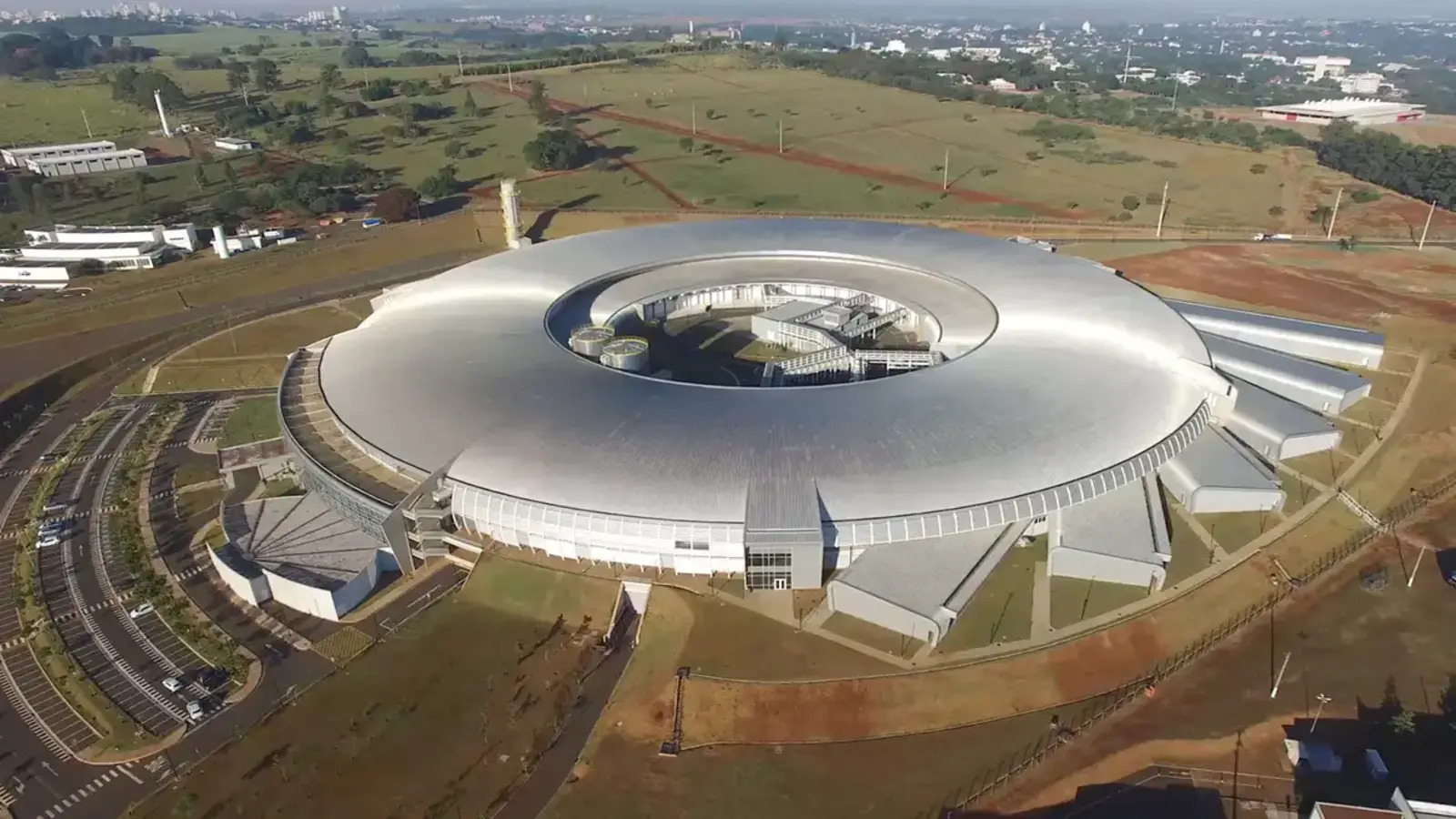


With R$ 800 million from the New PAC, the Sirius accelerator activates four new research lines, strengthens studies on an atomic scale, and advances integration with the Orion laboratory, NB4 biological containment
The expansion of Sirius, a particle accelerator located at CNPEM in Campinas, was inaugurated by Luiz Inácio Lula da Silva this Monday (18), with R$ 800 million from the New PAC to expand research on an atomic scale.


Largest scientific infrastructure gains new fronts
The complex is considered the largest and most complex scientific infrastructure ever built in Brazil. The new funding, coordinated by MCTI within the technical schedule of the New PAC, will be used to activate four advanced research fronts.
With this expansion, the total federal investment applied to the fourth-generation synchrotron reaches R$ 2.8 billion. The amount consolidates Sirius as one of the most advanced molecular physics hubs on the planet.
-
Australia deploys poisoned sausages and uses traps, shooting, and fences in a battle against invasive cats that kill over 1.5 billion native animals annually, threatening more than 200 species.

-
NASA Rover Captures “Tired Face” on Mars, Highlighting Human Brain’s Tendency to See Faces in Rock Formations

-
Ancient Stone City in the Desert, Once Home to 30,000, Puzzles Scientists with Nabateans’ Water Mastery 2,000 Years Ago

-
Ancient Creature Thought Extinct Since Dinosaur Era Reappears, Baffling Scientists




The ceremony brought together the CNPEM scientific committee, ministers from strategic departments, and heads of regional agencies.
After the unveiling of the plaques for the new lines, the committee inspected the civil installations of the Orion Project.
Four lines expand the capacity of Sirius
The new experimental structures were named Tatu, Sapucaia, Quati, and Sapê. Each will function as an autonomous unit for capturing high-brightness radiation, produced by the accelerated movement of electrons.
The goal is to map samples in nanometric dimensions. The Sapê station will focus on high-complexity tests aimed at characterizing superconducting and semiconductor materials, with direct support to the semiconductor industry.
Technical reports from CNPEM governance indicate that this front will contribute to the development of microchips. The Tatu, Sapucaia, and Quati lines will work in an integrated manner in other research areas.
These three fronts will monitor, on an atomic scale, arable soils, metal alloys of strategic minerals, and complex protein structures. The machinery allows observing substances under extreme pressure and temperature conditions.

Project Orion will have NB4 biological containment
During the official agenda, the president inspected the civil engineering works of Orion, a maximum biological containment laboratory of NB4 level, budgeted at R$ 1.4 billion and installed next to the complex.
The outsourced construction company’s forecast is to complete the structural closure of the building by the end of the current political year.
Orion will be the world’s first maximum security facility physically coupled to a synchrotron light source.
This integration will allow scientists to use the high resolution of Sirius to map the proliferation of highly transmissible microorganisms without breaking the vacuum barriers. The connection requires precision technical solutions.
The general director of CNPEM, Antonio José Roque da Silva, highlighted that the connection between Orion and Sirius required unprecedented vibration dampers.
The technical effort increased the participation of national suppliers and inputs to 85% of the civil work cost.
Program targets radical innovation in health
The ceremony in Campinas also marked the launch of the Foundation Stone of the National Program for Radical Innovation in Health.
The articulation aims to create channels for technology transfer between the accelerator studies and public laboratories linked to SUS.
Representatives from the Ministry of Health stated that the immediate priority is to reduce the internal market’s dependence on foreign Active Pharmaceutical Ingredients. The new lines should accelerate tests of high-tech medicines and vaccines.
With the facilities approved, the capacity to absorb postgraduate research and private corporate projects at Sirius is expected to double.
The usage regime provides for open and free submission of proposals by Brazilian and foreign scientists.
The proposals will undergo peer review, keeping access conditioned to technical evaluation. Thus, the new structure expands the scientific use of the complex and strengthens the connection between advanced research, industry, and public health.
With information from ND Mais.