Portuguese
  Spanish


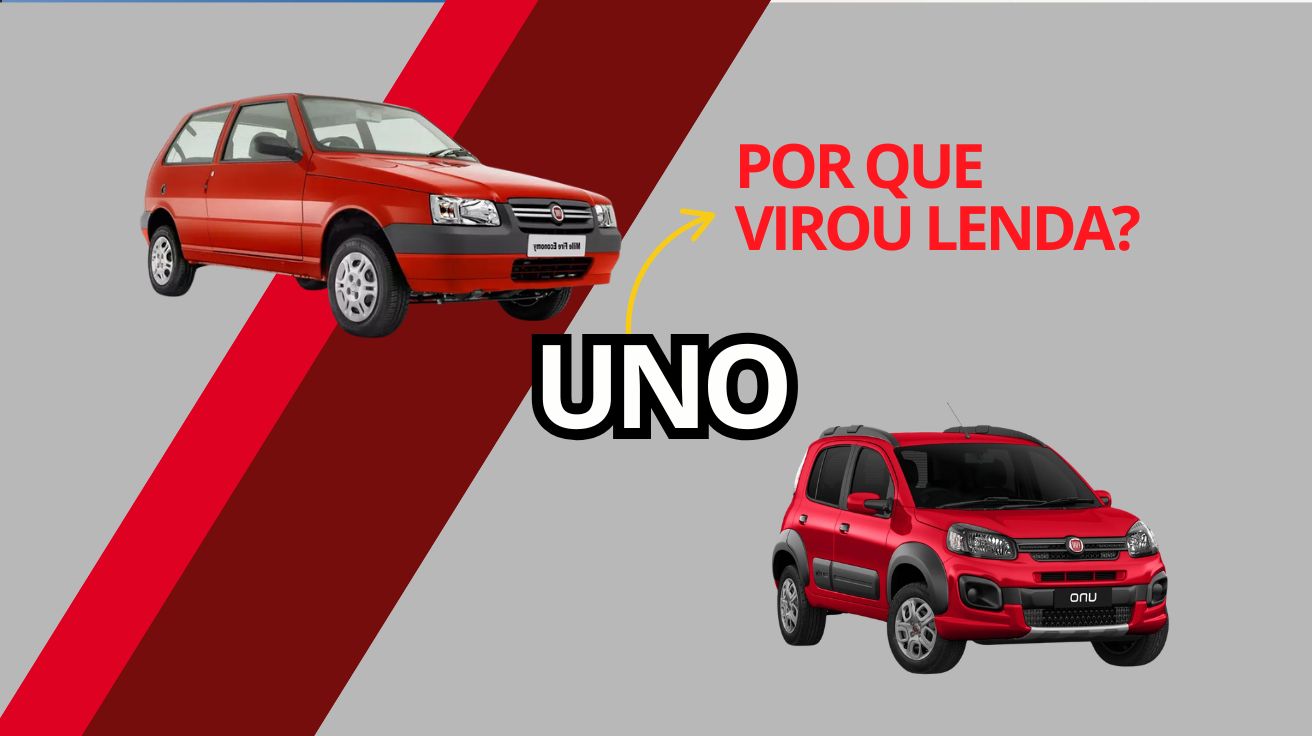

Fiat Uno: The Car That Marked Generations With Economy, Durability, and Charisma. Find Out Why It Still Lives in the Memory of Brazilians.
Model Revolutionized the Brazilian Market in the 80s, Became Synonymous With Economy and Durability, and Still Lives in the Hearts of Many Drivers
The Fiat Uno was not just a car.
It was a popular phenomenon, a watershed moment in the Brazilian automotive industry, and for many, an extension of the family.
With its “boxy” look, simple mechanics, low fuel consumption, and affordable price, the Uno quickly became one of the most beloved and best-selling vehicles in the country.
-
Thailand Converts 8 Tons of PET Bottles into 3,500 School Backpacks, Showcasing Circular Economy with Over 40 Factories Involved

-
Mysterious Bats Spotted in Paris’s Père Lachaise Cemetery, Drawing Tourists to the “Vampire Cemetery”

-
From Selling Street Food to Leading a $300 Million Construction Firm: The Journey of a Brazilian Entrepreneur

-
Abandoned Penthouse in Houston Reveals Million-Dollar Suite with 24-Karat Gold, Tiffany Crystals, and Opulence Even Elvis Might Have Snubbed



Launched in Brazil in 1984, the Uno was the first Fiat car produced on the brand’s global platform, which had been introduced in Europe a year earlier.
The proposal was bold: an urban compact car with modern design, high internal space utilization, and reliable performance.
And it worked.
In Brazil, the Uno stood out for precisely meeting the demands of the middle class that sought economy, practicality, and durability.
A Car That Was Born From a Design Revolution
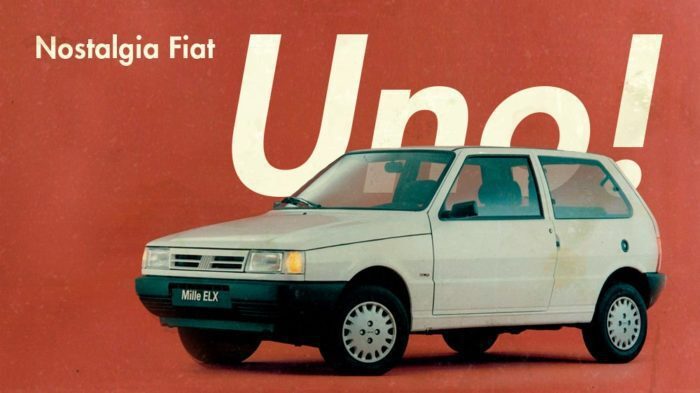
Signed by the design studio Italdesign, by Giorgetto Giugiaro — one of the biggest names in automotive design history — the Uno innovated by bringing straight lines, rounded corners, and a highly functional shape.
While competitors were still betting on robust-looking models with little internal space utilization, the Uno was already delivering one of the best interior spaces in its category, even being compact on the outside.
Form followed function.
The aerodynamics were exemplary for the time, with a drag coefficient (Cx) of 0.34, even better than more expensive models.
The objective was clear: to create an efficient car, with reduced consumption and simple maintenance.
Economical, Durable, and Easy to Maintain
For decades, the Uno was synonymous with economy.
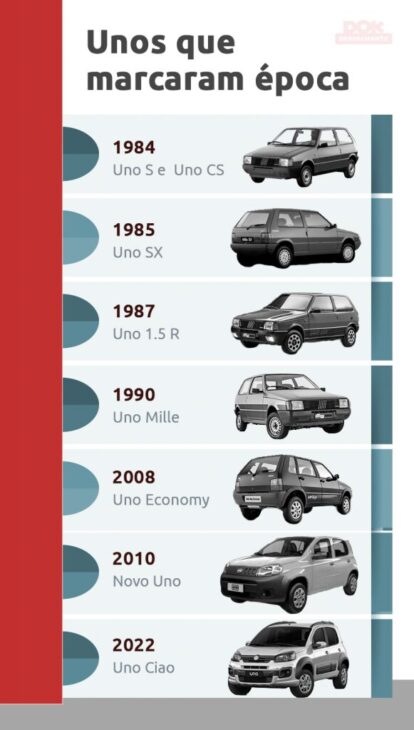
Its most popular versions, such as the Uno Mille, introduced in 1990 to adapt to the new legislation for popular cars, featured 1.0 engines that easily achieved over 15 km/l, even without today’s modern technologies.
Besides being economical, the Uno was resistant. It could withstand the roughness of Brazilian roads, pothole-filled cities, and improvised repairs with wire, duct tape, and a lot of creativity.
It was the typical car that “never broke,” and if it did, it was cheap to fix.
Workshops all over Brazil knew the model inside and out, which made maintenance even easier.
And the cost of parts? Affordable.
It was literally the people’s car.
From Taxi to Family Car: The Uno Was Everywhere
Anyone who lived through the 80s, 90s, and early 2000s has probably ridden in or driven a Uno.
It was in taxi fleets, used by delivery companies, became the first car for thousands of drivers, and for a long time, was the “wild card” for Brazilian families.
With versions ranging from the popular Uno Mille to the sporty Uno Turbo (launched in 1994 with a 1.4 turbo engine producing 118 hp), the model catered to diverse audiences.
Even speed enthusiasts surrendered to its surprising performance for the time.
Absolute Sales Success
No wonder, the Fiat Uno surpassed the mark of 3.6 million units sold in Brazil, becoming one of the best-selling cars in the history of the country.
For years, it competed for the top spot with the Volkswagen Gol, its eternal rival.
Fiat knew how to effectively market the model, which underwent several updates over time without losing its essence.
Even with the emergence of more modern competitors, the Uno remained relevant for decades.
The New Generation and the End of the Line
In 2010, Fiat tried to give new life to the model with the launch of the New Uno, with a revamped design, new technologies, and more efficient engines.
Despite retaining part of its identity, the new model could not replicate the same charisma and success of the original version.
Production of the Uno was officially ended in 2021, after 37 years of history.
The announcement surprised many and generated emotion on social media, with tributes, heartfelt testimonials, and — of course — memes.
Why Is the Fiat Uno Still So Remembered?
Few cars have managed to leave such a deep mark on Brazilian popular culture as the Fiat Uno.
Its boxy shape became a symbol of resilience.
The distinctive sound of the engine, the lightweight doors, the simple dashboard, all contributed to an emotional memory that still resonates with many Brazilians today.
Moreover, the Uno was the protagonist of countless memes on social media, such as the sayings “Uno with a ladder goes faster” and “Uno Turbo is a legend.”
This comedic fame helped keep the model alive in the collective imagination, even after its departure from dealerships.
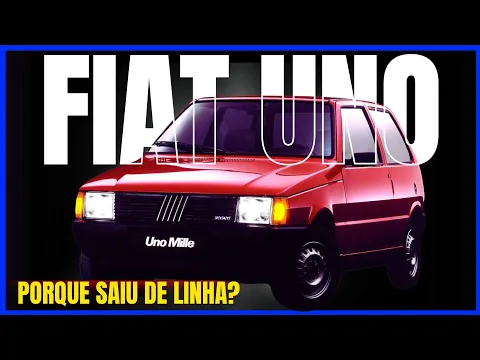

The Legacy of the Uno Continues
Despite the end of production, many Fiat Unos still roam the streets of Brazil in perfect condition.
Its legacy is remembered fondly and with respect. Not just as a car, but as part of the lives of millions of Brazilians.
Whether as a first car, delivery partner, taxi, or family heirloom, the Uno carved out a space that goes far beyond the garage.
It is an important chapter in the country’s automotive history — and, for many, a memory that will never be erased.
And You?
What was your most memorable experience with a Fiat Uno? Have you ever owned or ridden in an iconic model? Share with us in the comments — and tag that friend who had a “tuned” Uno with neon lights and a sound system in the trunk!