Portuguese
  Spanish


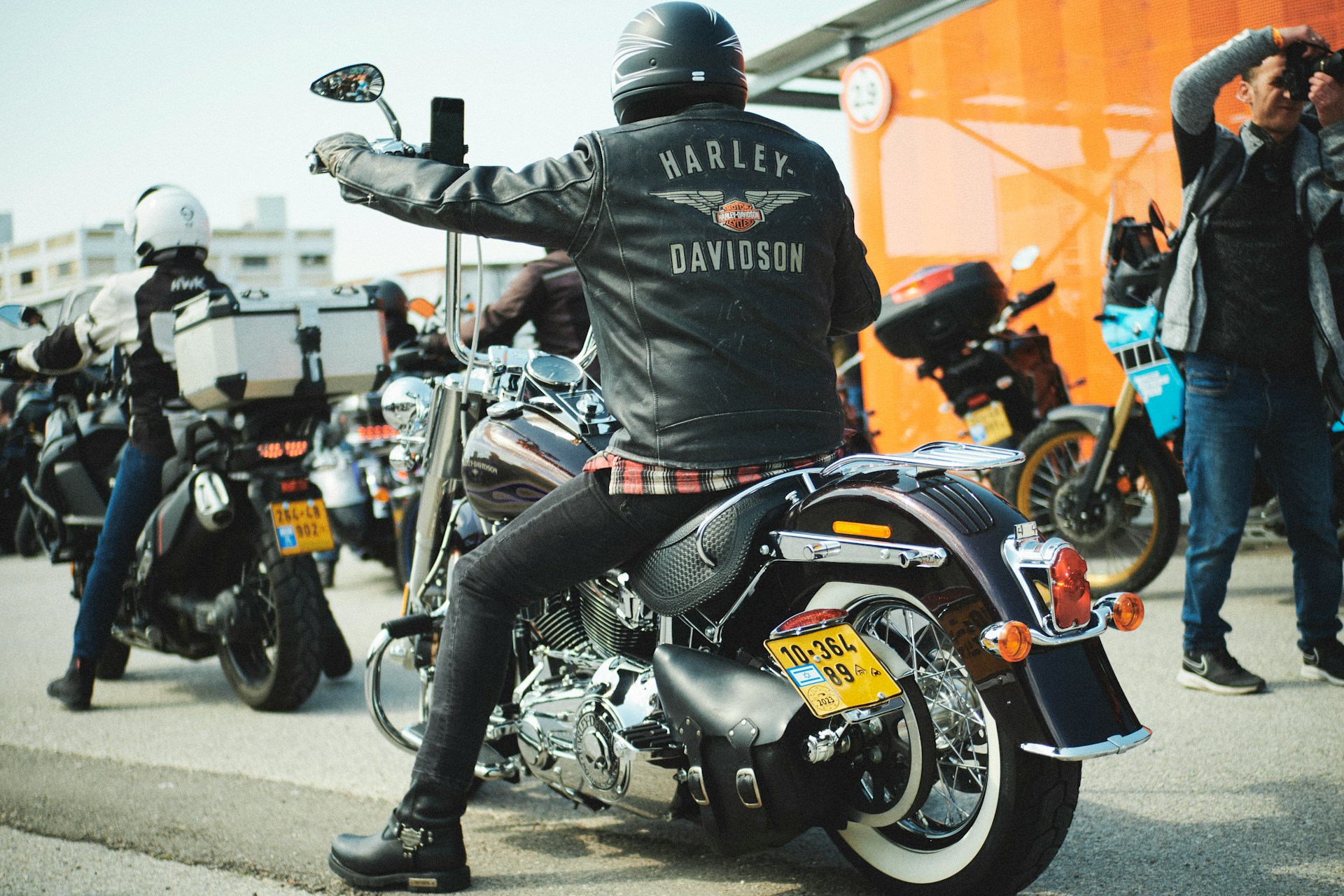

The Lightness of Motorcycles Dispenses Reverse Gear, But Large Models Include the Feature to Facilitate Complex Maneuvers
Anyone who has ridden a motorcycle has probably never needed to reverse. In most models, this function simply does not exist. And there are good reasons for that.
Motorcycles are lightweight vehicles that are easy to maneuver. The strength of the rider’s legs is usually sufficient to move them backward. Thus, the absence of a reverse gear does not create difficulties in daily use.
Honda Specialist Explains the Issue
Engineer Bismark do Vale from Honda’s Research department addressed the topic in an interview with the AutoPapo column from Uol. According to him, including a reverse system would require an additional set of gears, making the design more complex and unnecessary in most cases.
-
Hilux’s little sister: Toyota relaunches the Land Cruiser 70 in the 2027 lineup with over 40 years of production, a 2.8 turbo diesel engine with 201 hp and 51 kgfm, a six-speed automatic transmission, and a renewed retro look.

-
Automatic, economical, and known for reliability: with a 1.5 engine of up to 110 hp, CVT transmission, seven airbags, and fuel consumption of up to 15.9 km/l, this used hatchback appears as a rational alternative to Polo, HB20, and Onix; meet the Toyota Yaris XLS 2020.
-
He surpassed the Tera, Creta, and Tracker: With a TSI engine of up to 150 hp, 6-speed automatic transmission, and a 373-liter trunk, the Volkswagen T-Cross was the best-selling SUV in June, with 11,753 registrations.

-
It looks factory-made, but it came out of a workshop: a mechanic from Pernambuco builds a handcrafted “mini Toyota,” drives it through the streets, and the video goes viral on social media, leaving residents astonished.



Bismark summarized: “To have a reverse system, we would need another gear system, and due to the motorcycle being light, maneuvering (reverse) is more efficient using the feet.”
Price Increase Would Make Adoption Unfeasible
Another important factor is cost. Many motorcycles are affordably priced, primarily to meet the needs of workers who depend on them daily. Including reverse gear would require investments in development and production, which would inevitably increase the models’ prices.
The engineer explained that motorcycle transmissions are sequential. This means that the gears are engaged linearly: first, second, third, and so on.
To create a reverse gear in this system, extra gears and additional space in the mechanical assembly would be required. The result would be an increase in weight and cost.
Models That Offer the Reverse Gear Function
Despite the challenges, some motorcycles have been manufactured with reverse gear. These cases, however, are exceptions and involve specific models, usually larger in size.
The Honda Gold Wing is a well-known example. Commonly used for long trips, it features an electric reverse system that does not directly interfere with the conventional transmission.
Another similar model is the BMW K 1600 GTL. Also designed for touring, it has a reverse function, facilitating maneuvers in tight spaces, considering the weight of the motorcycle.
The Yamaha Star Venture, already out of production since 2013, also had this functionality. Like the others, it was aimed at comfort during long travels with large motorcycles.
The Special Case of the Can-Am Spyder Trike
Among the few exceptions is the Can-Am Spyder. This trike, with two wheels in front and one in the back, benefits more from reverse gear. Being more difficult to manually push, the reverse system aids in specific maneuvers.
Even with these examples, the overwhelming majority of motorcycles still do not have reverse gear. The lightness and practicality of these vehicles continue to make this feature unnecessary for daily use.
With information from Canal Tech.