Portuguese
  Spanish


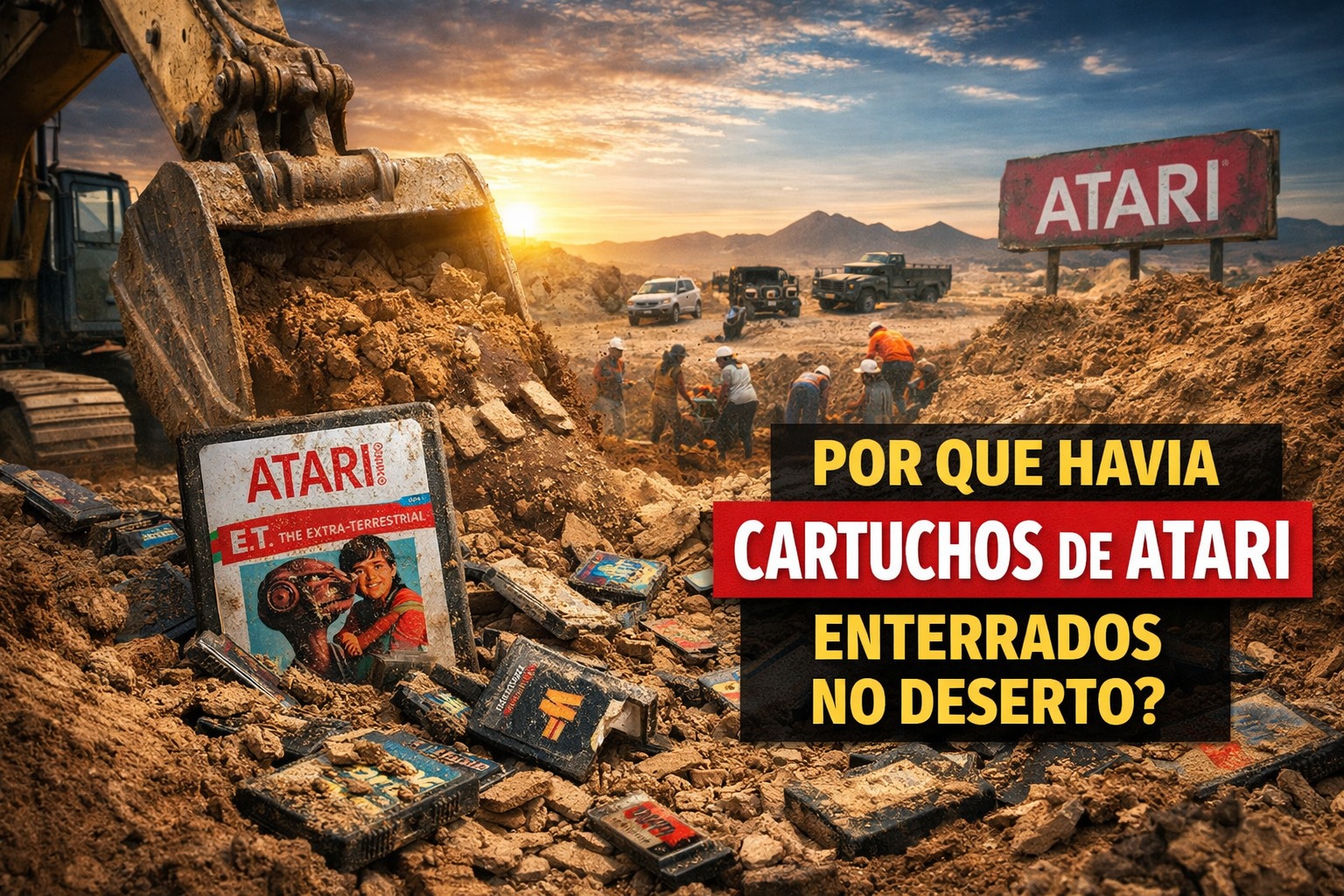


Confirmation of the Burial of E.T. Game Cartridges Revealed Link Between Commercial Failure, Video Game Crisis in 1983, Atari’s Strategy, Dig in New Mexico, and Documentary Shown at Comic-Con
The legend about the burial of E.T. game cartridges in the U.S. desert returned to the center of cultural debate when confirmed decades later, involving Atari, the 1983 crisis, a Microsoft-funded documentary, and the physical rediscovery of the buried games.
The story gained attention by recalling the commercial failure of the E.T. game for the Atari 2600, released before the North American video game industry crisis in 1983. The failure contributed to unsold inventory and widespread losses in the market.
For years, players circulated reports that Atari had buried thousands of cartridges in the deserts of the United States.
-
The large jar blender has a rival: Oster Ultra Power bets on 1,000 W, six stainless steel blades, and two portable cups with leak-proof lids.

-
Tesla injected an additional $250 million into the German factory, doubled the battery cell target, and opened its own production line for startups.

-
No more TV stuck on the wall: Samsung The Freestyle+, the new projector with over 400 lumens projects on walls, floors, and ceilings, bringing cinema to any corner of the house.
-
A Japanese governor single-handedly stalled the construction of the world’s fastest train for nine years, and only now has he agreed to allow a tunnel excavated at a depth of 1,400 meters.



The lack of concrete evidence turned the episode into one of the greatest legends of gamer culture.
Decades after the alleged disposal, the topic gained public attention again when it was adapted for film and digital platforms, reigniting interest in the behind-the-scenes of the crisis.
The Rescue of the Legend in Pop Culture
The story of the burial of the cartridges was incorporated into cinema through an independent film featuring the character The Angry Video Game Nerd, created by James Rolfe.
Rolfe, an American passionate about movies and games, began producing videos aimed at the gamer audience in 2006, becoming one of the pioneers of this format on the internet.
The feature film “The Angry Video Game Nerd: The Movie” was released on July 21, 2014, with a limited showing in selected North American theaters.
The work uses the supposed burial of the cartridges as a narrative starting point, exploring the theme fictionally and making the legend a driving force of the character’s adventures.
The film had an independent release and was projected for distribution on Bluray, DVD, and download by the end of 2014, broadening its reach among fans.
The Documentary Shown at Comic-Con
Alongside the fictional approach, a documentary exclusively shown at Comic-Con promised to definitively clarify the episode involving Atari.
The Comic-Con, held annually in San Diego, California, is considered the largest nerd fair in the world and gathered an audience interested in the revelation.
Titled “Atari: Game Over,” the documentary was funded by Microsoft and followed a dig in the desert of Alamogordo, New Mexico.
During the operation, hundreds of buried Atari cartridges were found, confirming that the story, treated as myth for decades, had indeed occurred.
The content was announced for viewing to Microsoft console owners via the Xbox Live network in 2014, amplifying its impact.
The Reasons Behind an Extreme Act
One of the hypotheses presented to explain the burial of the cartridges involves the economic infeasibility of maintaining unsold game inventory without demand.
During that period, games were offered in stores for only $1, but even so, they had extremely low sales, according to the gathered reports.
In light of this scenario, it may have been cheaper for Atari to physically dispose of the products than to bear the logistical costs of redistribution and storage.
The extreme decision became a symbol of the peak of the crisis faced by the video game industry in the United States in the early 1980s.
Buried Cartridges: An Episode That Spanned Decades
The case of the buried cartridges remained a rumor for about 30 years, crossing generations of players and fueling debates about the industry’s history.
The confirmation transformed a persistent rumor into a documented fact, ending a discussion that deeply marked the collective memory of gamers.
Besides the historical impact, the episode has become a recurring reference in analyses of planning failures and overproduction in the cultural industry.
As a precedent, the E.T. case continues to be remembered as a symbol of a period of collapse, the consequences of which redefined market practices in the following years.
With information from Campo Grande News.