Portuguese
  Spanish


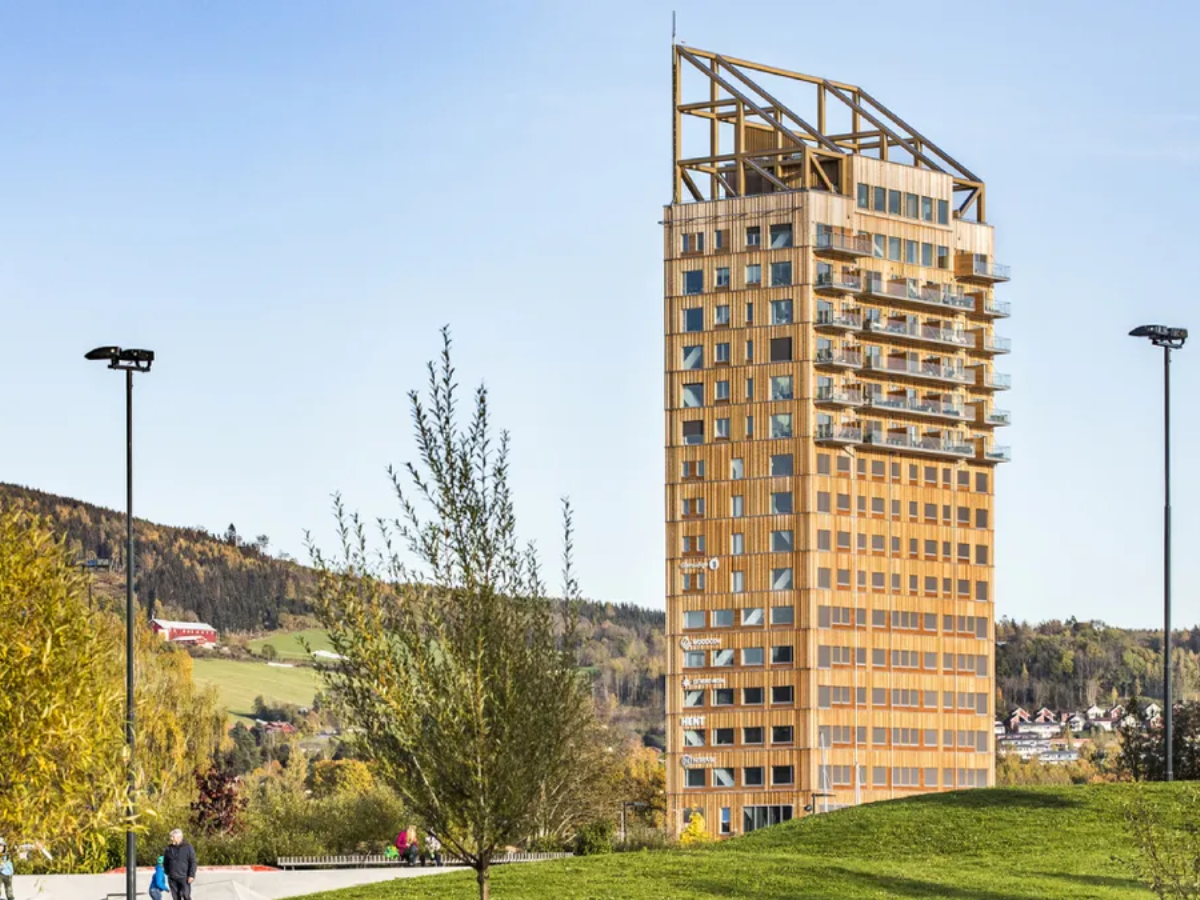

The New Era of Wood Construction: Faster, More Sustainable, and Efficient — But with a Bottleneck Still Holding Back Brazil.
In the face of growing climate urgency and the global need to decarbonize the economy, wood emerges as one of the most effective and sustainable solutions for transforming the construction industry. In Brazil, engineered wood production has grown by 160% in the last five years, and the trend is for the sector to continue expanding, with projections of a 115% increase in global production by 2034, according to the Brazilian Institute of Wood and Wood Structures (Ibramem).
This growth reflects a structural shift in the sector, which now sees wood not just as an aesthetic or traditional material, but as a strategic tool to tackle the environmental and productive challenges of the future.
Engineered Wood: Technology, Efficiency, and Sustainability
The so-called engineered wood — obtained from the industrial processing of wood — offers substantial advantages.
-
U.S. City Builds Tiny Home Village on Water Company Land to House 136 Homeless People: Inside the Social Housing Units

-
Woman Turns Shipping Container into Home, Embraces Rural Life to Cut Monthly Expenses to Just Over $330
-
France Revamps 530 Social Housing Units with Large Balconies and Glass Facades Without Demolishing Existing Buildings

-
Facing high rent, couple transforms parents’ garage into a fully functional apartment, creating a complete home at a fraction of the market cost.




The technique involves bonding fibers in specific directions to increase their structural strength, eliminate imperfections such as cracks, and facilitate the fitting of pieces on the construction site of projects.
This type of wood, sourced from planted forests, is considered the only 100% renewable building material. Furthermore, its production is guided by environmental compensation, making the process more sustainable than the use of concrete or steel.
“Of all the construction chain, wood is the only renewable material. The construction and maintenance industry is the largest emitter of CO₂ on the planet. If you take cars, planes, ships, etc., they emit less than half of what the civil industry emits. Our responsibility to see building as a sustainable product is enormous, which is why we have invested in this material,” says Marcelo Aflalo, engineer, designer, and president of the Wood Technology Reference Center.
Faster Projects with Lower Environmental Impact
In addition to its environmental appeal, wood construction offers practical advantages. According to the president of Ibramem, Ângela do Valle, the use of engineered wood can reduce project execution time by up to 40%, with stringent quality control, as components are produced in factories and delivered ready for assembly on-site.
“Constructing with wood allows for faster projects, reducing execution time by up to 40%, and offers rigorous quality control. Technologies like CLT (Cross Laminated Timber) and MLC (Glulam) already enable safe, sustainable, and large-scale construction,” she states.
These technologies are already applied in various countries in Europe and North America, where multi-story buildings are being erected using high-performance wood.
International Examples Inspire the Sector in Brazil
Abroad, the highlight is Mjøstårnet, located in Norway. At 85.4 meters tall and 18 stories high, it is considered the tallest building in the world entirely built from wood.
“We hope this construction inspires others to choose more environmentally friendly solutions in the coming years,” said Morten Kristiansen, CEO of Moelven Industrier ASA, the company responsible for the project.
Brazilian Challenges: Labor and Public Policies
Although advancements are promising, Brazil still faces significant bottlenecks in solidifying wood as a key player in the construction industry.
According to Fábio Brun, president of the Paraná Association of Forest-Based Companies (APRE Florestas), the country needs to overcome the lack of qualified labor and the absence of public incentive policies.
“The lack of qualified labor, technical expertise, both in architecture and engineering, and specific public policies that encourage wood construction are some of the bottlenecks the sector needs to face and overcome,” Brun asserts.
Wood in Design: Versatility and Sustainable Aesthetics
While wood still seeks its place in construction, it is already widely used and valued in interior design. Architect Raphael Wittmann highlights wood as a sculptural element that brings warmth, beauty, and personality to spaces.
“With it, we can create wide doors, with natural textures and sophisticated finishes that also provide an artistic aspect. It is an element that serves not just a practical purpose but also adds warmth and identity to the environment,” he states.
In custom woodworking, the material also plays a prominent role, ensuring functionality, durability, and personalization.
“This strategy not only enhances the functionality of environments but also ensures the longevity of the furniture, making it an intelligent choice for those seeking optimization and practicality in interior projects,” Wittmann concludes.


The strengthening of wood use in the construction industry signals a new phase for the sector: more sustainable, efficient, and aligned with global environmental goals. With investments in training, innovation, and public policies, Brazil can lead this transformation.