






 Portuguese
  Spanish


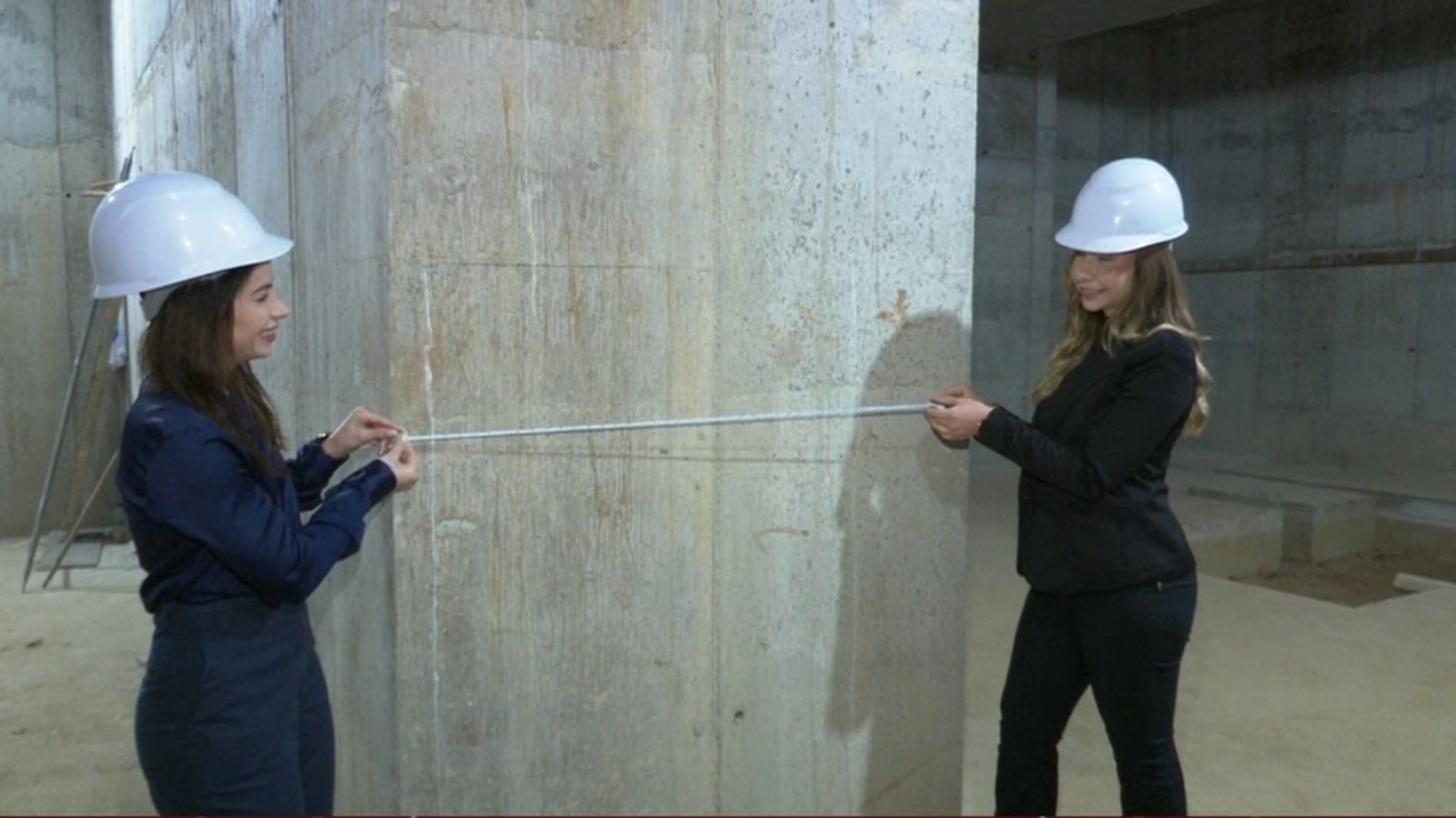


In Paraná’s Campos Gerais, Engineers from Santa Casa de Ponta Grossa Used 30 Tons of Ice in the Concrete of a Hospital Bunker to Prevent Cracks and Ensure Safety in Radioactive Cancer Treatment
In Paraná’s Campos Gerais, a curious technique has drawn attention in the construction of a hospital bunker: the use of 30 tons of ice mixed with concrete. The method was adopted by Santa Casa de Ponta Grossa to prevent cracks in the structure that will house a radioactive equipment intended for cancer treatment.
Ice Against The Heat of Concrete
The addition of ice has a precise technical purpose: to reduce the temperature of the mixture and prevent the concrete from shrinking during the drying process.
According to engineer Luani Cristine Basso Faversani, this shrinkage occurs due to moisture loss, which could compromise the integrity of the structure. “We add ice to control the shrinkage,” she explains.
-
U.S. City Builds Tiny Home Village on Water Company Land to House 136 Homeless People: Inside the Social Housing Units

-
Woman Turns Shipping Container into Home, Embraces Rural Life to Cut Monthly Expenses to Just Over $330
-
France Revamps 530 Social Housing Units with Large Balconies and Glass Facades Without Demolishing Existing Buildings

-
Facing high rent, couple transforms parents’ garage into a fully functional apartment, creating a complete home at a fraction of the market cost.




The work involved about 800 cubic meters of concrete, transported in more than 95 truckloads.
Strict controls were necessary at all stages, because the material needs to reach a minimum density capable of containing the radiation emitted by the equipment that will be installed.
Structure Designed to Contain Radiation
According to civil engineer Julia Senger Marin, controlling the density of the concrete is essential. “The radiation needs to hit the wall and stay inside the room, not escape,” she emphasizes.
Therefore, the walls of the bunker are up to 2.20 meters thick, ensuring proper insulation.
The construction is part of the transformation of the old Evangelical Hospital, closed since 2016, into a new oncology reference center.
The total investment exceeds R$ 20 million, combining resources from Itaipu Binacional, the State Government, and parliamentary amendments.
Unprecedented Equipment in South America
The bunker will house a linear accelerator equipped with artificial intelligence. The device emits radiation directly at the tumor, sparing healthy tissues and providing greater precision in treatment.
Santa Casa claims that the model is the first of its kind in South America.
Expected Delivery and Regional Impact
Construction began in April and is expected to be completed by March 2026. With the new center, the oncology service capacity in Ponta Grossa is expected to double, reaching over seven thousand consultations and two thousand monthly procedures, benefiting patients from 28 cities in the region.
Learn More About The Equipment and Bunker
In addition to the structural complexity, the construction of the hospital bunker symbolizes a significant advance in medical infrastructure in Campos Gerais.
The environment is designed to safely house the linear accelerator — one of the most sophisticated devices in modern radiotherapy.
This technology uses beams of high-energy accelerated electrons to target and destroy cancer cells with extreme precision.
Unlike conventional devices, the model chosen by Santa Casa is equipped with artificial intelligence systems capable of adjusting, in real-time, the intensity and angle of the radiation according to the patient’s movement or tumor variation.
This reduces side effects, increases treatment efficacy, and allows for shorter and more comfortable sessions.
Why The Bunker?
The use of a bunker is mandatory because the linear accelerator emits ionizing radiation, potentially dangerous to people outside the treatment room.
For this reason, the environment needs to be completely isolated, with high-density concrete walls, armored doors, and controlled monitoring and ventilation systems.
The isolation prevents any radiation leakage, ensuring that only the therapeutic target receives the necessary dose.
In addition to the 2.20-meter walls, the location will feature reinforced ceilings and floors, special coatings, and technical corridors designed for safe inspection and maintenance.
Access to the interior will be done through ante-chambers that prevent the direct entry of professionals during the operation of the equipment.
According to the responsible team, the precision of the concrete is just as important as that of the accelerator itself. Therefore, each step of the process underwent constant measurements of density, temperature, and humidity, supervised by engineers and specialized technicians.
The ice, which totaled 30 tons, acts as a thermal regulator to prevent internal cracking and ensure structural uniformity — an essential condition to keep the bunker hermetically sealed.
With operations expected to begin in 2026, the new oncology center will not only increase the number of treatments but also position Ponta Grossa among the cities with cutting-edge medical technology in the country.
The expectation is that patients from across the region will have access to treatments that were previously only available in major capitals, marking a new chapter in the history of public health in Paraná.
With information from G1.









Essa técnica foi usada durante a obra (concretagem) da Ponte Rio Niterói
Nada de novo no processo de concretizem
Em 1973 acompanhei a construção do Ginásio de Esportes de Rolândia -PR, onde foi usada a técnica de Concreto Protendido Congelado, naquela época, 52 anos atrás, era novidade.
Sem qualquer sentimento de bairrismo, entre SP e RS é um outro mundo dentro do Brasil. Cada Qual com seus problemas e vantagens, viver nessa região é sensacional.
Eu moro no Nordeste e realmente é mais tranquilo, aqui tenho acesso a Internet de alta velocidade 1GB/S, Universidades, Atendimento bom no SUS, fora varias clínicas particulares e hospitais de qualidade, sol e chuva e clima na temperatura certa, sem enchentes, criminalidade controlada. Comida de todo tipo temos acesso, frutas diversas. Muito bom.
Faltou dizer onde, exatamente
Pq colocar imagens de mulheres com capacete branco?
Esqueceram oque aconteceu no túnel do metro de SP ?
Astolfo, as duas mulheres da foto são respectivamente a responsável técnica de execução e a arquiteta do projeto.
A foto foi tirada no bunker. Estive lá na semana passada, a propósito.
Muito sextista de sua parte.
Eu teria muito mais confiança se fossem dois homens.
Então case com homem, ou dois homens.