Portuguese
  Spanish


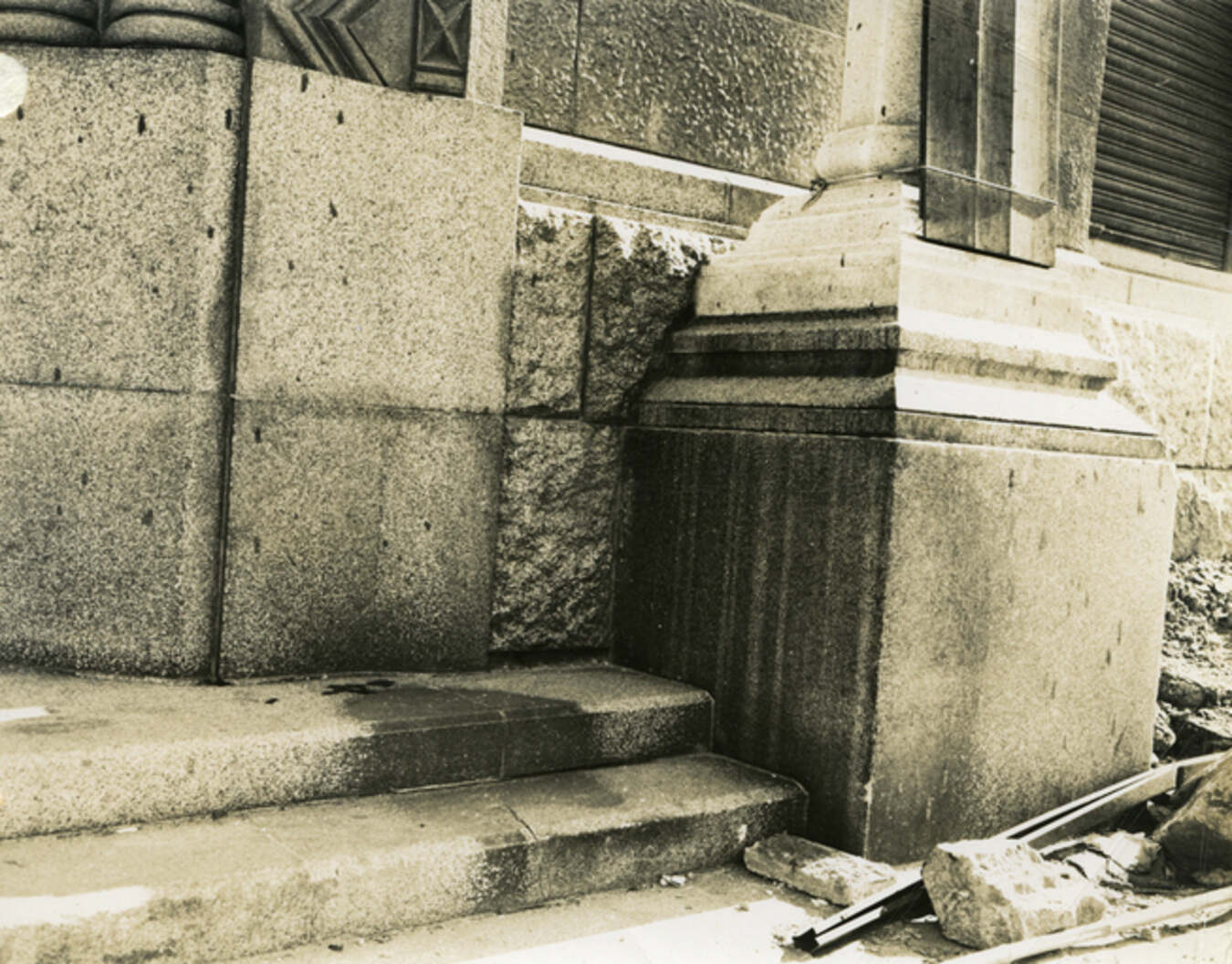


Shadows Left By The Atomic Explosions Of Hiroshima And Nagasaki Show The Last Moments Of Life And Expose The Human Cost Of Nuclear War
The Oscar-winning film Oppenheimer, directed by Christopher Nolan, has reignited interest in the race to develop atomic weapons. The production depicts J. Robert Oppenheimer’s unease and his fear of nuclear war, but it does not show the direct consequences of the attacks on Hiroshima and Nagasaki.
In the streets of the two Japanese cities, the marks were immediate and disturbing. Black shadows of people and objects, like bicycles, were imprinted on sidewalks and buildings after the atomic explosions of August 6 and 9, 1945.
Most importantly, these shadows likely represented the last moments of life for those who were there. The effect is reminiscent of the ash molds of the victims of the eruption of Pompeii.
-
At 17, she hand-painted her first watercolor design for school uniforms; her brand grew without investors, sold 135,000 pieces, and aims for $3 million in revenue by 2026.

-
Shell Discovers Intact Early 19th-Century Wooden Shipwreck in the Gulf of Mexico at Over 1,300 Meters Deep
-
Brazilian Entrepreneur Turns Door-to-Door Jewelry Sales into a Family Business Empire with Over 70 Stores

-
$75 Million Bridge in Brazil Opens to Connect Cities, Create Jobs, and Cut Travel Time from 30 to 2 Minutes; Spanning 1.24 km, It’s Among the Country’s Largest and Ends Decades of Ferry Queues.




How The Shadows Formed
According to Dr. Michael Hartshorne, emeritus curator of the National Museum of Nuclear Science and History, when each bomb exploded, intense light and heat radiated from the point of implosion. People and objects blocked this energy, protecting the surfaces behind them.
The exposed area around suffered a bleaching effect caused by the impact of radiation and heat. The protected parts retained their original color, creating the impression of a dark shadow. These marks were, in fact, the appearance of the concrete or stone before the explosion.
Although many appeared at the moment of detonation, few survived. Most were destroyed by the heat and shock waves that followed.
The Power Of Nuclear Fission
The energy of the explosions came from nuclear fission. According to the Atomic Heritage Foundation, this process occurs when a neutron strikes the nucleus of a heavy atom, such as uranium 235 or plutonium 239, breaking it apart and releasing a large amount of energy.
This initial collision triggers a chain reaction of exponential growth that lasts about a millisecond.
According to Alex Wellerstein, a professor at Stevens Institute of Technology, one trillion atoms can split in that interval before the reaction stops.
The bombs used in 1945 released extreme heat and gamma radiation, capable of penetrating human tissue and causing severe DNA damage.
This radiation also propagated as thermal energy, reaching temperatures close to 5,538 °C.
When the energy encountered an obstacle, such as a person’s body or a bicycle, it was absorbed, protecting what was behind and creating the contrast that formed the shadow.

Hiroshima And Nagasaki
On August 6, 1945, the uranium 235 bomb nicknamed Little Boy detonated 580 meters above Hiroshima.
The explosion had an equivalent power of 16 thousand tons of TNT, destroying 13 square kilometers. Almost a quarter of the population died instantly, and another quarter perished in the following months due to radiation effects.
Three days later, the United States dropped the plutonium 239 bomb nicknamed Fat Man on Nagasaki. Its power was even greater, equivalent to 21 thousand tons of TNT, and the patterns of destruction and deaths were similar.
End Of The War And The Beginning Of Reflections
Emperor Hirohito announced Japan’s surrender on August 15, signing the formal declaration on September 2, 1945. Thus, hostilities in the Pacific War ceased, and World War II came to an end.
The targets were chosen for their military significance and because they had not been heavily hit by previous attacks. This allowed for a clear assessment of the bombs’ effects, according to the Atomic Archive.
Over time, the long-term impacts of radiation sparked deep discussions about the use of nuclear weapons.
Many shadows disappeared due to the action of wind and water. Some were preserved and are currently housed in the Hiroshima Peace Memorial Museum.
Memory And Warning
For experts like Wellerstein, these marks serve as reminders of the human cost of using nuclear weapons.
He states that it is easy to treat them merely as political tools, forgetting that they are instruments of mass destruction.
The nuclear shadows, silent and static, continue to tell a story that not even a Hollywood movie can fully convey: that of the moment when lives were interrupted and the urban landscape was forever marked.
With information from Live Science.