Portuguese
  Spanish


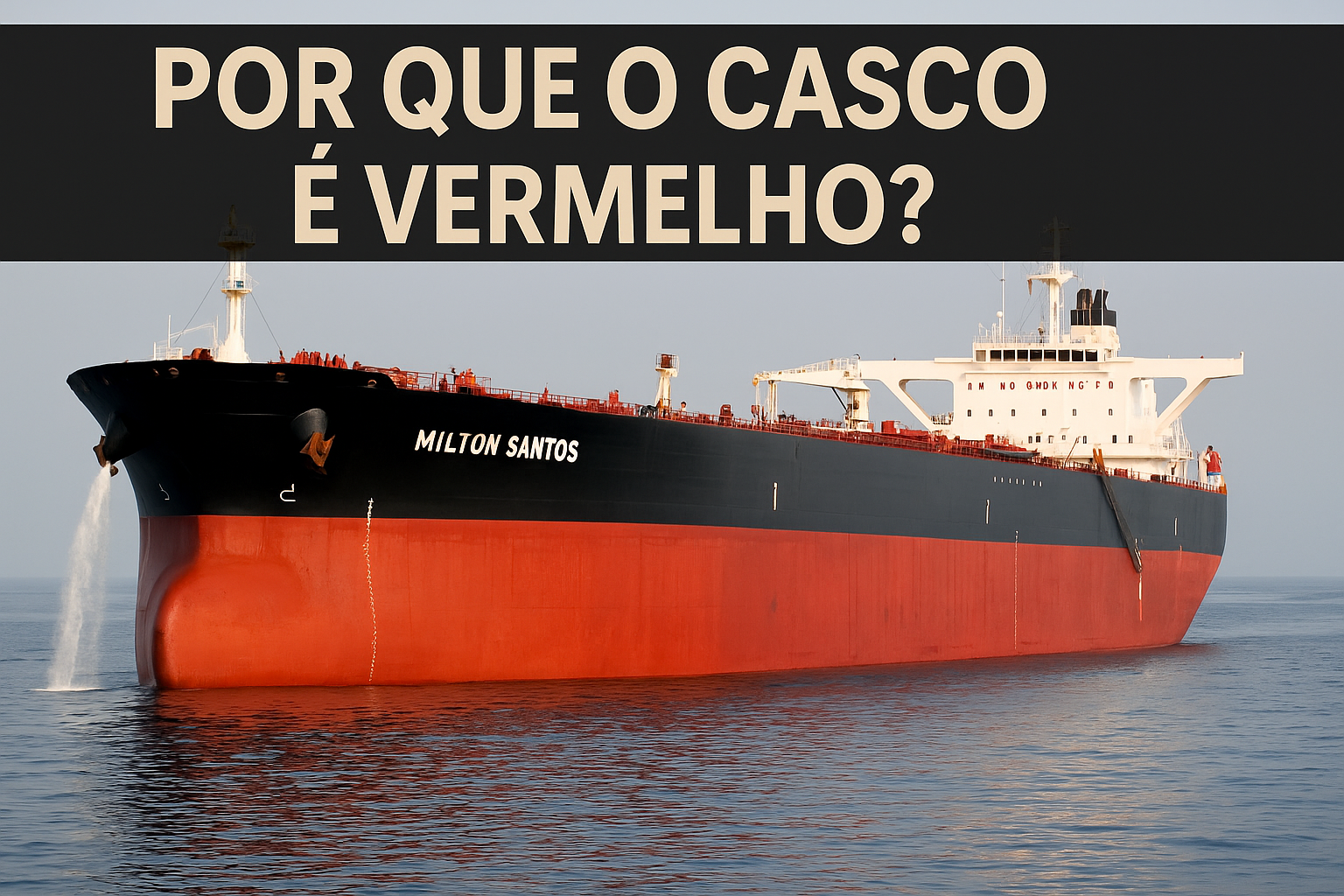

The Red That Dominates The Oceans: Find Out Why Oil Tankers And Commercial Ships Use Red Hulls And How This Technical Choice Helps Reduce Costs And Increase Efficiency.
The red hull paint is a common sight on ships crossing the world’s oceans. From oil tankers to cargo ships, this striking coloration below the waterline catches attention and raises a frequent question: why do so many ships adopt this shade? The answer lies in the combination of functionality, tradition, and naval engineering. More than aesthetics, the choice of red color is linked to historical and technical factors that remain relevant in the contemporary maritime industry.
Historical Origin: Antifouling And Protection Against Marine Organisms
In the 18th and 19th centuries, wooden-hulled ships faced serious problems with the attachment of marine organisms, such as algae, barnacles, and mollusks. This phenomenon, known as biofouling, compromised speed and increased fuel consumption.
To avoid these damages, sailors began applying a mixture of paints with copper oxide, a compound with antifungal and antimicrobial properties. The material provided a naturally reddish coloration — which led to the use of red hulls as a functional solution.
-
This Massive 12-Meter, 21-Ton Underwater Drone Can Operate Autonomously for Up to Five Days

-
Global Shipping Faces Shortage of Certified Maritime Officers, Salaries in the U.S. Can Exceed $100,000 Annually

-
The FLIP: A 108-Meter Ocean Laboratory That Stood Vertically for 60 Years, Dismantled in 2023
-
North Korean Fiasco: Launch of the Largest Warship Ends in Sinking




Over time, this practice became standardized across various types of vessels, even with the modernization of the materials used.


Reduction In Fuel Consumption And Maintenance
The presence of organisms on a ship’s hull creates resistance to movement in the water. This generates greater friction, requires more power from the engine, and consequently increases fuel expenditure.
The application of antifouling paints — many of them still in shades of red — prevents the attachment of these organisms. This way, the vessel maintains its hydrodynamics, improves energy efficiency, and reduces operational costs.
This is one of the reasons why oil tankers, bulk carriers, and container ships continue to use red coloring on the submerged parts of their hulls.
Practice Maintained In The Modern Naval Industry
Even with advancements in nautical coatings and high-tech paints, red remains the predominant color below the waterline on many vessels. This occurs due to technical reasons — red is still an effective base for antifouling compounds — and also due to custom and standardization.
The naval industry relies on well-established construction and maintenance standards. The use of conventional colors facilitates visual inspection, both in ports and during repairs in dry docks. When the red hull starts to darken or show stains, it is a clear sign that it is time for a new application of the coating.
Visibility And Operational Safety
Red also stands out visually in the water, which is useful for detecting the draft level — that is, the part of the ship submerged based on the weight of the cargo. This helps in quickly assessing the loading status of the vessel, an important factor for stability and safety control.
Additionally, in port operations and docking, the contrast of the red hull aids in the visual identification of critical areas.
What Types Of Ships Use Red Hulls?
The standard is widely used in large vessels. Among the most common ships with red hulls are:
- Oil Tankers: transport crude oil and derivatives in large volumes and operate with attention to resistance and consumption.
- Cargo Ships And Container Ships: responsible for the majority of global maritime trade.
- Bulk Carriers: used to transport soybeans, corn, iron ore, and other bulk products.
- Gas Tankers (LNG): which use specialized paint, but often maintain the reddish coloration below the waterline.
In some military or cruise vessels, the hull may adopt other colors, such as blue or black, for strategic or visual identity reasons. Still, many maintain the submerged portion in shades of red for technical efficiency.
Modern Alternatives And Trends
In recent years, new antifouling paints with different chemical compositions have emerged, as well as antifouling technologies without paint, such as hulls with textured surfaces that make it difficult for organisms to attach. Some of these alternatives have distinct colors, such as blue or gray, but red still dominates in a large part of the global commercial fleets.
Sustainability in the naval industry has driven the development of eco-friendly paints, with less toxic impact on marine ecosystems.
A Functional Symbol Of Naval Engineering
The red hull has become a visual mark of modern navigation, but its origin is rooted in practical solutions of naval engineering. The choice of color has technical foundations that span centuries, connecting naval tradition with current technological innovation.
More than a visual standard, it represents a measure of performance, safety, and durability — fundamental characteristics for any ship that crosses the seas of the world.