Portuguese
  Spanish


Discover Why Japan Is Digging a Mountain and How a US$ 600 Million Investment Could Revolutionize the Future of Humanity.
Japan is developing a revolutionary project that could transform the future of medicine and expand our knowledge of the universe. The Hyper-Kamiokande Atomic Observatory, with an investment of US$ 600 million, will house the largest water tank in the world. Discover why Japan is digging a mountain and the implications of this innovative project.
Why Is Japan Digging a Mountain?
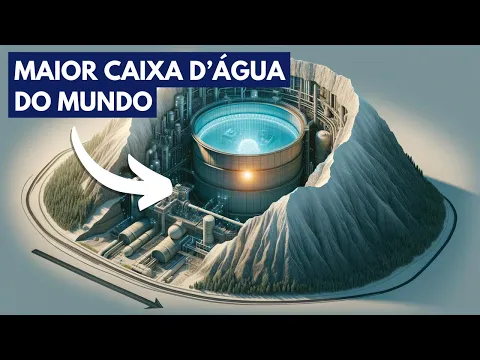

The project is under construction in the city of Hida, Gifu Prefecture, specifically on the Nijuugo mountain in the Japanese Alps. The project is led by the University of Tokyo, located about 380 km from where Japan is digging a mountain.
While this distance may seem daunting at first, there would hardly be a better location in the country to develop a project for atomic studies, after all, the mountainous area has dimensions and rock structures suitable for creating a gallery with ideal measurement and isolation considering the complexity of this project.
-
In a Degraded Atlantic Forest Area, a São Gonçalo Resident Transforms Land into a Living Eco-Museum, Now a Model for Environmental Education

-
World’s First Lithium-Sulfur Battery Factory Launches, Promising to Double Range Without Relying on China

-
AI Data Centers Now Feature Built-In Nuclear Power Plants and Have Ordered Non-Existent Reactors
-
In India, thousands earn about $2.50 an hour cooking and cleaning with a phone strapped to their heads, as every move is recorded to train humanoid robots for jobs they might one day replace.


It is worth noting that this gallery will have an observatory located 681 m from the peak of the mountain and a tank capable of holding an astonishing 260 million liters of water, enough to supply a city of approximately 1,300,000 inhabitants.
In general terms, the construction where Japan is digging a mountain will host four physics programs: neutrino acceleration and atmospheric oscillations, neutrino astronomy and geoneutrinos, proton decay, and dark matter. These four programs explain why Japan is digging a mountain.
When Is Hyper Kamiokande Expected to Be Completed?
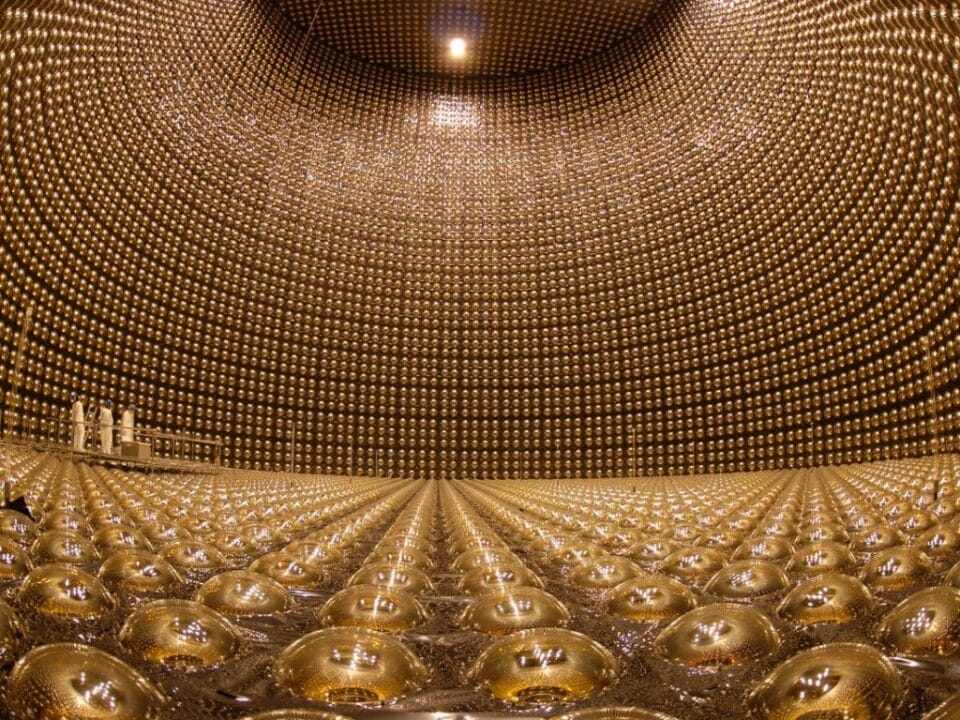
With construction starting in May 2021, Hyper Kamiokande is expected to be completed in 2026. According to the schedule, research at the site should begin the following year, and despite the project’s high complexity, understanding its execution is straightforward. Japan is digging a mountain and a huge cylinder will be carved in the inner region, accessed by tunnels at the top and base.
The tunneling was done using a traditional and efficient method, with the creation of an approach tunnel and another for construction using tunnel boring machines. As teams explored these options, a structure reinforced by a steel lattice was installed to support the weight of the rock above.
This is one of the aspects that made Hyper-K so attractive for atomic research. The density of the rock helps isolate the space from potential background radiation, a form of radiation electromagnetic radiation composed of photons and microwaves, emitted when the universe was only 380,000 years old.
The space is also home to a massive concrete shell measuring 88 m in height and almost 70 m in width, coated with waterproof concrete. Thus, the project will turn into the largest water tank in the world, with a storage capacity of 260 million liters.
How Could the New Project Help the Pharmaceutical World?
According to the expectation of the University of Tokyo, the project will be completed in 2026, and it is worth noting that this good news should not be celebrated only by scientists and enthusiasts in the field for various reasons.
In addition to helping optimize agricultural techniques, improve food safety and quality, and enhance the imaging diagnostics sector, atomic studies play a crucial role in the development of medications. Therefore, from a better understanding of the atomic structure of molecules, it is possible to create more targeted medicines at the molecular treatment level.
This means greater efficiency and a lower chance of side effects. In this context, the results from Hyper-K could even aid in the development of new drugs for AIDS.