Portuguese
  Spanish


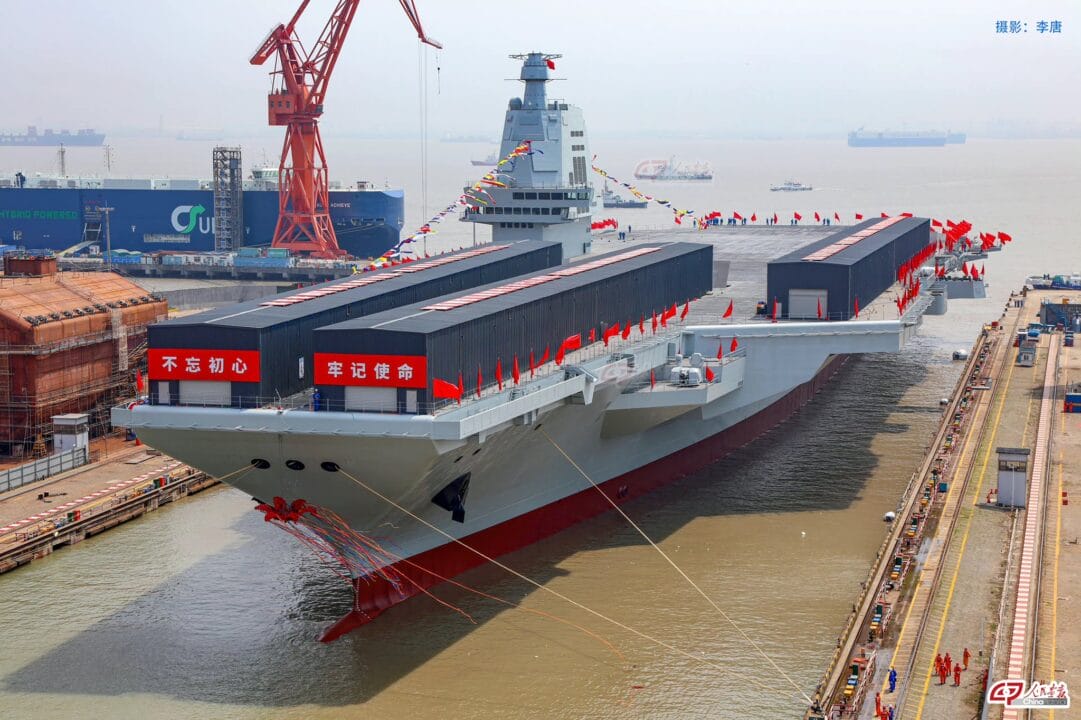

Meet the Fujian, China’s Aircraft Carrier That Impresses Everyone with Its 316 Meters in Length, Almost Three Times Longer Than a Football Field.
The Fujian, China’s third aircraft carrier and the first super aircraft carrier equipped with electromagnetic catapults, has left the Jiangnan shipyard dock in Changxing Island, in the Yangtze River Delta, preparing for its first sea trials. Check out all the details!
The Aircraft Carrier Is 316 Meters Long
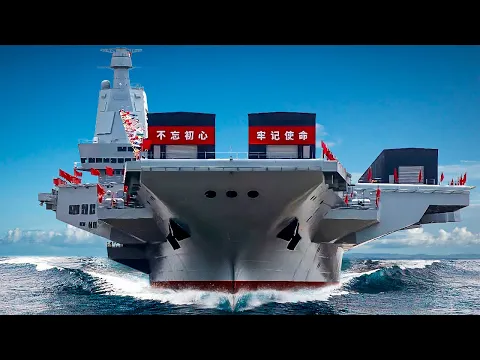

The new Chinese aircraft carrier left the dock assisted by several tugboats, according to images circulating on Chinese social media and “X,” formerly Twitter. The ship has an approximate length of 316 meters, an average flight deck width of 72 meters, and 76 meters at its widest point. The hull’s width at the waterline is approximately 40 meters.
The displacement is estimated to be between 80,000 and 85,000 tons. The Fujian has two aircraft elevators, three catapults, and four arrestor wires. Its self-defense armament consists of several launchers for the short-range surface-to-air missile system HQ-10 and, additionally, several CIWS H/PJ-11 30 mm systems.
-
France Revamps 530 Social Housing Units with Large Balconies and Glass Facades Without Demolishing Existing Buildings

-
10-Year-Old Max Makes History with Paris Fashion Show, Launches Own Brand, Hires Staff, and Sets World Record as Youngest Runway Designer

-
Bolivian Female Construction Workers Form Association to Combat Discrimination and 38% Pay Gap in the Industry
-
Near Amsterdam, residents buy land and discover they must also build streets, manage drainage, handle waste, and grow food on half their plot.




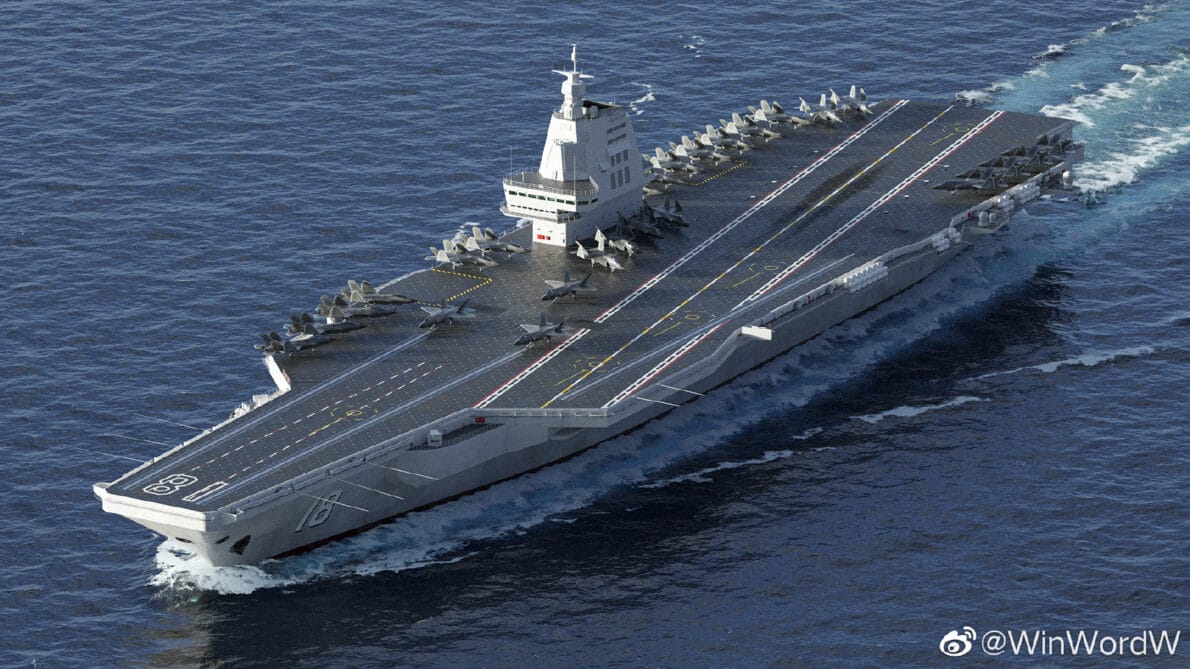
The SUPER aircraft carrier of China is larger than the previously built ones, Liaoning (Type 001) and Shandong (Type 002), with the capacity to carry a larger number of aircraft, including fighters, early warning aircraft, and helicopters.
The air group of the Fujian will initially include Shenyang J-15B and J-15D fighters, stealthy Shenyang J-35 fighters, Xian KJ-600 early warning aircraft, and Harbin Z-20 anti-submarine and utility helicopters.
The expectation is that this giant ship will enter service as early as next year, adding a new dimension to China’s defense capabilities. The addition of the Fujian to China’s aircraft carrier fleet will not only strengthen its defense capabilities but also reaffirm its position as one of the world’s leading naval powers.
Understand How the Electromagnetic Catapult System Works
The magnetic catapult system of the Fujian, as mentioned earlier, is also known as the Electromagnetic Aircraft Launch System (EMALS), which is an innovative technology. Unlike conventional catapult systems that use fixed clamps, the EMALS system utilizes magnetic energy to launch aircraft.
This allows airplanes to be launched more efficiently and smoothly, reducing wear on both the aircraft and the aircraft carrier.
The catapult system of the Fujian is capable of launching a wider variety of aircraft, from lighter to heavier ones. This increases the versatility of the aircraft carrier, allowing it to operate a broader range of aircraft for different missions.
The use of the EMALS system on China’s SUPER aircraft carrier is particularly noteworthy as it is the first time this technology is used on an aircraft carrier outside the United States. This reflects China’s rapid advancement in naval technology and its growing technological competence.
China’s Aircraft Carrier Constructions Are Surprising
The journey of China’s aircraft carriers began in the 1970s, with the understanding that constructing an advanced aircraft carrier was beyond the country’s technical capabilities at the time.
To overcome this gap, China acquired the decommissioned Australian aircraft carrier HMAS Melbourne in 1985. This ship served as a crucial learning tool, allowing Chinese engineers to study and replicate essential aircraft landing and take-off systems.
Progress in the construction of these vessels in China accelerated with the purchase and remodeling of the unfinished Soviet aircraft carrier Varyag in 2002. Renamed Liaoning, this first operational Chinese aircraft carrier was a crucial step in the country’s naval capability development.
The experience gained with the Liaoning paved the way for the launch of the Shandong, an aircraft carrier that reflects China’s growing confidence in its own technology and design.