






 Portuguese
  Spanish


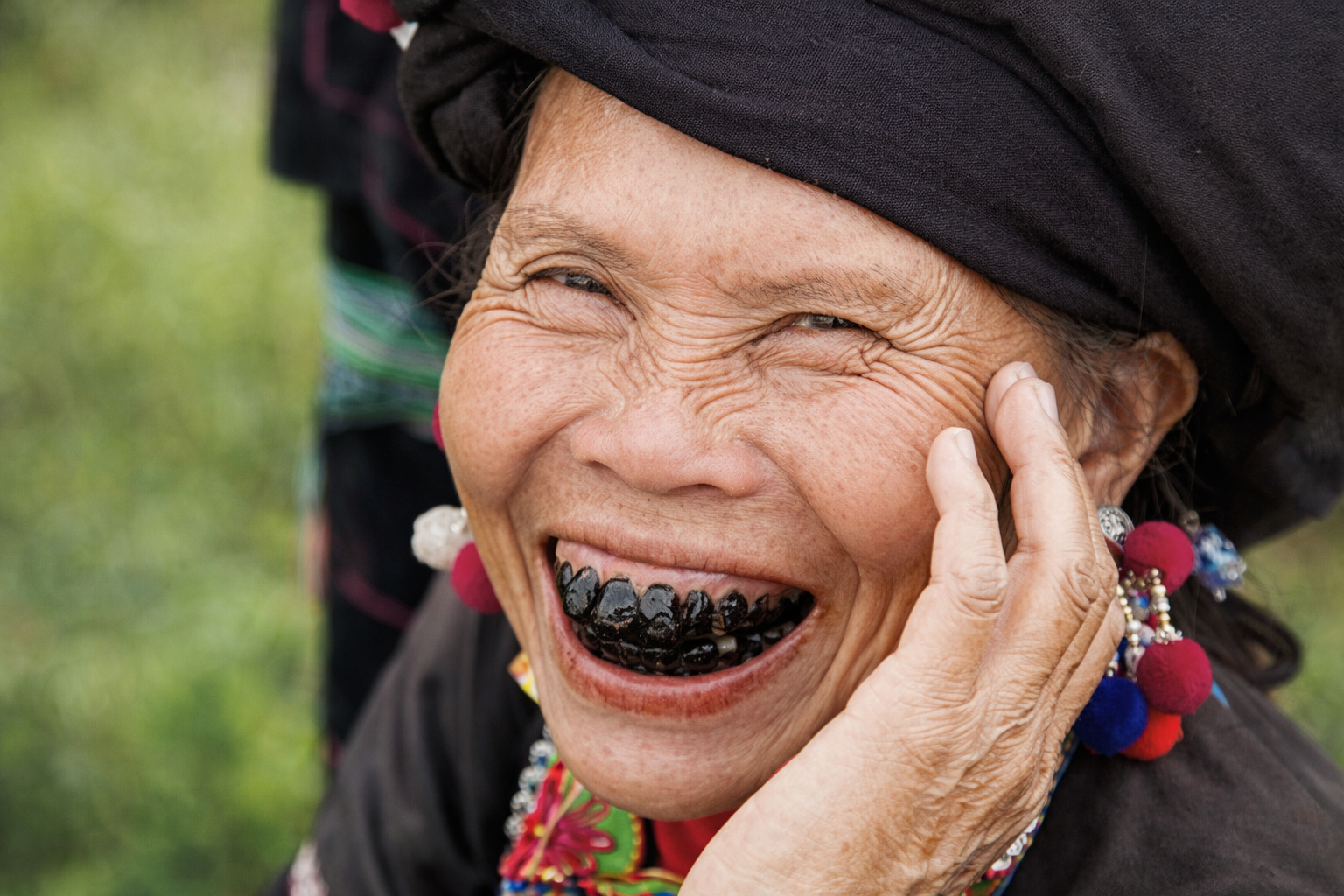

The Ancestral Practice Combined Aesthetics, Social Identity, and Possible Protective Effects, Marking Generations in Vietnam Before the Transformations of the 20th Century
A cultural tradition with a strong social impact marked Vietnam for centuries and shaped beauty standards very different from those today.
Painting the teeth black was a widely spread custom among different Vietnamese groups, especially before the 20th century.
Historical records indicate that the practice was already observed before the 10th century, according to accounts associated with the Tang dynasty, between the 7th and 10th centuries.
Subsequently, 19th-century ethnographic studies conducted during the French colonial period also documented the habit as a distinctive feature of local identity.
Beauty, Maturity, and Social Distinction in Ancient Vietnam
The tradition was directly linked to the idea of beauty and social status.
Darkened teeth were considered a sign of elegance, maturity, and cultural refinement.
At the same time, white teeth could be symbolically associated with evil spirits or animals, according to cultural interpretations recorded by scholars.
Thus, dental darkening functioned as a marker of social belonging.
In addition, the ritual marked the transition to adulthood, especially among women.
However, men also adhered to the practice in various regions.
Thus, the custom consolidated community bonds and reinforced family traditions passed down through generations.
-
ArcelorMittal Builds €200 Million Plant in Belgium Where Bacteria Convert Blast Furnace Gas into 80 Million Liters of Ethanol Annually

-
Lake Mead, a crucial water source for parts of the United States, faces critical conditions by 2026 with mandatory cuts, declining volume, and increased pressure on the Colorado River.

-
Scientists Race to Harness Vast Underground Energy for Clean Electricity

-
Brazilian City Launches Comprehensive Shelter with Pet Facilities and Support Programs to Aid Homeless Transition Off Streets


Techniques Used to Darken the Teeth
The process required careful preparation and gradual application of specific substances.
Initially, the teeth were meticulously cleaned.
Then, natural compounds were applied repeatedly until the desired shade was reached.
According to historical descriptions gathered by researchers, plant resins, mixtures with oxidized iron, and natural extracts were used.
Subsequently, successive layers ensured the color fixation.
During the procedure, certain foods were avoided to ensure better adherence.
Additionally, periodic touch-ups maintained the intense black, considered aesthetically ideal.


Possible Protective Effect on Oral Health
Although the main objective was cultural and aesthetic, studies from the early 20th century suggested that the practice could offer a secondary protective effect.
The compounds applied formed a layer over the teeth.
Thus, this coverage could reduce the incidence of cavities and decrease dental wear.
Therefore, although it did not arise as a dental treatment, the custom may have contributed to dental preservation in certain historical contexts.
Western Influence and Decline of the Tradition
From the late 19th century, with the intensification of the French presence in Vietnam, aesthetic standards began to change.
Gradually, white teeth came to be valued under Western influence.
Consequently, especially in urban areas, the habit declined in the early decades of the 20th century.
Still, in rural regions and among some ethnic groups, the tradition persisted for longer.
Even with the significant reduction, the custom remained a historical symbol of Vietnamese identity.
Cultural Transformation and Historical Legacy
The change in beauty standards highlights how social values transform over time.
What once represented sophistication has been replaced by new aesthetic references.
Nevertheless, the practice of painting teeth black remains as a relevant cultural record of Vietnamese history.
Today, historians and anthropologists analyze the custom as a clear example of cultural diversity and how conceptions of beauty vary according to historical and social context.
In light of these transformations, how will future generations reinterpret cultural practices that today seem distant from contemporary aesthetics?


