Portuguese
  Spanish


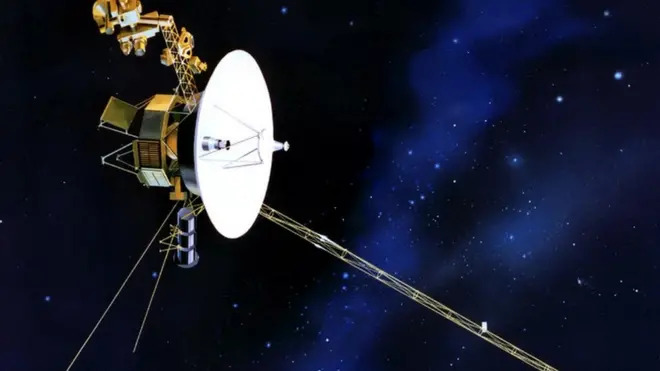


Scientists Around The World Are Increasingly Convinced That The Discovery Of Alien Life Is Imminent. Discover The Reasons Behind This Growing Expectation.
The Search For Alien Life Has Never Been More Advanced. Scientists From Various Parts Of The World Are Convinced That Finding Signs Of Life Beyond Earth Is Just A Matter Of Time.
With The Advancement Of Space Observation Technologies And The Discovery Of Increasingly Promising Exoplanets, Optimism Is Only Growing.
The James Webb Space Telescope (JWST), Launched By NASA, Has Provided New Data Indicating The Presence Of Possible Biosignatures On Distant Exoplanets.
-
Three teenagers transform cut cardboard into Japanese origami-style packaging that promises to retire styrofoam and bubble wrap, win a $12,500 prize, and target giants like Amazon, FedEx, and Home Depot after a robot motor arrived broken.

-
The large jar blender has a rival: Oster Ultra Power bets on 1,000 W, six stainless steel blades, and two portable cups with leak-proof lids.

-
Tesla injected an additional $250 million into the German factory, doubled the battery cell target, and opened its own production line for startups.

-
No more TV stuck on the wall: Samsung The Freestyle+, the new projector with over 400 lumens projects on walls, floors, and ceilings, bringing cinema to any corner of the house.




One Example Is K2-18b, Located 120 Light-Years From Earth. This Planet Is In The So-Called “Habitable Zone,” Where Conditions Are Favorable For The Presence Of Liquid Water.
Scientists Have Detected Possible Traces Of Dimethylsulfide, A Compound On Earth Produced By Marine Microorganisms. Although Confirmation Of This Discovery Requires More Time, The Initial Results Excite Experts.
Technologies And Current Missions
The Next Decade Promises To Be Crucial. NASA Is Developing The Habitable Worlds Observatory (HWO), A Telescope Planned To Detect Atmospheres Of Rocky Exoplanets.
Back On Earth, The Extremely Large Telescope (ELT) From The European Southern Observatory Will Begin Operations With The Capability To Analyze Atmospheres In Detail.
In Addition To Exoplanets, The Icy Moons Of Our Solar System Continue To Attract Attention. Europa, A Moon Of Jupiter, Is One Of The Main Targets.
The Europa Clipper Mission, Set To Launch Soon, Aims To Investigate Its Subsurface Ocean, Which May Harbor Microbial Life. Titan, A Moon Of Saturn, Is Also The Focus Of Study. NASA’s Dragonfly Mission Will Explore Its Surface, Rich In Organic Compounds.
Mars Still Holds A Prominent Position In The Search For Life.
The NASA Perseverance Rover Is Collecting Rock Samples That May Contain Evidence Of Past Life. These Samples Will Be Brought Back To Earth For More In-Depth Analysis In The 2030s.
It Is Not Just Physical Explorations That Bring Hope. The SETI Program (Search For Extraterrestrial Intelligence) Is Modernizing Its Techniques, Expanding The Search For Alien Communication Signals.
Now, In Addition To Radio Waves, Scientists Are Searching For Laser Pulses That Could Be Sent By Advanced Civilizations.