Portuguese
  Spanish


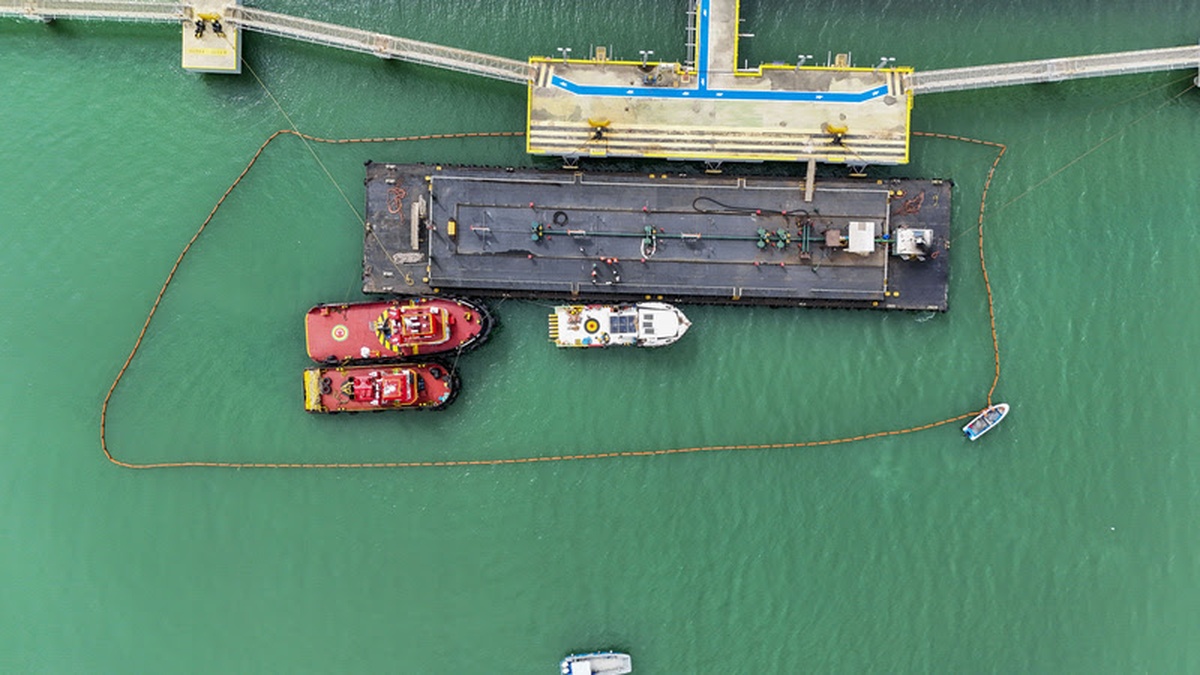


Tests With HVO in September 2024 Mark Strategic Advance for Decarbonization in the Fluminense Port Sector
In September 2024, in the northern Fluminense region, a movement began to accelerate the decarbonization of the Brazilian maritime sector.
Additionally, OceanPact and Vast Infrastructure started tests with HVO (Hydrotreated Vegetable Oil) on vessels operating in T-Oil.
The initiative symbolizes a structural change in port operations and positions Açu as a reference in sustainable logistics.
-
Nuclear Submarine USS Alexandria Retired After 35 Years, Having Completed Over 1 Million Miles in Missions

-
MODEC Introduces New Hull Design for FPSO Gato do Mato to Produce Up to 120,000 Barrels of Oil Per Day in Brazil’s Pre-Salt Region
-
This Massive 12-Meter, 21-Ton Underwater Drone Can Operate Autonomously for Up to Five Days

-
Global Shipping Faces Shortage of Certified Maritime Officers, Salaries in the U.S. Can Exceed $100,000 Annually


Joint Initiative Paves the Way for Renewable Fuels
The tests are taking place at the Açu Liquid Terminal (TLA) and assess the technical and operational feasibility of using biodiesel.
According to Adriano Lima, Sustainability Director of Vast Infrastructure, the TLA serves as a hub for storing and moving liquids.
Thus, the agreement strengthens the national logistical position and reinforces the commitment to port decarbonization.
Previous Cooperation Paved the Way for Energy Transition
The partnership had already yielded results in 2023, at the very T-Oil.
That year, the Onshore Power Supply (OPS) was implemented to provide onshore electricity to vessels.
Thus, the resource allows engines to be turned off during docking and consistently reduces polluting emissions.
According to Fernando Borensztein, Sustainability and New Business Director of OceanPact, the new phase expands the advance. He states: “Reducing carbon emissions in our operations is a central part of the maritime energy transition.”
Strategic Studies Reinforce Sustainable Role of Açu Port
Now, the agreement in September provides for technical, environmental, and operational studies on the replacement of fossil fuels with biodiesel.
Simultaneously, the surveys include calculations of emissions avoided with the use of OPS during docking.
Finally, the planning creates a reliable data foundation to guide the expansion of HVO in operations.
Expected Impacts on Logistics and Maritime Sector
- Significant reduction of emissions in support vessels.
- Strengthening of sustainable image of Açu Port.
- National reference in low-carbon logistics.
- Integration into established sustainability standards.
The project follows the movement to accelerate the energy transition in maritime transport.
Moreover, the OPS consolidates practices aligned with emission reduction during dockings at T-Oil.
The Future of Açu Port as a Sustainable Reference
In summary, the combination of HVO with the OPS infrastructure transforms Açu into a national laboratory for innovation. Based on the results of the tests started in September 2024, the model could be expanded to other terminals and routes. Therefore, the integration of innovation, infrastructure, and sustainability highlights Brazil’s potential in the regional energy transition.
So, should Brazil accelerate the adoption of biodiesel in ports or gradually advance to ensure long-term sustainability?