






 Portuguese
  Spanish
  5 min of reading
  0 comments


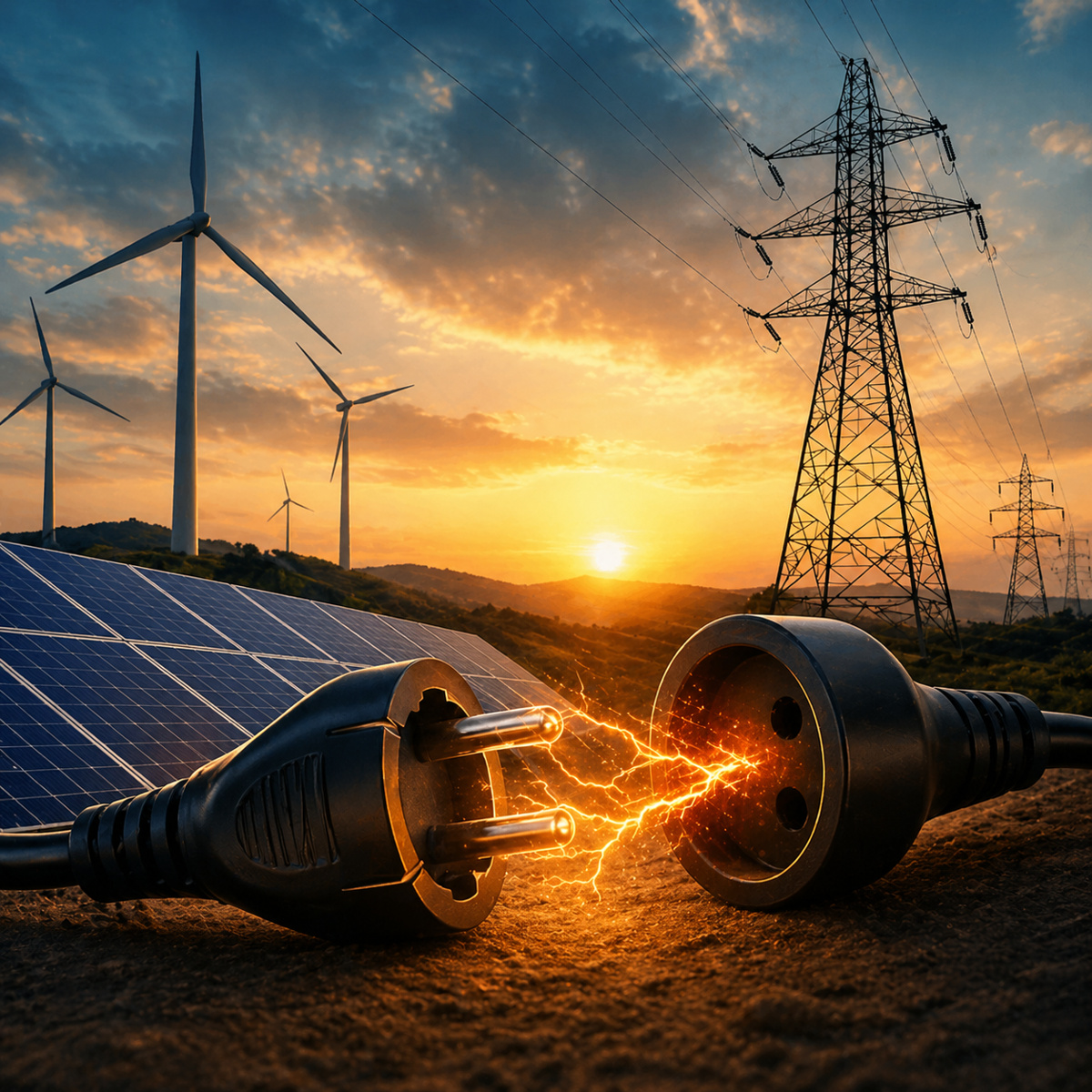
Power cuts in Brazil raise risks for renewable energy and trigger an alert abroad, points out SPIC CEO, with direct impact on investors.
Power cuts in Brazil are no longer an isolated problem and have become a central topic in discussions about infrastructure, economy, and international credibility. The issue gained even more relevance after statements from SPIC Brazil’s leadership, who pointed out direct impacts of the cuts on the country’s image abroad.
The assessment comes from Adriana Waltrick, CEO of SPIC, who highlighted during the VEJA Energy Forum 2026 event, held on April 27th, that Brazil faces a level of restriction in renewable energy generation far above the global standard. According to her, the so-called curtailment reached approximately 35% in 2025, while the international average is around 5%. This significant difference raises an alert for investors and reinforces the need for urgent structural adjustments.
This scenario, in addition to generating financial losses, compromises project predictability and increases the perceived risk for international financiers, who observe the Brazilian market with greater caution.
-
Brazilian scientists are simultaneously advancing two research projects on clean hydrogen and driving solutions that could transform the energy matrix, enhance industrial competitiveness, and accelerate large-scale emission reduction targets.

-
Advancement in renewable energy: A R$ 150 million project launched by Petrobras and Finep aims to create state-of-the-art electrolyzers for green hydrogen, strengthening national research and preparing Brazil to compete in a billion-dollar energy market.
-
Illiterate or semi-literate grandmothers were trained to repair solar systems, open rural workshops, and light up homes that still depended on kerosene.
-
The world has bet on green hydrogen as the fuel of the future, but now faces the side effect: producing 1 kilogram requires about 9 liters of ultrapure water, and the largest projects on the planet are precisely in the driest regions of the Earth, where water is already scarce for people.





Power cuts in Brazil gain global repercussion and raise concern abroad
Power cuts in Brazil have started to have a direct impact on the country’s international perception. The problem, which was previously treated as a technical issue, now influences strategic decisions of investors abroad.
The SPIC CEO emphasizes that the electricity sector is highly capital-intensive. This means that any instability, such as frequent cuts, can affect investor confidence and hinder the attraction of new resources.
The high level of curtailment recorded in the country creates an environment of uncertainty. Foreign investors, when comparing Brazil with other markets, tend to prioritize regions with lower operational risk and greater regulatory predictability.
Furthermore, the impact is not limited to the electricity sector. The country’s reputation as a safe destination for investments is also called into question, affecting different segments of the economy.

What explains the cuts in Brazilian renewable energy
To understand the power cuts in Brazil, it is necessary to look at the structure of the electrical system. Despite the significant advance of renewable energy, the infrastructure has not evolved at the same pace.
In practical terms, energy is generated, but it doesn’t always reach the final consumer. This imbalance occurs due to different factors, including:
- Lack of sufficient transmission lines
- Delays in energy infrastructure works
- Limitations in the electrical grid capacity
- Excess supply during certain periods
The SPIC CEO also drew attention to situations where solar plants were unable to operate fully for more than two years due to a lack of adequate grid connection. This type of problem highlights failures in the planning and execution of strategic projects.
Another important point is that, in many cases, generators are not financially compensated when energy is not dispatched, which further increases business risk.
SPIC CEO points to direct impact on international confidence and investments
The SPIC CEO, Adriana Waltrick, highlights that the current scenario directly affects the confidence of international investors. In a sector that requires large volumes of capital, predictability is an essential factor.
Power cuts in Brazil compromise this balance. When investors perceive structural and regulatory difficulties, the result is usually immediate: reduced investments and increased financing costs.
Among the main effects observed are:
- Greater caution from foreign investors
- Increase in financing rates
- Reduced interest in new projects
- Migration of capital to more stable markets
Abroad, Brazil is increasingly seen as a promising, yet risky, market. This combination can hinder the growth of the renewable energy sector, which heavily relies on long-term investments.
Limited infrastructure exposes fragilities in the advancement of renewable energy
Even as a global leader in renewable energy, Brazil faces difficulties in transforming this potential into operational efficiency. The power outages in Brazil show that the expansion of generation has not been accompanied by equivalent investments in transmission.
This imbalance creates a chain effect. Energy is produced but not utilized, leading to waste and financial loss. At the same time, operational restrictions compromise system stability.
The statement from the CEO of SPIC reinforces that the problem lies not only in generation but in the integration across all stages of the electricity sector.
Among the most urgent challenges are:
- Expansion of the transmission network
- Modernization of the electrical system
- Better coordination between generation and distribution
- Reduction of regulatory hurdles
Without these improvements, the country will continue to face difficulties in consolidating its position in the global clean energy market.
Foreign markets cautiously observe power outages in Brazil and their risks
The way foreign markets view power outages in Brazil has changed in recent years. The country is still seen as a powerhouse in renewable energy, but operational risks have started to weigh more heavily on investment decisions.
The recorded curtailment level — around 35%, compared to a global average of 5% — is considered high and outside international standards. This data, cited by the CEO of SPIC, reinforces the perception that there is a structural problem to be solved.
International investors analyze factors such as:
- Regulatory stability
- Energy outflow capacity
- Legal certainty
- Return predictability
When these elements are not aligned, the result is a more conservative stance from the market. This directly impacts the flow of capital for new projects in Brazil.

Possible paths to reduce outages and strengthen the electricity sector
Despite the challenges, solutions are being discussed to reduce the impacts of power outages in Brazil. The CEO of SPIC herself points out that the future of the sector involves a more integrated and technological approach.
Among the most promising alternatives are:
- Use of energy storage systems, such as batteries
- Development of more flexible contracts
- Investments in smart grids
- Better management of energy demand
These solutions can help balance the system, reduce waste, and increase the efficiency of renewable energy. Furthermore, public policies and regulatory improvements will be fundamental to ensure greater security for investors and improve the country’s image abroad.
An alert that could redefine Brazil’s energy future
Power outages in Brazil represent more than a technical challenge. They are a clear sign that the electricity sector needs to evolve to keep pace with the growth of renewable energy.
The statements by SPIC’s CEO, Adriana Waltrick, show that the problem has already crossed national borders and begun to influence how Brazil is perceived abroad.
If, on one hand, operational restrictions cause concern, on the other hand, they also highlight opportunities for improvement. With adequate investments, strategic planning, and technological advancements, the country can transform this scenario.
Brazil possesses abundant natural resources and enormous energy potential. The challenge now is to ensure that this capacity is used efficiently, sustainably, and reliably, strengthening the country’s position on the global stage and restoring the confidence of international investors.
With information from CNN Brasil.




Be the first to react!