






 Portuguese
  Spanish
  6 min of reading
  0 comments


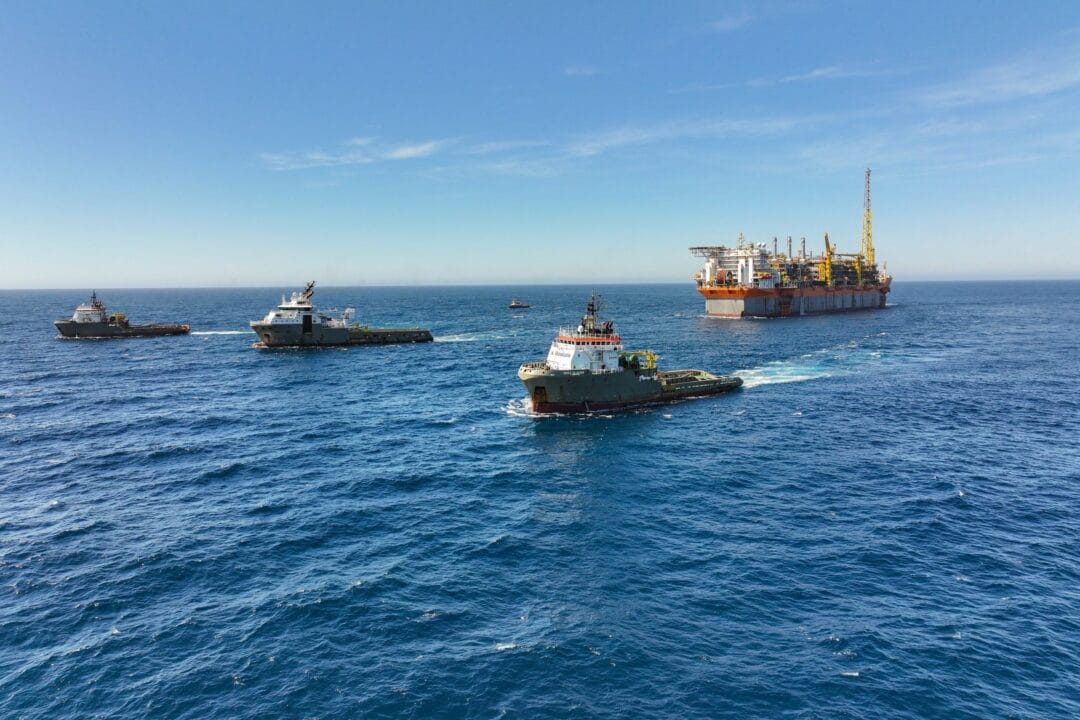
ANP Has Areas Up for Auction and Analysis with Estimated Volumes of 24 Billion Barrels, Sharing Regime, and Permanent Offering.
The auction for the five pre-salt blocks, with estimated volumes of 18 billion barrels of oil and gas, will be held by ANP this Wednesday (12/13).
Regarding the pre-salt area, it is important to emphasize that there is a queue for future offerings, with another approximately 6 billion barrels in different stages of internal analysis by the federal government. The oil fields in this region present a great exploration potential and continue to attract the sector’s interest.
Sharing Blocks in the Permanent Offering
Since last year, sharing blocks have entered the permanent offering. Auctions are defined based on prior expressions of interest.
-
IEA reduces forecast for global oil demand in 2026 after impacts of the Middle East crisis

-
Bank of Japan raises interest rates to 1%, reaching the highest level in over three decades

-
ANP halts LPG reform, and Sindigás sees technical caution as a decisive point for safety, investments, and the future of the cylinder in Brazil.
-
Oil spill in the Caribbean raises environmental alert and increases tension between Venezuela and Trinidad and Tobago




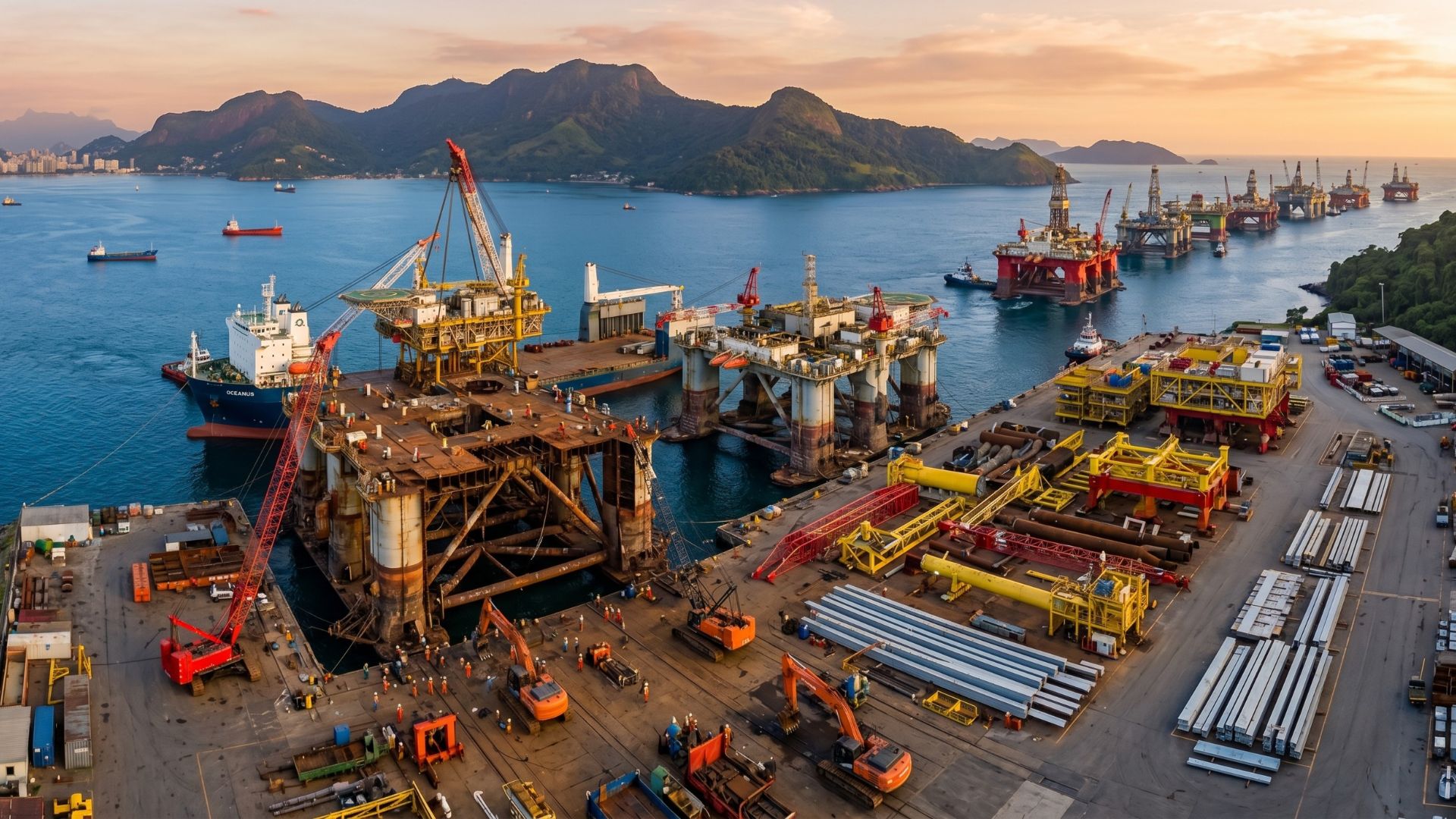
This will be the second cycle of the permanent sharing offering, alongside the 4th of the concession, where blocks in the pre-salt areas, Santos oil fields (outside the polygon), Pelotas, and land areas will also be auctioned.
ANP will offer, this Wednesday (12/13), five blocks in the pre-salt polygon, in the 2nd Cycle of the Permanent Sharing Offering. Meanwhile, the government is considering including at least 13 other areas in the OPP menu.
In ten years, 23 areas have been auctioned off in sharing rounds – including auctions of the excesses from the onerous assignment, which included assets with already commercial discoveries.
Today, five blocks will be offered and the government has advanced this year with efforts to offer another 13 areas in the pre-salt polygon.
Auction of Blocks in the Pre-Salt Area
This Wednesday, the following will be auctioned:
- Turmalina (Campos) – located east of the Roncador and Albacora Leste fields, with estimated volumes of oil in place (VOIP) of 2.26 billion barrels, plus potential untested geological sections (upside) of 1.36 billion barrels.
- Jade (Santos) – estimated VOIP of 2.91 billion barrels and upsides of 4.2 billion barrels;
- Cruzeiro do Sul (Santos) – east of the Tupi field, the largest oil-producing field in the country, and west of the BM-S-24 block (Jupiter); 1.17 billion barrels of condensate and 1.82 billion barrels of oil, with upsides estimated at 3 billion;
- Tupinambá (Santos) – estimated VOIP of 4.2 billion barrels;
- Esmeralda (Santos) – 5.88 billion barrels, which includes the Tupã prospect in the same block.
The volume of oil in place is an initial estimate of the potential reserves, which is confirmed only with the drilling of wells, production tests, and reservoir studies.
Any commercial reserves will also take into account economic aspects, should discoveries be confirmed. The total volume of 18 billion barrels mentioned at the beginning of the text does not account for the upsides.
According to ANP, Cruzeiro do Sul presents exploration risk exclusively associated with the upsides, as they are extensions of already drilled prospects. The CO2 content, however, may hinder the commercial use of the reservoir. Esmeralda and Jade are considered to have moderate risks, with relevant volumes, characterizing a high premium, according to geologists’ estimates from the agency.
Despite the many uncertainties regarding Esmeralda, a well has already been drilled with indications of oil in the area.
The Ágata and Tupinambá blocks, in turn, are exploratory frontier blocks and present high to moderate exploration risk. In the northern section of Tupinambá, exploratory wells have already been drilled that, even in unfavorable conditions, reported indications of oil.
Vacant Areas and Permanent Offering
The data from today’s auction comes from the geological summary published by ANP in 2022.
The Ministry of Mines and Energy has already mapped 11 blocks to take to the National Energy Policy Council (CNPE), including some areas already known to the market, such as Itaimbezinho (Campos Basin) and Ágata (Santos Basin).
Itaimbezinho was included in the permanent offering but had to be withdrawn this year because the validity of the joint manifestation between the ministries of Mines and Energy and Environment expired.
This step is necessary due to the absence of the Sedimentary Area Environmental Assessment (AAAS), an environmental study that would encompass the entire basin and would need to be contracted by the government.
The areas in deep waters of Campos and Santos, Brazil’s main oil province, have not posed a risk in the issuance of exploratory well licenses.
Ágata is already part of the permanent offering portfolio. It did not enter today’s auction due to a lack of market interest.
The MME’s list includes: Citrino, Larimar, Ônix, Jasper, East Sapphire, West Sapphire, Amazonite, Mahogany, and Amethyst.
These 11 blocks have a potential of 1.73 billion to 3.69 billion barrels of non-rated oil in place, according to the MME.
Sharing Regime and Areas in the OPP Menu
Last week, ANP also approved the geological and economic studies of two more areas, Ruby and Granada, both located in the Santos Basin. It is the rite: ANP studies, MME approves and sends to the National Energy Policy Council (CNPE). Subsequently, they are eligible for inclusion in the auctions.
With the inclusion of pre-salt sharing areas in the permanent offering, the government has consolidated the demand-driven hiring modality as the main form of auctioning exploratory blocks in the country. The 6th sharing round in 2019 negotiated only Aram, one of the five areas offered under the previous model, where the selection of areas originated from the government. The auction was marked by the absence of international oil companies.
After the low contracting rate of areas in the 17th concession round, which negotiated five of the 92 blocks offered in October 2021, the government then decided to adopt the permanent offering as the only model for contracting exploratory areas.
The assets that would be offered in the 7th and 8th sharing rounds were thus transferred to the menu of permanent offering areas.
Permanent Offering and Signing Bonus
The change comes alongside a reduction in the entry barrier. From the current portfolio of the permanent offering, Tupinambá is the asset with the lowest signing bonus (R$ 7 million) and Cruzeiro do Sul is the most expensive (R$ 134 million).
In the sharing regime, signing bonuses are fixed, as competition is based on the profit percentage offered to the Union, in oil and gas produced.
Even without monetary correction, to date, the highest signing bonus was, by far, in the first auction, in 2013, when the area of Libra was offered in the Santos Basin. An atypical debut, when the government auctioned an area with oil already discovered.
There were R$ 15 billion in signing bonuses, paid by Petrobras (40%), Shell (20%), TotalEnergies (20%), and the Chinese companies CNPC (10%) and CNOOC (10%).
The second auction took place four years later, in 2017.
Since then, the highest amount collected was in the 5th sharing round, in 2018: R$ 6.8 billion for four blocks.
This auction was marked by the relaxation of sharing rules and increased participation of international majors in the pre-salt, with participation from major companies in the sector, such as BP, Chevron, ExxonMobil, Shell, and TotalEnergies.
The values of the bonuses paid in the early sharing auctions contrast with the last round held in December 2022, when the signing bonuses for the four blocks auctioned in the permanent offering totaled R$ 916.25 million.
‘We are leaving behind the era of billion-dollar bonuses to enter the phase of high production and revenue’, stated the then-director-general of ANP, Décio Oddone, in 2019, during the 6th sharing round.
According to consultant and former director of ANP, Felipe Kury, the lesser participation of companies in the most recent rounds is also due to the fact that large companies have already built a robust exploratory portfolio in Brazil and now focus on seeking results.
‘Companies already have assets to explore and monetize. Moreover, the global context does not favor great aggressiveness in auctions. The global situation has changed, there is more risk in the world, and this impacts investment decisions‘, he assesses.
Source: EPBR







Be the first to react!