






 Portuguese
  Spanish


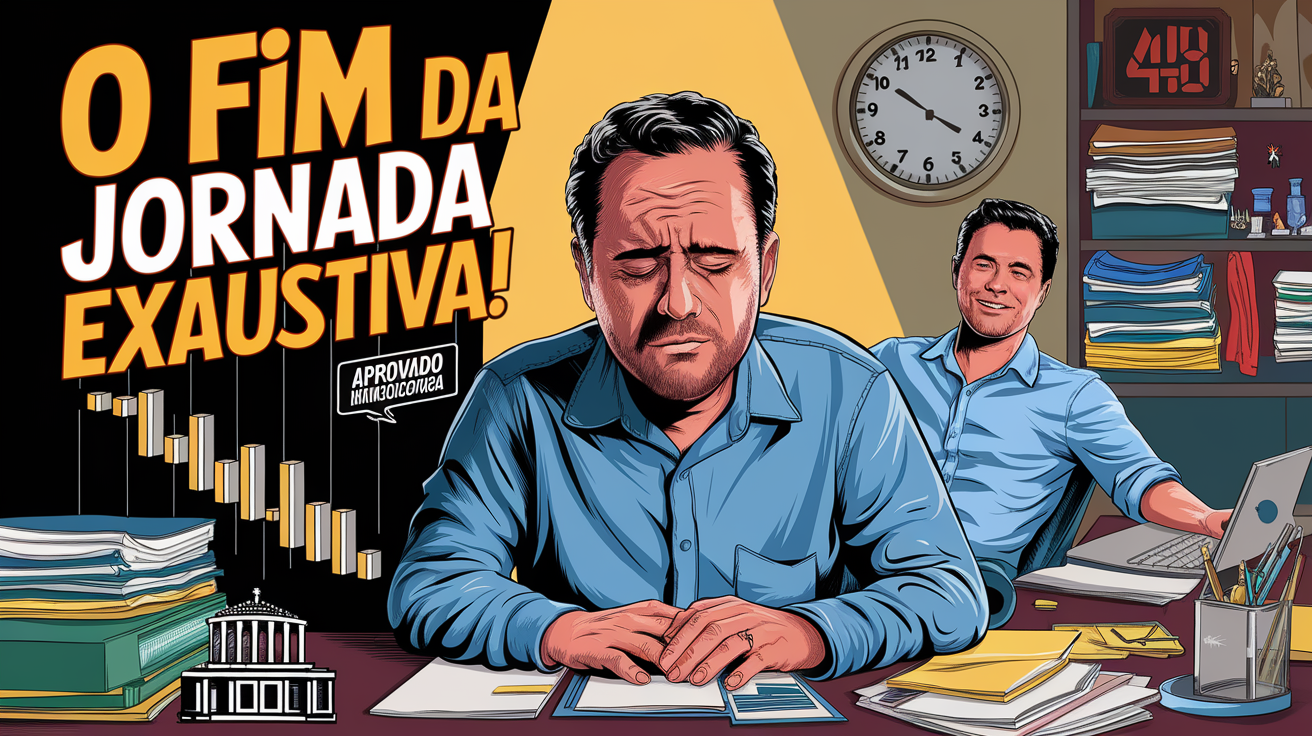


A Survey Reveals That 65% of Brazilians Demand a Shorter Workday! The PEC 4/2025 is Under Discussion, Proposing to Reduce to 40 Hours Per Week. While Experts Discuss Possible Economic Impacts, The Population Seeks a Balance Between Work and Personal Life. Are We On the Brink of a Revolution in the Labor Market?
The search for a balance between professional and personal life has intensified in Brazil in recent years. A recent survey by Nexus revealed that 65% of Brazilians support a reduction in working hours.
This data reflects a global trend of rethinking traditional work hours in favor of better quality of life.
Public Support for Reducing Working Hours
The Nexus survey highlighted that support for reducing working hours is even more pronounced among young people aged 16 to 24, reaching 76%.
-
European Country Achieves 100% Glass Recycling and 52% Municipal Waste Recovery, Highlighting Brazil’s Challenges Despite Selective Collection in 60.5% of Cities

-
Facing extreme heat, floods, and disappearing fertile soil, Pakistan launches a “10 Billion Tree Tsunami” in three years to combat desertification, protect rivers, create green jobs, and make reforestation a national survival priority.

-
Cape Verde’s World Cup Surprise: Betting on Electric Cars, a 5 MW Solar Plant, and an Ambitious Plan to Transform Energy for 600,000 Residents

-
Man Finds 1,469 Ancient Roman Silver Coins While Metal Detecting in Romania


Among the unemployed, 73% are in favor of the measure, while 66% of current workers also support the change.
These numbers indicate significant demand for changes in labor laws to accommodate shorter workdays.
Proposed Constitutional Amendment (PEC) Under Discussion
In response to this public demand, the PEC 4/2025 is currently being discussed in the Federal Senate, proposing to reduce the maximum weekly work hours to 40, with a limit of 8 hours per day, spread over up to 5 days a week. The paid weekly rest would preferably be on Saturdays and Sundays.
Economic Impacts of Reducing Working Hours
The Getulio Vargas Foundation, through the Brazilian Institute of Economics (FGV Ibre), analyzed the possible economic effects of reducing the workday.
The reduction to 40 weekly hours could result in a 2.6% loss in economic output, while a reduction to 36 weekly hours could lead to a 7.4% loss.
These data suggest that a more drastic reduction in working hours could have a significant effect on the Brazilian economy as a whole.
Variations in Support for Reducing Working Hours
The survey also revealed interesting variations in support for reducing working hours among different segments of the population.
Among those in the labor market (formal or informal), 66% are in favor. Among the unemployed, 73% support the reduction.
Among young people aged 16 to 24, 76% are in favor of the measure. These data suggest that support for reducing working hours is even more pronounced among young people and those outside the labor market.
Debate on the 6×1 Shift
The 6×1 shift, in which the worker works six days and rests one, has been the target of criticism. A Datafolha survey showed that 64% of Brazilians advocate for the end of this shift.
Moreover, 70% of respondents believe that the ideal workweek should be five days, while 17% prefer six days and 7% opt for four days.
Arguments in Favor of Reducing Working Hours
Supporters of reducing working hours present several arguments to justify the change:
- Improvement of Quality of Life: A shorter workday would allow workers more time for personal and family activities, contributing to overall well-being.
- Increase in Productivity: Less stressed and more rested employees tend to be more productive in their roles.
- Job Creation: The need to cover the reduced hours could lead to the creation of new jobs in the labor market.
- Alignment with International Trends: Countries like Spain have adopted measures to reduce working hours, aiming to balance professional and personal life. elpais.com
Arguments Against Reducing Working Hours
On the other hand, critics of the proposed reduction in working hours present important counterarguments:
- Increased Costs for Companies: The need to hire more employees or pay for overtime could raise operational expenses.
- Reduction in Competitiveness: Brazilian companies could lose market share internationally due to higher costs.
- Risk of Increased Informality: Employers might opt for informal hires to evade additional costs.
- Possible Decrease in Workers’ Income: If salaries are adjusted proportionally to the reduction in hours, workers could earn less.
Final Considerations
The discussion about reducing working hours in Brazil is complex and involves multiple economic and social aspects.
While a significant portion of the population supports the measure aimed at improving quality of life, it is essential to carefully assess the economic impacts and the specifics of each sector before implementing significant changes in labor legislation.


É **** a ideia de que a redução da jornada de trabalho afeta negativamente a economia, no máximo iria afetar no curto prazo
Esse argumento é antigo e já fui usado até a exaustão
Absurdo esta visão que terá pontos negativos a redução da jornada se trabalho. Por favor estamos no século 21. Empresas milhonarias aos montes, pessoas super ricas e milhões super pobres. Óbvio que estes miseráveis de alma não querem diminuir. Como se mandasse em algo. Quem manda é o povo quem paga a conta e a vida boa dos políticos é o povo. Quem escolhe é o povo.