






 Portuguese
  Spanish


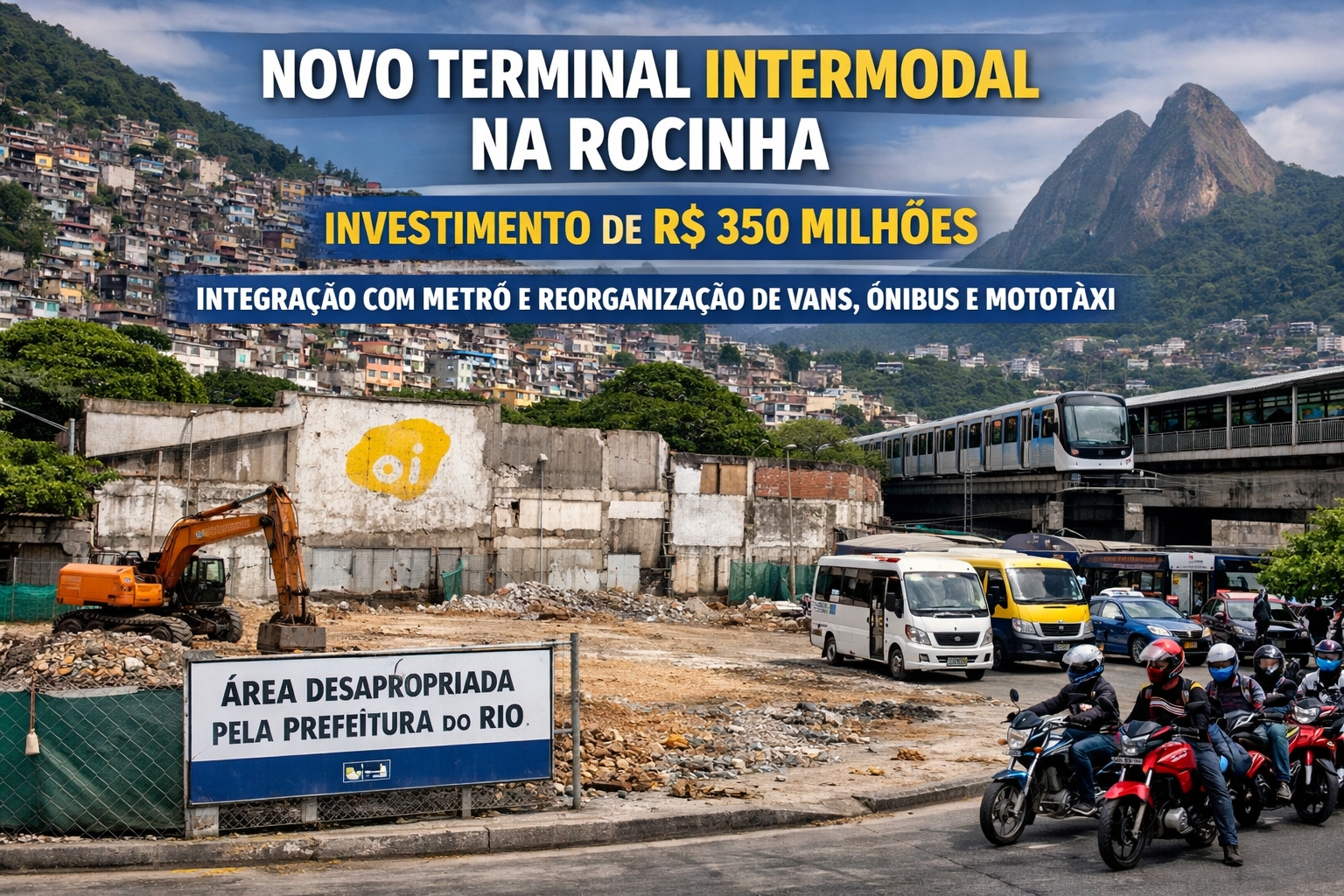


The City Hall of Rio Officializes the Expropriation of Property on Estrada da Gávea for the Construction of the New Intermodal Terminal in Rocinha. The Project Foresees the Reorganization of Vans, Minibuses, and Mototaxis, Integration with the Metro, and Million-Dollar Investments via PAC Periferia Viva.
The City Hall of Rio has taken a decisive step to change mobility in Rocinha. The Rio Decree No. 57.556 has been published, declaring a public utility for the expropriation of property located on Estrada da Gávea, at Largo das Flores.
The space, which previously housed a building used by the company Oi, will be allocated for the construction of the new intermodal terminal, considered a strategic piece within the million-dollar investment package of PAC Periferia Viva.
This measure is not isolated. It is part of a robust urbanization and infrastructure plan that totals around R$ 350 million in investments in the community, as disclosed by the City Hall of Rio and the Ministry of Cities during an official program presentation.
-
U.S. City Builds Tiny Home Village on Water Company Land to House 136 Homeless People: Inside the Social Housing Units

-
Woman Turns Shipping Container into Home, Embraces Rural Life to Cut Monthly Expenses to Just Over $330
-
France Revamps 530 Social Housing Units with Large Balconies and Glass Facades Without Demolishing Existing Buildings

-
Facing high rent, couple transforms parents’ garage into a fully functional apartment, creating a complete home at a fraction of the market cost.




The execution of the works will be under the responsibility of the Municipal Secretary of Infrastructure, while the institutional coordination involves the Federal Government, through the Ministry of Cities, in direct partnership with the municipality.
New Intermodal Terminal Promises to Reorganize Vans, Minibuses, and Mototaxis in Rocinha
The new intermodal terminal will still have its executive project developed, but there are already clear guidelines. The structure is expected to occupy approximately 3,000 square meters and will have organized areas for the boarding and disembarking of vans, minibuses, and mototaxis, three modes that currently operate with high intensity in Rocinha.
The proposal is to reorganize the flow, reduce traffic conflicts, and improve internal circulation. Currently, the transportation dynamics in the community occur in a dispersed manner, which creates bottlenecks during peak hours.
According to the Ministry of Cities, PAC Periferia Viva focuses on “promoting integrated urbanization, ensuring mobility, infrastructure, and quality of life in Brazilian peripheries.” This guideline fits directly with the terminal’s objective.
In addition to the operational area for transportation, the facility will have:
- Administrative space;
- Boxes designated for popular commerce;
- Support structure for urban cleanliness operations.
This means that the impact goes beyond mobility. The project also influences local economic organization and public services.
Integration with São Conrado Metro Strengthens Urban Connection
One of the central points of constructing the new intermodal terminal is the connection with the São Conrado metro station. The integration should facilitate movement between Rocinha and other regions of the city.
The expansion of integrated mobility is one of the historical goals of the City Hall of Rio, especially in areas of high population density. According to data from the Pereira Passos Institute, Rocinha is considered one of the largest communities in Latin America, which demands permanent structural solutions for transportation.
By organizing vans, minibuses, and mototaxis at a structured point, the trend is to improve road safety, enhance accessibility, and provide more comfort to passengers.
Expropriation of Property is a Strategic Step to Enable the Work
The expropriation of property on Estrada da Gávea is considered an essential step for the construction to materialize. Without legal possession of the area, the municipality could not begin implementing the infrastructure.
The Rio Decree No. 57.556 formalizes this legal condition and allows the administrative advancement of the project.
The use of legal instruments of public utility is common in large-scale urban mobility projects. As explained by the City Hall of Rio’s own portal, the declaration of public utility is a legal mechanism to ensure the execution of projects deemed to be in collective interest.
In Rocinha’s case, the interest involves the reorganization of local transportation, urban qualification, and metropolitan integration.
Million-Dollar Investments from PAC Periferia Viva Propel Urban Transformation
The package of R$ 350 million allocated to Rocinha does not only include the new intermodal terminal. The amount is part of a broader set of urbanization and infrastructure actions.
PAC Periferia Viva, resumed by the Federal Government, prioritizes territories with high social vulnerability and a historical deficit of investments. Official information from the program highlights that the actions include sanitation, mobility, slope stabilization, and public facilities.
The construction of the terminal is precisely within this axis of urban requalification.
By concentrating the boarding and disembarking of vans, minibuses, and mototaxis in a planned space, the City Hall of Rio seeks to reduce traffic conflicts, organize traffic, and elevate the standard of service offered to the population.
Expected Impact: Safer Mobility and More Efficient Circulation
The reorganization of transport modes within Rocinha can generate immediate reflections in the daily lives of the community.
Among the main expected impacts are:
- Reduction of informal stopping points;
- Improvement of traffic flow on Estrada da Gávea;
- Increase in safety for pedestrians;
- Greater integration with the metro system.
Urban mobility experts argue that integrated terminals help to rationalize transportation in dense areas, decreasing route overlap and operational conflicts.
Moreover, the presence of commercial boxes within the new intermodal terminal tends to stimulate the local economy, creating formal opportunities within a structured public facility.
Rocinha Enters a New Phase of Infrastructure
With the publication of the decree and the advancement of the property expropriation, the City Hall of Rio signals that the construction of the new intermodal terminal has moved from a promise to a concrete stage within the PAC schedule.
Estrada da Gávea, the central axis of Rocinha, is expected to become the strategic point of this transformation.
Now, the expectation revolves around the preparation of the detailed project and the effective start of the works.
The question that remains is: will this new structure truly transform the mobility of Rocinha or will it be just another point intervention?
Are you a resident of Rocinha or Rio de Janeiro? Do you believe that the construction of the new intermodal terminal on Estrada da Gávea will truly improve the transportation of vans, minibuses, and mototaxis in the region? Share your opinion in the comments and share this article with those who live this reality every day.








Deveria desapropriar a Rocinha, já que é tudo ****, ilegale e ****, e replantar a linda vegetação natural.