





 Portuguese
  English
  Spanish
  5 min of reading
  0 comments


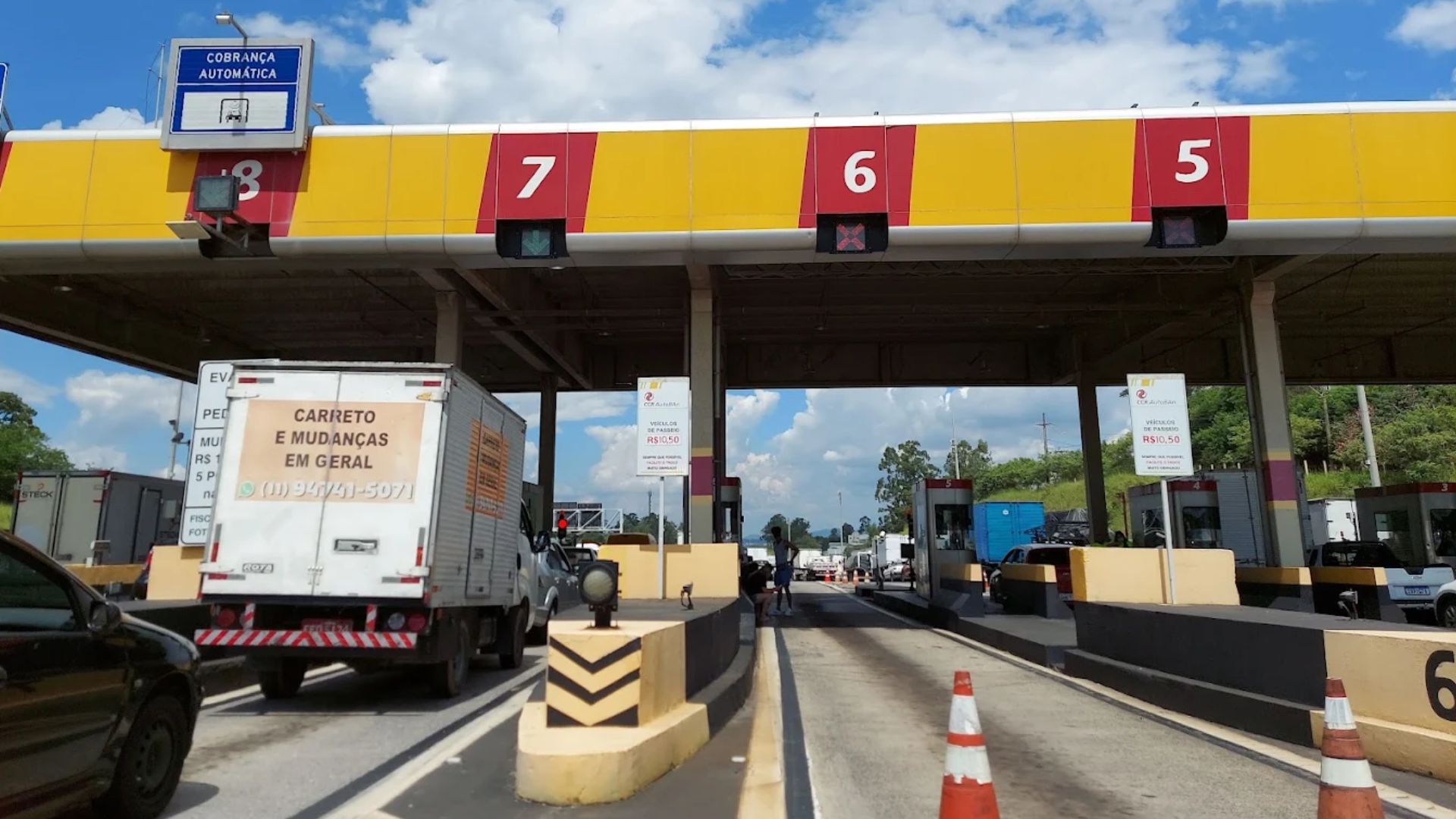
New Adjustment of the Most Expensive Toll in Brazil Surprises Drivers and Impacts Those Using the Highways of the Paulista Coast as of July 2025. Updated Values Reinforce the Trend of Rising Travel Costs.
The toll of the Anchieta-Imigrantes System (SAI), recognized as the most expensive in Brazil, will have a new adjustment starting July 1, 2025, as announced by the Regulatory Agency for Delegated Public Transport Services of the State of São Paulo (Artesp).
The amount charged at the main toll plazas, located on the Anchieta Highway (km 31) and the Imigrants Highway (km 32), will increase from R$ 36.80 to R$ 38.70, representing an increase of 5.16%.
This increase, which is already raising concerns among drivers, also extends to other tolls managed by the concessionaire Ecovias on important highways along the Paulista coast.
-
Aircraft maintenance has become one of the technical areas most pressured by the shortage of professionals in Brazil, even with salaries that can exceed R$ 7,500 in more specialized careers.

-
Electrotechnicians have become a rarity in Brazil, and the lack of qualified labor is already affecting factories, substations, industrial maintenance, and electrical networks, even with salaries reaching R$ 5,100 under the CLT regime; companies rely on new technicians to avoid operational blackouts.
-
Four years before Brazil launched PIX, India already had UPI, an instant payment system that today handles about 80% of the country’s digital retail and helped transform fintechs like Razorpay into billion-dollar companies.
-
BYD sues 37 Chinese influencers and places another 126 under surveillance in a defamation offensive accusing creators of spreading rumors about vehicle explosions and the automaker’s alleged financial instability.


Annual Adjustment Takes Inflation and Contracts Into Account
According to Artesp, the adjustment was calculated based on the inflationary recomposition for the period from May 2024 to May 2025, using the Broad Consumer Price Index (IPCA) as a reference.
The agency emphasizes that the update follows the contractual clauses established with the concessionaires responsible for the highways.
In 2024, the same toll started the year at R$ 35.30 and underwent an increase of 4.25%, reaching R$ 36.80, thus becoming, since then, the highest rate in the country.
Other Tolls Are Also Getting More Expensive
In addition to the Anchieta-Imigrantes System, the increase will also apply to the rates of other highways operated by Ecovias.
The percentage increases range between 5.16% and 6.86%, directly affecting those traveling on the Cônego Domênico Rangoni Highway (km 250) and the Padre Manoel da Nóbrega Highway (km 279).
With the new adjustment, the fare on the Cônego Domênico Rangoni rises from R$ 17.20 to R$ 18.30, an increase of 6.39%.
On the Padre Manoel da Nóbrega, the amount jumps from R$ 10.20 to R$ 10.90, an increase of 6.86%.
These figures reinforce the trend of rising travel costs on the São Paulo coast.
New Toll Values on the Main Highways in the Region
- Anchieta Highway (km 31): from R$ 36.80 to R$ 38.70 (5.16%)
- Imigrants Highway (km 32): from R$ 36.80 to R$ 38.70 (5.16%)
- Cônego Domênico Rangoni Highway (km 250): from R$ 17.20 to R$ 18.30 (6.39%)
- Padre Manoel da Nóbrega Highway (km 279): from R$ 10.20 to R$ 10.90 (6.86%)
Justifications for the Increase and Measures Taken
In an official statement, Artesp explained that the defined amounts considered the contractual rules for ordinary adjustments, as well as precautionary measures determined by the Secretary of Partnerships and Investments of the State of São Paulo (SPI).
These measures aim to mitigate potential economic-financial imbalances identified in seven stretches of highways granted to the private sector.
The main objective is to ensure the sustainability of the services provided, maintaining the quality of the roads and the safety of users.
Investments and Works on Conceded Highways
According to information from Ecovias, the concessionaire responsible for the Anchieta-Imigrantes System and other stretches, more than R$ 10 billion has been invested in the administered highways over the last 27 years.
For 2025, significant works are planned on the Imigrants Highway, including the paving of the plateau segment, between kilometers 11 and 30, and the lowland segment, from km 60 to km 70.
Interventions are also planned on the Imigrants Mountain, between kilometers 30 and 40, with an estimated completion in 2026.
The concessionaire also reported that approximately 70% of the roadway network of the Anchieta-Imigrantes System has already undergone structural revitalization works.
By December 2026, there are 625 kilometers left to be contemplated with improvements.
In the last 12 months, about 795 kilometers of lanes have been revitalized, covering, in addition to the Anchieta mountain stretch, the Padre Manoel da Nóbrega, Cônego Domênico Rangoni, and Baixada Interconnection highways, in both directions.
Impact on Drivers’ Pocket and Freight Transportation
The new toll adjustment on the Anchieta-Imigrantes System, regarded as the most expensive toll in Brazil, worries drivers who frequently use the highways for travel between the São Paulo Metropolitan Region and the southern coast of the state.
The financial impact affects not only light vehicle drivers but also freight transportation companies, buses, and truck drivers who routinely operate on the route, crucial for the movement of goods at the Santos Port, the largest in Latin America.
Data from the National Transport Confederation (CNT) shows that the increase in toll prices can have a direct effect on freight costs, influencing the prices of transported goods and, consequently, affecting the final consumer.
Traffic at Ecovias’ toll plazas is usually heavy, especially on holidays and during summer seasons, when thousands of tourists head to the São Paulo beaches.
Anchieta-Imigrantes System: Importance and Challenges
Inaugurated in 1974, the Anchieta-Imigrantes System consists of a network of roads connecting the city of São Paulo to Baixada Santista, handling a large portion of vehicle traffic between the São Paulo plateau and the coast.
The stretch is recognized for the complexity of its engineering, especially in the mountain areas, and for receiving constant investments in road safety, signaling, and monitoring technology.
Ecovias states that the funds collected from tolls are allocated to maintenance, modernization, and expansion of highway infrastructure, ensuring better traffic conditions, reducing accidents, and providing prompt assistance in emergencies.
The company also highlights that a portion of investments is directed toward environmental programs and social responsibility actions in the region.
Expectations for the Coming Years
With the new adjustment, the toll of the Anchieta-Imigrantes System remains the most expensive in Brazil in absolute values for passenger vehicles.
The trend, according to sector specialists, is that annual adjustments will continue, keeping pace with inflation and the needs for infrastructure investments.
Artesp informs that contractual reviews are conducted periodically to adjust the amounts charged to the economic reality and legal requirements, aiming at the sustainability of the concession model.
The increase in tolls also reignites the debate on the costs of mobility in the state of São Paulo, especially in a scenario of rising prices of fuel and essential services.
In light of this scenario, how can drivers prepare for the impact of these adjustments on family budgets and travel planning?
What alternative would be more viable to reconcile the need for road maintenance with tariffs that do not weigh heavily on users’ wallets?




-

-

2 people reacted to this.