Portuguese
  Spanish


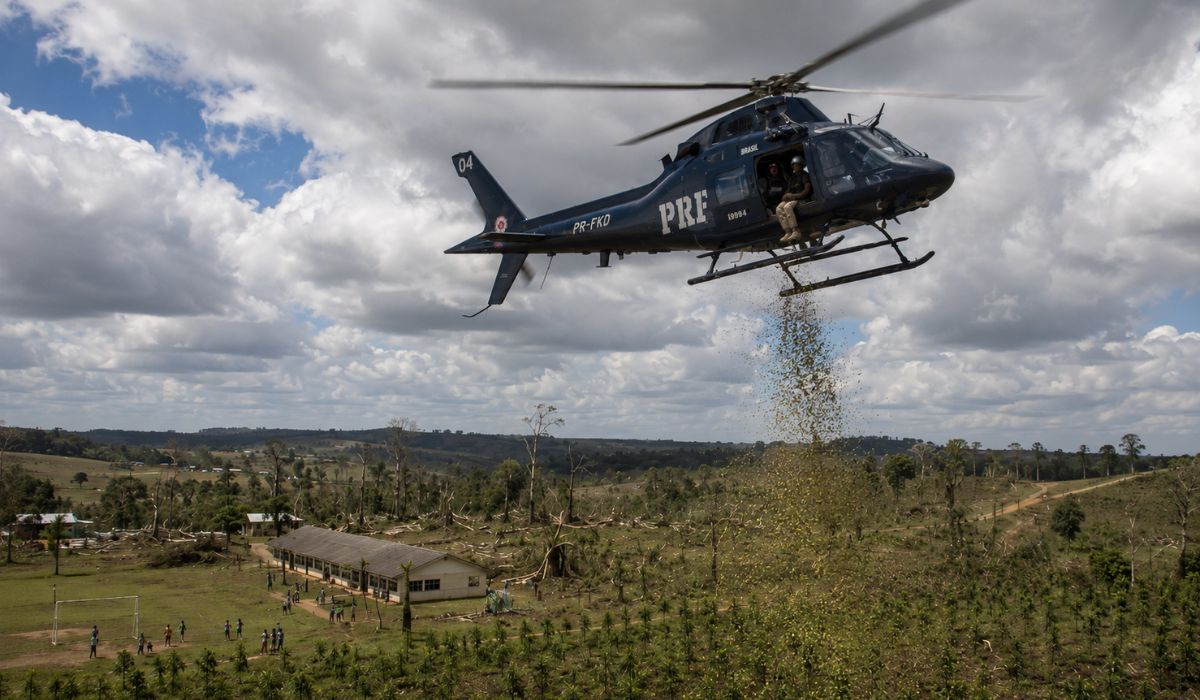

Operation in Paraná used PRF helicopter to drop juçara palm seeds in areas affected by tornadoes, in an action that combines Atlantic Forest restoration, scientific research, and recovery of rural territories.
A Federal Highway Police helicopter dropped 4 tons of juçara palm seeds over the Herdeiros da Terra de Primeiro de Maio community in Rio Bonito do Iguaçu, Paraná, during a reforestation action carried out on June 3, 2026.
The operation was part of the 4th Nature Journey, an event held from June 1 to 6 in rural, indigenous, and quilombola areas of the state, with activities focused on environmental restoration and planting of native species.
Aerial seeding in Paraná
The area chosen for seeding is in a community affected by the tornadoes recorded in Paraná on November 7, 2025.
-
Egypt Discovers 18 Ancient Tombs with Gold Tongues, Unveiling Unusual Funeral Rituals and Amulets Believed to Give Voice to the Dead

-
Nigeria Dumps 120 Million Tons of Sand into Atlantic to Build Massive City with 8.4 km Sea Wall for Protection Against Ocean Waves and Erosion
-
German Engineer Developed Diesel Engine Running on Vegetable Oil Decades Before Electric Cars Became Popular; Can This Forgotten Idea Work in 2026?

-
James Webb Telescope Uncovers Unexpected Clues on Mysterious Moon, Potentially Redefining Planetary Origins




According to the Paraná Environmental Technology and Monitoring System, Simepar, the phenomenon that passed through Rio Bonito do Iguaçu was classified as F4 on the Fujita scale, following a technical report released on November 26, 2025.
The document confirmed the occurrence of three tornadoes that hit 11 municipalities in Paraná.
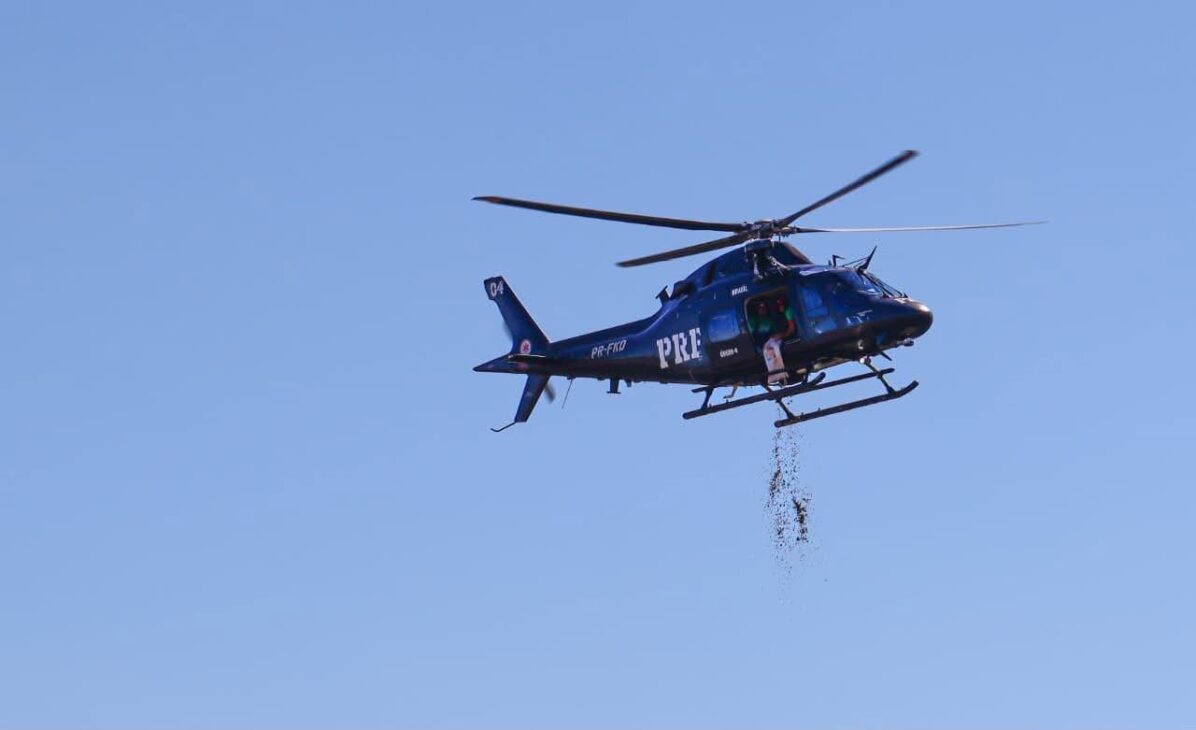
The operation used the PRF aircraft to disperse seeds in hard-to-reach areas, in a technique known as aerial seeding.
According to the corporation, the helicopter was used to drop 18 tons of juçara palm seeds between June 1 and 6, 2026.
The Nature Journey program, announced before the event, planned for the seeding and distribution of 30 tons of seeds in Paraná.
The use of the term “green rain” visually describes the fall of seeds dropped from above, but the action follows a technical restoration logic: to increase the dispersion of a native species of the Atlantic Forest in places where manual planting would require more time, travel, and access to irregular terrain.
In the case of Rio Bonito do Iguaçu, the activity was also associated with the recovery of areas affected by extreme weather events.
Why the juçara palm was used
The juçara palm, scientifically named Euterpe edulis, is a species native to the Atlantic Forest and appears in restoration initiatives due to its ecological function.
According to the Paraná Water and Land Institute, the seed dispersal of the species aims to intensify the presence of the plant in forest areas, including sections where access by land is limited.
The species is also mentioned by environmental agencies as important for biodiversity.
According to ICMBio, the juçara palm is considered a keystone species for the Atlantic Forest, as its fruits and seeds serve as food for birds and mammals.
Among the animals cited by the agency are toucans, jacutingas, guans, thrushes, bellbirds, agoutis, tapirs, and squirrels.
This relationship with the fauna helps explain the scientific interest in the plant.
By feeding on the fruits, some animals also contribute to seed dispersal throughout the forest.
Aerial seeding does not replace this natural process, but it can increase the number of seeds placed in the field in planned restoration actions, according to the strategy adopted by environmental institutions and organizations involved in the journey.
Another factor considered is the conservation status of the species.
The juçara is historically associated with palm heart extraction, an activity that causes the plant’s death when done predatorily.
Studies and technical materials on the species point to habitat loss, forest fragmentation, and palm heart exploitation among the pressures affecting its occurrence in Atlantic Forest areas.


Science follows the restoration of the Atlantic Forest
The aerial seeding of the juçara palm in Paraná has been monitored by educational and research institutions since previous editions of the Nature Journey.
According to the PRF, since 2023, 43 tons of seeds of the species have been launched in indigenous communities, rural settlements, and quilombola communities, with plant growth monitored by a research project at the Federal University of the Southern Border.
On the same day as the seeding in Rio Bonito do Iguaçu, UFFS, at the Laranjeiras do Sul campus, held a conference to present research results on the technique.
The meeting brought together researchers, representatives of public institutions, and members of the communities involved in reforestation actions, according to information released by the MST.
The report by Brasil de Fato on the launch of the 4th Nature Journey cited monitoring data of areas sown in previous years, with a record of 10,000 to 11,000 seedlings per hectare in sections monitored after the first sowing, carried out in July 2023.
As the data was presented in a report and not in a scientific article located during the check, it should be treated as information attributed to the publication and the researchers cited by it.
Beyond germination, the technical interest is in observing how the seedlings behave in different types of areas, levels of vegetation cover, and soil conditions.
Aerial dispersion expands the reach of sowing, but the success of restoration depends on factors such as humidity, luminosity, presence of remaining vegetation, animal pressure, conservation of the surroundings, and continuity of monitoring.
Community hit by tornado received native seedlings
The activity in the Herdeiros da Terra de Primeiro de Maio community had as a support point the Itinerant School Herdeiros da Terra de Primeiro de Maio.
In addition to the launch of 4 tons of seeds, the program included a task force for planting more than 1,700 native tree seedlings, as announced by the MST.
During the opening of the meeting, Ivete Lopes de Mello, a member of the community’s coordination, thanked the solidarity received after the tornadoes and linked the action to concerns about the future of the children.
“We see the climate situation today, and this has to do with the future for everyone, especially the children,” she stated, according to a report published by the movement.
Fernando César Oliveira, superintendent of the PRF in Paraná, also participated in the agenda.
In information released by the corporation, he stated that the aircraft used in the sowing is the same one available to the aeromedical service in Greater Curitiba, supporting emergency care, patient transport, and integrated actions with state forces.
Juçara can unite reforestation and sustainable production
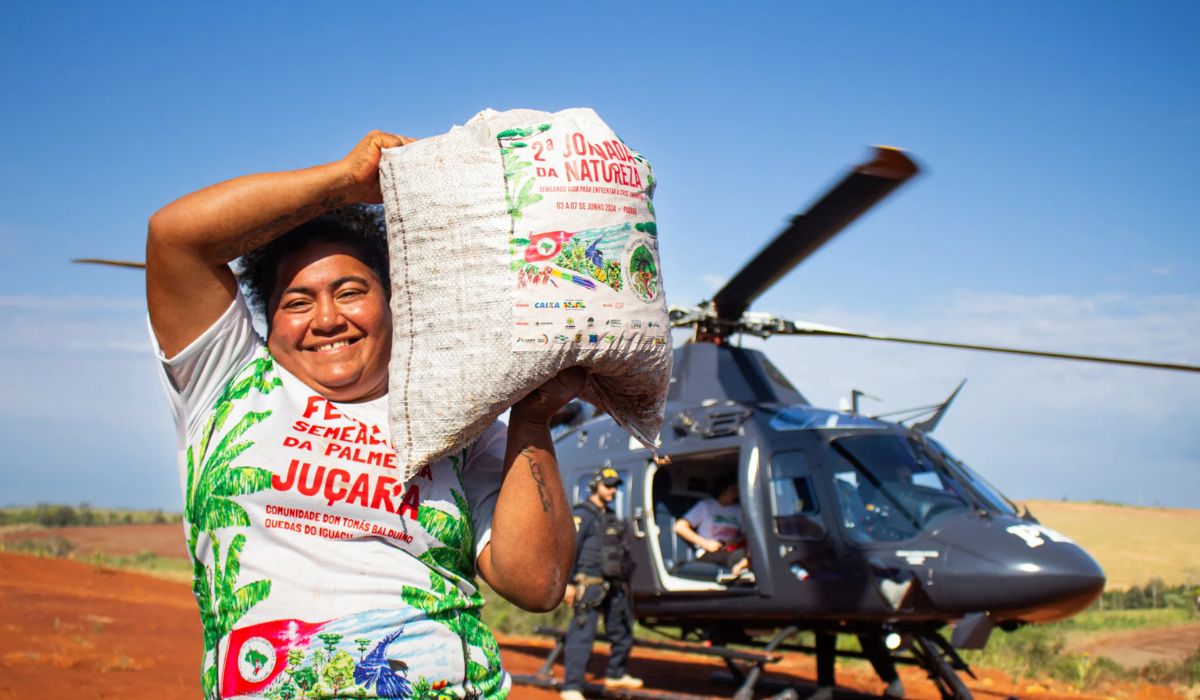
The juçara palm also has economic potential through its fruits, which can be processed without cutting down the plant.
According to technical materials on the species, pulp production is an alternative associated with the sustainable use of the tree, in contrast to heart of palm extraction, which eliminates the exploited individual.
This point was addressed during the Nature Journey by representatives of universities, public agencies, and entities linked to agroecology.
The Vice-Rector of the Federal University of Paraná, Camila Fachin, advocated during the event for the integration between public institutions, universities, and communities.
According to the MST, she linked the reforestation action to agroecology practices, environmental preservation, and food production.
In the same agenda, Lígia Pupato, advisor to the Ministry of Women, announced the creation of a Decentralized Execution Term in partnership with UFFS.
According to the MST, the planned investment is R$ 2.6 million for projects of economic organization of women affected in the region.
“We are sowing life,” declared Lígia during the event, according to the publication.
The announcement was included in the context of the article because the journey was not limited to seed launching.
The program also involved debates, cultural activities, environmental education, seedling planting, and actions related to productive organization in communities affected by environmental and climate damage.
Agrarian Reform and Environmental Recovery
The community Herdeiros da Terra de Primeiro de Maio is located in a region linked to agrarian reform in Paraná.
According to the MST, the occupation of the area began in April 1996, when families occupied lands associated with the former Giacomet Marodin timber company, now Araupel.
The movement claims that the region, once marked by the monoculture of pine and eucalyptus, began to house peasant communities.
In January 2026, still according to the MST, the federal government announced the formalization of about 33 thousand hectares of land linked to Araupel.
The measure would serve approximately 2 thousand camped families in the communities Dom Tomás Balduíno, Araucária, Nova Vitória, and Herdeiros da Terra de Primeiro de Maio.
As the verification did not find, in official sources from Incra or the federal government, the announcement with all these details, the information remains attributed to the movement.
Nilton Bezerra Quedas, a representative of Incra cited in the original publication, advocated that the future settlement be organized based on agroecology, agroforestry, and environmental preservation.
According to him, the proposal includes recovering environmental liabilities left by timber exploitation and structuring the area for food production and conservation.

The 4th Nature Journey gathered MST, PRF, universities, environmental agencies, research institutions, cooperatives, and entities related to agroecology.
The program passed through Nova Laranjeiras, Quedas do Iguaçu, Rio Bonito do Iguaçu, Guarapuava, and Adrianópolis, with aerial seeding, seedling planting, field activities, and environmental training.
In the scientific scope, the operation shows how seed dispersal techniques can be used in ecological restoration projects when there is a native species, territorial planning, and subsequent monitoring.
In the local scope, the action was presented by its organizers as part of a process of recovering areas affected by tornadoes, environmental degradation, and a history of intensive land use.
The continuity of monitoring will be the main data to measure the effects of the seeding.