Portuguese
  Spanish


New Zealand Scientists Reveal a Unique Atlas with Microscopic Gold Particles on the South Island Beaches, Offering Clues About the Geological History of the Country
On the beaches of the South Island of New Zealand, what once seemed like just white sand now reveals an unexpected shine. Scientists from the University of Otago have released detailed images of tiny gold particles scattered along the country’s east coast.
The study represents the first meticulous documentation of these golden traces, creating the world’s first “atlas” of beach gold deposits.
The images show particles about 10 micrometers wide — one-fifth the thickness of a human hair. Despite being minuscule, these samples offer important clues about the region’s geological past.
-
Berries, Strawberries, and Blueberries Could Transform Agriculture in Northeastern Brazil, New Tests Reveal

-
Danish Resident Discovers Six Viking Gold Bracelets Weighing 762.5 Grams, Third Largest Gold Treasure in Denmark

-
Over 200 Cities in Southern Brazil on Storm Alert as Cyclone Near Uruguay Brings Heavy Rain, Hail, and Winds Up to 100 km/h

-
Archaeologists Discover 2,300-Year-Old Beer in Sealed Bronze Vessel from Ancient Chinese Tomb



A Map to Understand the Earth
The new atlas presents a comprehensive view of beach gold in different scenarios. The researchers analyzed the shapes and sizes of the particles, considering elements such as erosion, sediment supply, and tectonic movements.
This combination of factors provides a rare opportunity to better understand how the Earth’s surface has been shaped over time.
According to the study’s authors, the geological diversity of the South Island creates a wide variety of scenarios, even in a relatively small area. This allows for comparisons of the data collected with other locations around the world, observing similarities in geological processes and mineral deposits minerals.
“This wide variety of scenarios arises due to highly disparate geological processes and histories within the small area of New Zealand’s South Island. Consequently, comparisons between observations in this atlas and locations elsewhere in the world may be possible by observing the characteristics of the various scenarios described here,” noted the researchers.
Invisible Beauty to the Naked Eye
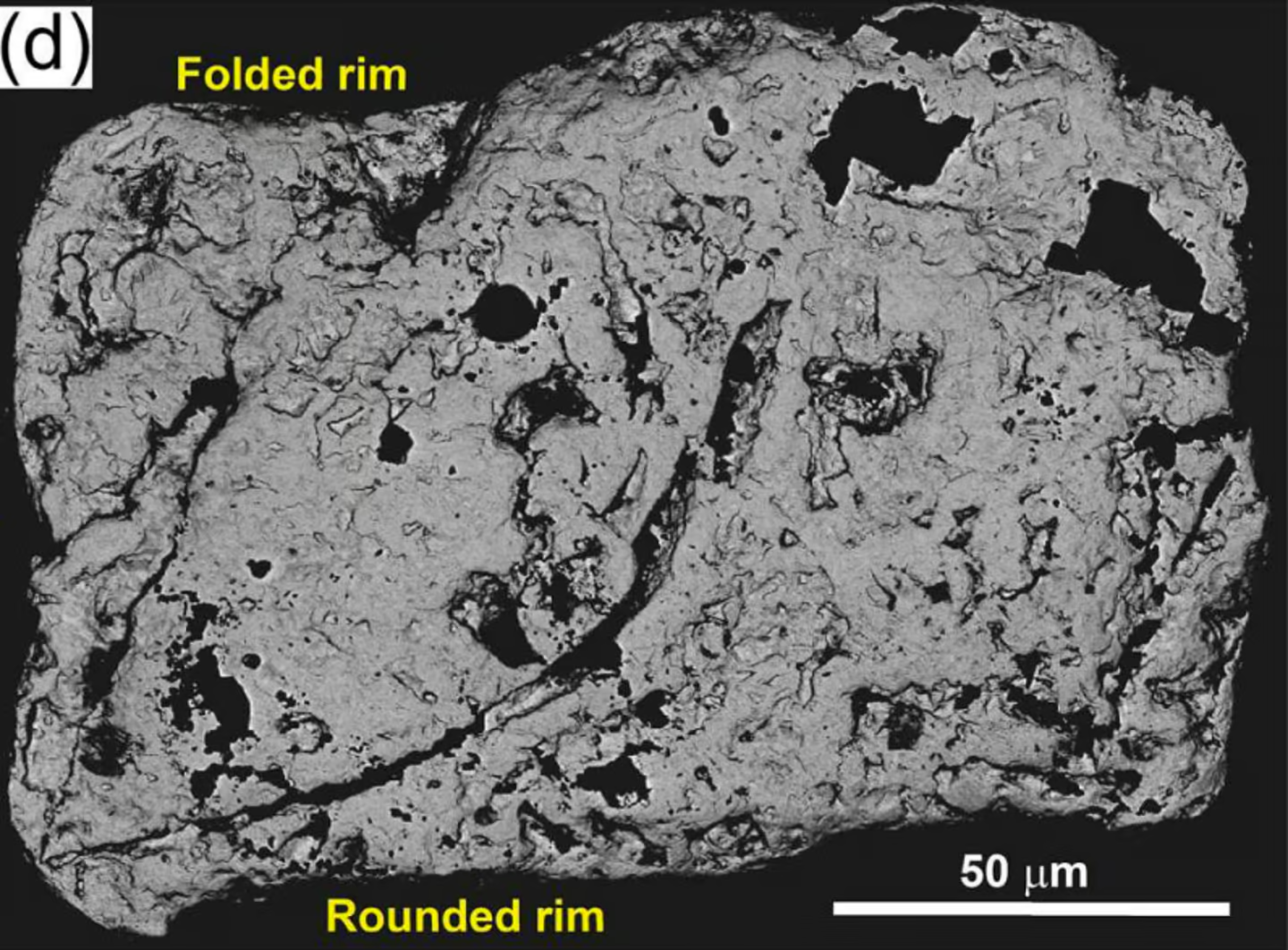
In addition to its scientific value, the study also has a striking visual aspect. The images, taken with an electron microscope, reveal a beauty that would normally go unnoticed. Small golden spots that, even invisible to the naked eye, tell a deep story about the Earth.
The researchers emphasize that, despite the shine, there’s no point in planning a trip expecting to find treasures. The particles are so small that it would be practically impossible to gather them in sufficient quantity for any practical use. One of the authors jokingly mentions that, in trying to collect this gold, a person might end up looking like Gollum, the fantasy character.
Memories of the Gold Rush
During the gold rush, the Māori indigenous population showed little interest in the precious metal. Nevertheless, this period was decisive for the country’s development. However, the growth driven by mining also had significant costs for local indigenous communities — something the study makes a point of recognizing.
With information from New Atlas.