Portuguese
  Spanish


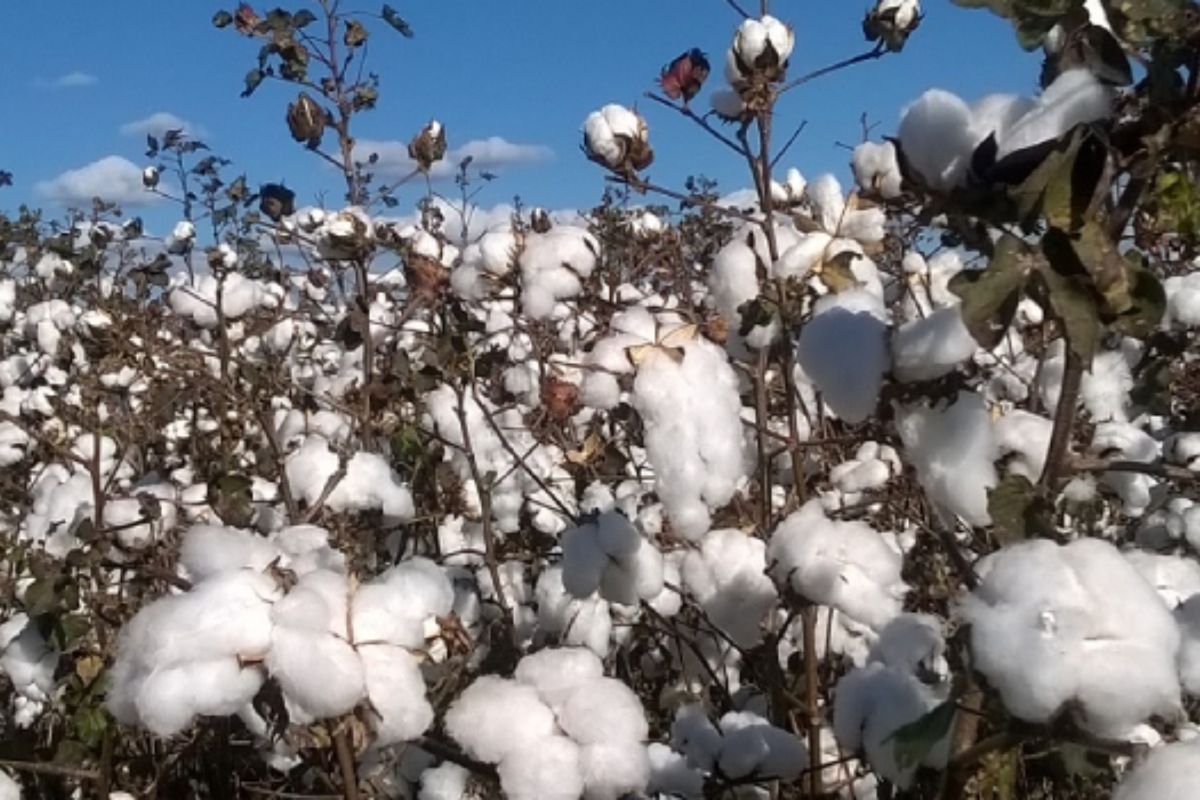

With a Focus on Sustainability and Innovation, Cotton Production in Minas Gerais Grows with Tax Incentives and Programs that Strengthen Producers and Textile Industries Across the State
The cotton production in Minas Gerais has achieved significant results in recent years, consolidating the state as one of the main hubs of national cotton production, according to an article published.
According to official data, the volume harvested rose from 92.6 thousand tons in 2018 to 145.3 thousand tons projected for the 2025 harvest, a growth of 57%.
This advancement directly reflects the actions of the Government of Minas, implemented through the Minas Gerais Cotton Culture Incentive Program (Proalminas), in partnership with the Minas Gerais Association of Cotton Producers (Amipa).
-
Bangladeshi Farmers Use Bamboo Levers to Pump Thousands of Liters of Water Daily Without Engines or Electricity

-
Brazilian Forests Could Expand by an Area Twice the Size of Switzerland by 2035, but Agricultural Sector Holds the Key, Study Finds

-
Brazilian Student Develops Solar-Powered Agricultural Machine Capable of Processing 250 Kilograms per Hour

-
Brazilian Farmer’s Viral Video on Onion Prices Opens New Income Opportunities Online


On November 6, the Secretary of State for Agriculture, Livestock and Supply (Seapa) certified 34 textile industries that actively participated in the program, recognizing the commitment of the sector to enhancing the production chain.
Proalminas has proven to be a model of public policy that combines economic competitiveness, tax incentives, and sustainability, creating an ecosystem that benefits both rural producers and the industry.
Tax Incentives for Textile Industries in Minas Gerais Expand Competitiveness and Ensure Income for the Producer
One of the pillars of Proalminas is the tax benefit granted to industries that purchase Minas cotton, reducing the tax burden on the industrialized product.
This measure strengthens local commercial relationships and ensures better negotiation conditions for the farmer.
The Secretary of Agriculture, Thales Fernandes, highlights that the resources from the Algominas Fund have ensured significant advances in productivity and fiber quality.
According to him, since 2003 the program has contributed to a “virtuous circle” that benefits the entire chain from the field to the final fabric.
The result is a more stable market, with prices above average and high-quality raw materials.
Furthermore, the cotton production in Minas Gerais has encouraged an increase in planted area, which now reaches 33 thousand hectares, with an average productivity of 4.38 tons per hectare.
Support Programs for Cotton Producers Strengthen the Productive Chain of the Sector in the State
In addition to tax incentives, Proalminas provides technical training, access to modern technologies, and marketing opportunities.
During the third Panel of the Textile Chain, promoted by Seapa in partnership with Amipa, producers and industry representatives discussed challenges and market trends.
One of the highlights was the improvement in fiber quality, noted by the senior coordinator of the Better Cotton Initiative (BCI), João Rocha.
He emphasized that, since the program’s inception, there has been a significant reduction in off-standard samples: from 12% in the 2010/2011 harvest to only 0.4% in 2018/2019.
This evolution demonstrates how the cotton production in Minas Gerais is aligned with sustainable practices and high technical performance.
The Productive Chain of Brazilian Cotton Invests in Sustainability and Technological Innovation in Cotton Production
The event also addressed the impacts of tax reform and the prospects for exporting Brazilian cotton, presented by the president of the National Association of Cotton Exporters, Dawid Wajs.
Another relevant point was the action of the “I Am Cotton” movement, created in 2016 at São Paulo Fashion Week, which seeks to promote the natural fiber produced in the country and encourage conscious consumption.
These initiatives reinforce the state’s commitment to cotton production in Minas Gerais, combining competitiveness with environmental responsibility.
For the sector, continuous investment in technological innovation in cotton production is essential to enhance productive performance and ensure long-term sustainability.
Thus, Minas consolidates itself as a national reference in quality, efficiency, and agricultural management.