Portuguese
  Spanish


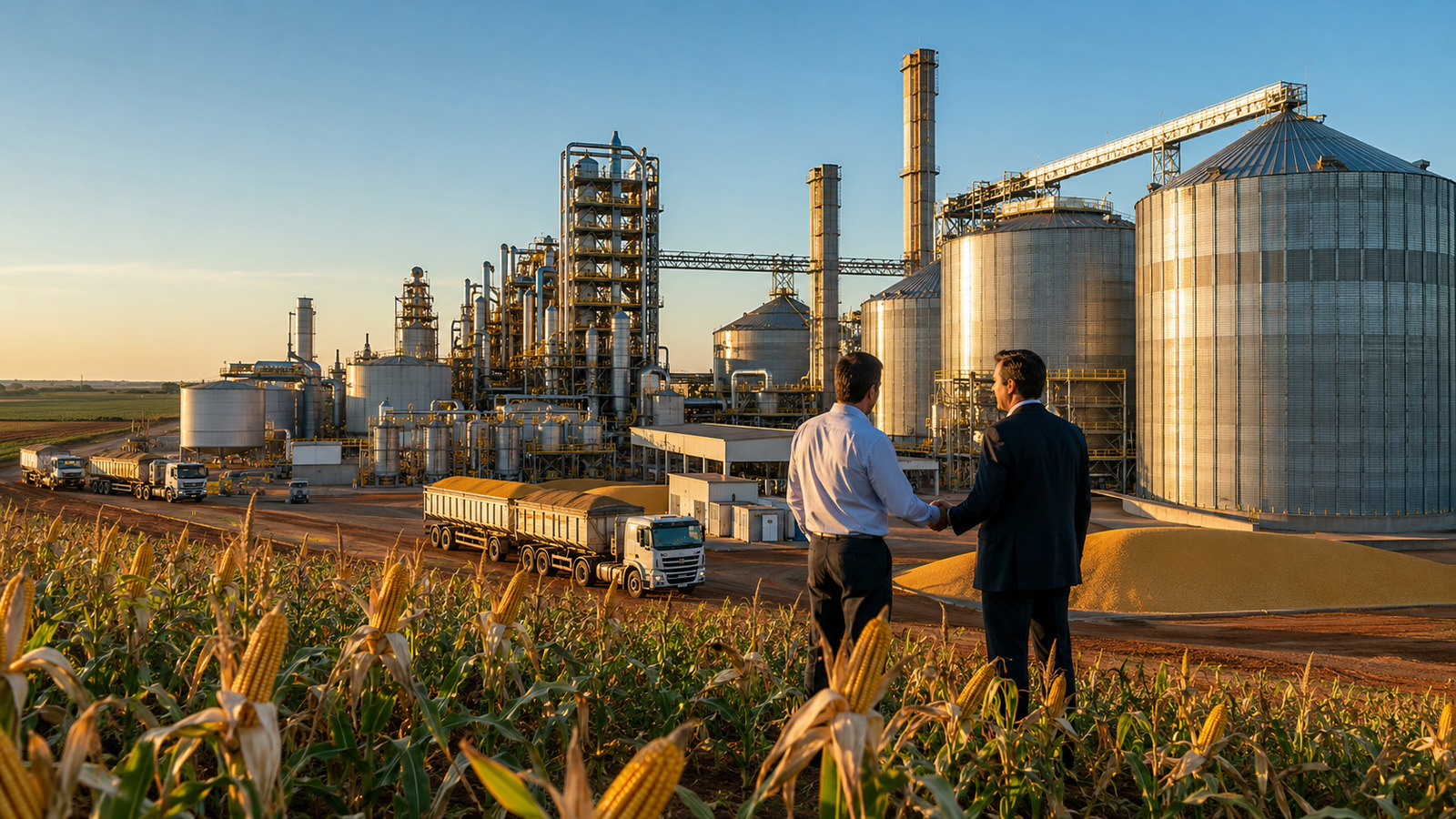

Purchase of 40% of FS by AMAGGI reinforces the advancement of corn ethanol in Mato Grosso, brings logistics, production, and exports closer, and expands the competition for low-carbon intensity biofuels
The purchase of 40% of FS by AMAGGI, announced this Tuesday (13), places one of the largest agribusiness companies in Brazil at the center of the expansion of corn ethanol and reinforces the advancement of biofuels in Mato Grosso.
According to data from Brazil Journal, AMAGGI will pay about US$ 1 billion for 40% of FS, which has an annual production capacity of 2.6 billion liters of corn ethanol.


Operation takes AMAGGI to a new segment
The operation was filed with the Administrative Council for Economic Defense (Cade) and brings together two companies with strong operations in Mato Grosso. AMAGGI, founded by the Maggi family, expands its industrial presence in the sector.
-
Small Farm in Brazil’s Minas Gerais Produces 403 Liters of Milk Daily, Sets Benchmark for Rural Producers

-
Man Revives 1930s Abandoned Trout Farm, Learns from Scratch, and Earns $1.1 Million Annually Selling Fish to Michelin-Starred Restaurants

-
Bangladeshi Farmers Use Bamboo Levers to Pump Thousands of Liters of Water Daily Without Engines or Electricity
-
Brazilian Forests Could Expand by an Area Twice the Size of Switzerland by 2035, but Agricultural Sector Holds the Key, Study Finds




Traditionally associated with the soybean, corn, and cotton chains, the company enters a sector seen as promising. The purchase of a stake in FS marks a significant change in its operational strategy.
FS was a pioneer in Brazil in the production of corn ethanol and also operates in animal nutrition. The company has consolidated itself through industrial efficiency and low carbon intensity.
Partnership brings together logistics and international capital
More than a corporate acquisition, the agreement brings the Summit Agricultural Group, the American group controlling FS, closer to the logistical, commercial, and productive structure of AMAGGI, pointed out as the largest Brazilian grain and fiber company with 100% national capital.
Blairo Maggi, shareholder and one of the founders of AMAGGI, stated he is confident in the alignment of values and execution capacity that underpin the business.
Bruce Rastetter, founder of the Summit Agricultural Group, highlighted the synergies between the companies and stated that the partnership should take FS to the next level.

Corn ethanol gains strength with industrialization
Behind the scenes, the assessment is that the agreement accelerates the vertical integration of the corn supply chain. In addition to agricultural production, agro groups are advancing in industrialization and exportation of added value.
The companies reported that the partnership should generate strategic gains in corn sourcing, logistics, and exports.
The CEO of FS, Rafael Abud, stated that the agreement comes at a decisive moment for the expansion of the corn ethanol industry in Brazil. He cited global decarbonization as a source of opportunities.
According to Abud, the arrival of AMAGGI significantly strengthens FS’s competitiveness. On the AMAGGI side, CEO Judiney Carvalho said that entering the segment had been studied for years.
FS was chosen for alignment
Judiney Carvalho stated that the choice of FS was due to the strategic alignment between the companies and the growth potential of the biofuels market, reinforcing a strategy already evaluated internally.
The operation also highlights the role of Mato Grosso in the expansion of corn ethanol. The state appears as a leader in the growth of this industry, driven by the second corn crop.
In recent years, the sector has moved from being a regional bet to occupying a strategic position in Brazilian agribusiness, attracting national and international groups linked to biofuels, energy, and animal nutrition.
Co-products expand the plant model
The advancement of flex plants and corn industrialization has changed the profile of the Brazilian production chain. The grain has gained value within the country itself, with the production of fuel, DDG/DDGS, corn oil, and bioenergy.
The model combines biofuels and co-products used in animal feed. This structure increases the profitability of operations and strengthens the interest of companies in different agribusiness fronts.
The global pressure for decarbonization and the search for renewable fuels with lower carbon intensity support the sector’s growth vision. In this scenario, AMAGGI’s entry into FS reinforces the consolidation of corn ethanol.
The movement also fuels expectations of alliances, mergers, and investments, in a race for market consolidation and the dominance of a chain considered fundamental for the country’s energy and economic future.
With information from Compre Rural.