






 Portuguese
  Spanish
  3 min of reading
  0 comments


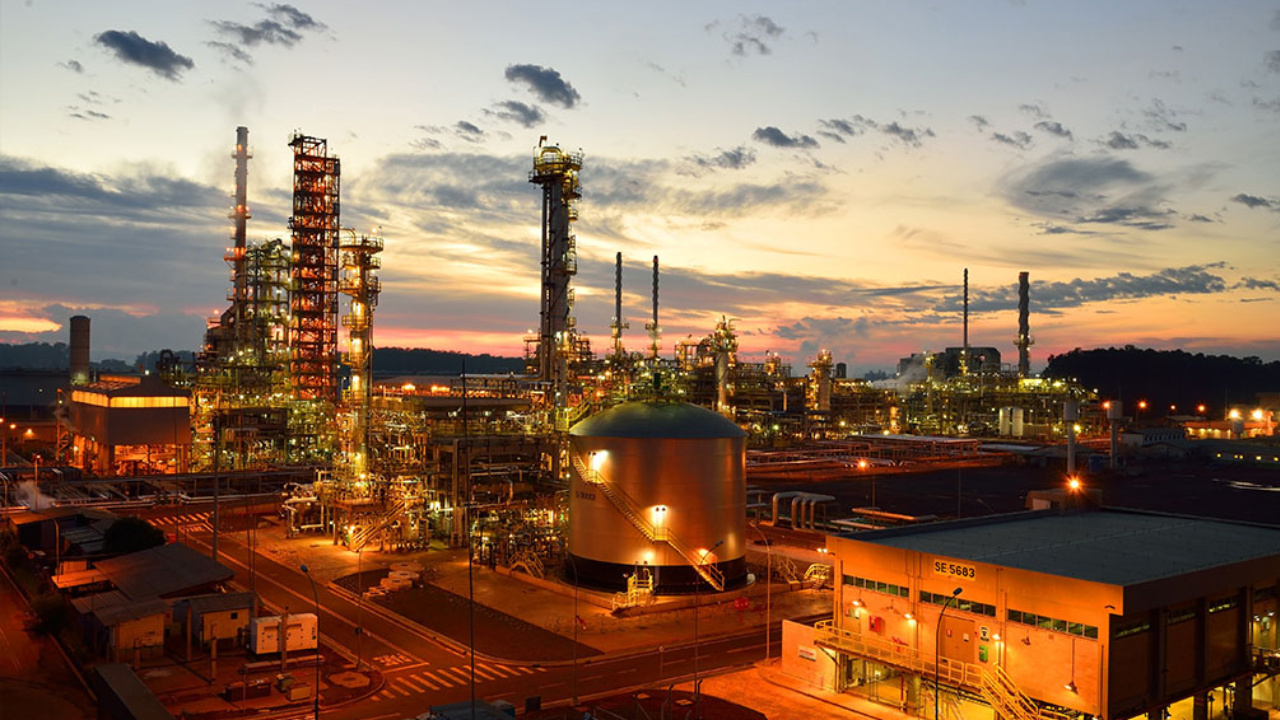
Oil Refining Production at Replan Accelerates in the Second Semester of 2025, Surpassing 2024 Performance and Reinforcing the Strategic Role of the Refinery in National Supply.
The production of petroleum derivatives at the Paulínia Refinery (Replan) showed a consistent recovery throughout 2025. After a start to the year marked by performance below that recorded in 2024, the unit accelerated its pace in the second semester and managed to surpass, for the first time this year, the accumulated volume from the previous period.
According to data from the National Agency of Petroleum, Natural Gas, and Biofuels (ANP), between January and November, 22.1 billion liters of petroleum derivatives were produced. This result represents an increase of 0.2% compared to the first 11 months of 2024, signaling an operational turnaround throughout the year.
Refinery Regains Breath After Months of Underperformance
For almost the entire first semester, Replan’s production was below the levels observed last year. However, from the second half of the year onwards, the refinery began to register a gradual increase in productivity, allowing for the recovery of the accumulated volume.
-
Oil production grows in Rio, but reserve replacement raises a warning sign

-
Petrobras is expected to complete the drilling of the Morpho well in the Foz do Amazonas in August 2026, the first well in the Equatorial Margin, an oil frontier that the ANP estimates at more than 30 billion barrels and could redraw the map of Brazil.

-
Oil returns to the center of concerns with tension between the US and Iran

-
IEA reduces forecast for global oil demand in 2026 after impacts of the Middle East crisis



The evolution over the months led the plant to reach, in November, a level higher than that of the same period in 2024. This movement reinforces the importance of the second semester for the annual performance of the unit.
Processing Capacity Reinforces Strategic Role
According to Petrobras, the Paulínia Refinery has the capacity to process up to 69 thousand cubic meters of oil per day, equivalent to 69 million liters or about 434 thousand barrels daily. With this structure, the unit serves approximately 30% of Brazilian territory.
This volume makes Replan the largest refinery in the country and one of the main responsible for supplying fuels and other derivatives in various regions.
Diesel Leads Petroleum Derivative Production
Diesel continues to be the main refined product in Paulínia. In 2025 alone, Replan processed about 9.4 billion liters of the fuel, primarily directed to distributors serving the domestic market.
In addition to diesel, the refinery produces gasoline, aviation kerosene (QAV), liquefied petroleum gas (LPG), fuel oils, and asphalts. The list also includes sulfur, which is used even in the cosmetics industry, and propene, an essential raw material for plastic manufacturing.
Other derivatives also have applications in various industrial chains, such as tire production, which increases the economic impact of the refinery.
Distribution Serves Multiple Regions of the Country
The production of petroleum derivatives from Replan is distributed to different regions. The interior of São Paulo concentrates the largest share, receiving about 55% of the total volume.
Furthermore, the supply reaches Southern Minas and the Triângulo Mineiro, as well as states in the Midwest and North, such as Mato Grosso, Mato Grosso do Sul, Goiás, Rondônia, Acre, and Tocantins. The Federal District is also among the destinations for the production.
This logistical reach reinforces the role of the Paulínia Refinery as a key player in the national refining and distribution system of petroleum derivatives, especially in a year marked by a gradual recovery in production.







Be the first to react!