






 Portuguese
  Spanish


Rail Project Plans Unprecedented Integration Between São Paulo City, Coast, and Inland, with Billion-Dollar Investments, Job Creation, and Impact on Regional Transportation. Learn How the New Lines Can Transform Mobility in São Paulo.
A large-scale rail project, estimated at R$ 25 billion, is being developed in the State of São Paulo and promises to transform mobility between the capital, the coast, and inland São Paulo.
With the forecast of creating approximately 13,000 jobs, the proposal for the Intercity Train (TIC) aims to offer an unprecedented connection between São Paulo, Baixada Santista, Vale do Paraíba, and cities in the interior, with quick trips expected to last around 90 minutes.
The project is part of a strategy by the Government of the State of São Paulo to modernize rail transport infrastructure, encourage regional development, and alleviate heavy traffic on highways such as the Anchieta-Imigrantes System.
-
At 14 years old, she worked in a factory in Hong Kong, studied economics abroad, and then entered the Chinese real estate market, which helped change the landscape of Beijing.

-
While NATO secured more than $10 billion in missiles and space surveillance at a single forum, Brazil still spends 1.1% of its GDP on defense and is stalling its own anti-aircraft system.

-
Corn ethanol attracts R$ 23 billion in 21 new plants and prepares for a nearly 50% jump in Brazilian production by 2027, even with high interest rates.
-
A newly opened terminal in the middle of the Amazon has begun transporting soy and corn through Amapá, eyeing the queue of ships that is congesting the ports in the South.


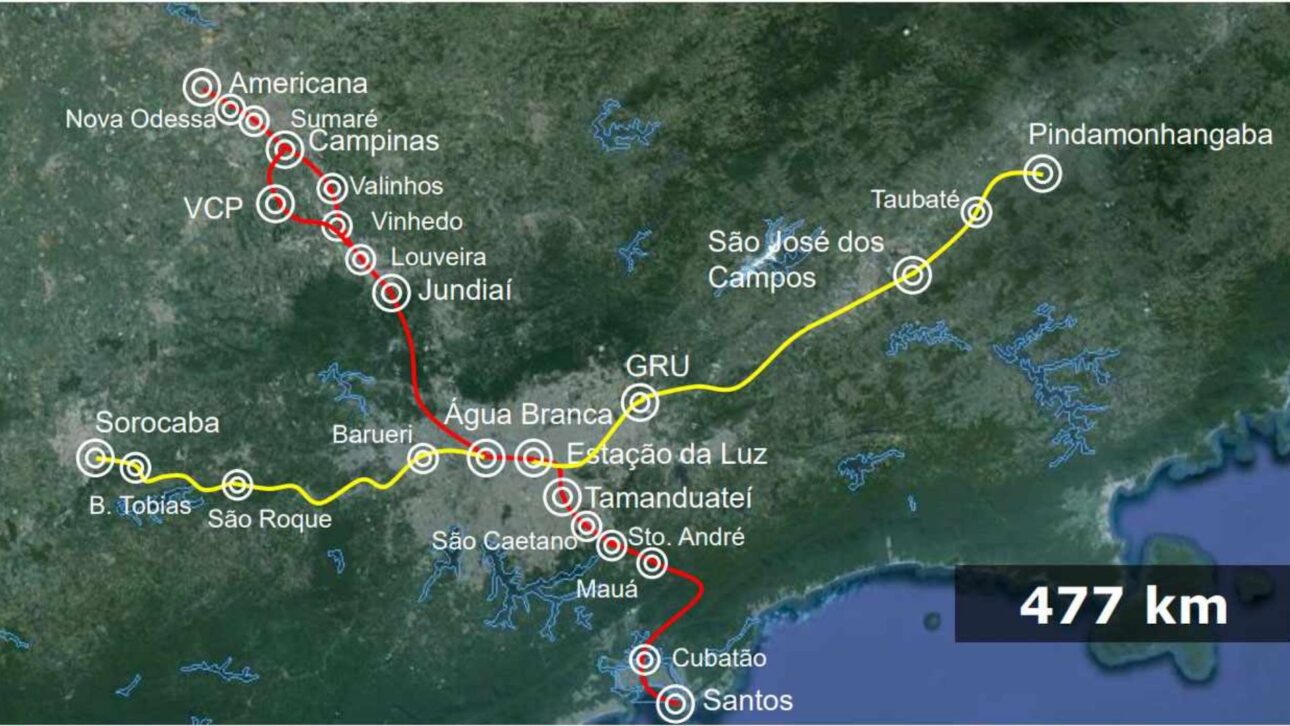
The project is divided into two main axes: the Intercity Train South Axis, responsible for the link between the capital and Baixada Santista, and the Intercity Train East Axis, focused on integration with Vale do Paraíba and São José dos Campos.
The official expectation is that the Intercity Train South Axis will reach a length of between 80 and 130 kilometers, facilitating passenger movement between São Paulo and the coastal region in reduced time, with more comfort and safety.
Among the main motivations for the project are the reduction of travel time, the creation of direct and indirect jobs, and the decrease in pressure on the main highways in the state.
Investment and Job Creation for the Intercity Train
The total investment value for the TIC South Axis is estimated at R$ 25 billion, while the East Axis is projected to be R$ 10 billion.
According to projections by the São Paulo government, the complete project may take up to 30 years to be fully completed, considering all necessary stages, from feasibility studies to full operation of the lines.
During the construction and implementation period, around 13,000 jobs are expected to be created, including direct vacancies in the construction sector, engineering, rail operations, services, and logistics, as well as indirect opportunities arising from the economic activity generated by the initiative.
These numbers reinforce the potential socioeconomic impact of the project, especially in areas near the new rail lines.
Project Phases and Planned Stages for the Intercity Train
The schedule for the Intercity Train is structured into six main phases.
The first, related to qualification in the Incentivized Parceling Program (PPI), has already been completed.
At this moment, technical and feasibility studies are ongoing, with completion expected in the first half of 2027.
The next steps include public hearings to hear society, drafting the concession notice, holding the auction, and finally, signing the contract with the winning company or consortium.
The feasibility and final layout of each axis depend on these studies, which take into account factors such as passenger demand, environmental impact, integration with existing systems, implementation costs, and potential conflicts with freight transport.
Route Alternatives to the Paulista Coast
In the case of the TIC South Axis, three routes are being analyzed to ensure an efficient link between Baixada Santista and São Paulo city.
The first option foresees the terminal at Brás Station, using Via ABC and the rail stretch of Paranapiacaba, traditionally occupied by freight transport.
The second possibility suggests using Pinheiros Station, utilizing Line 9 and the route that passes through Parelheiros, a path historically used by passenger trains until the 1970s.
The third alternative considers Santos-Imigrantes Station, using part of the layout of the Imigrants Highway to connect with the Santos-Cajati Railway, allowing trains to reach the city of Santos directly.
These alternatives are being evaluated to identify the best balance between costs, operational efficiency, impact on freight transport, and potential to meet passenger demand.
The main objective of the Intercity Train is to make travel between the capital and the coast faster, safer, and more accessible, stimulating tourism and the local economy.
Intercity Train East Axis: Connection with Interior São Paulo
The Intercity Train East Axis focuses on integration between the city of São Paulo, its Metropolitan Region, and Vale do Paraíba, with completion expected in the city of São José dos Campos.
The railway line will have a length similar to that of the South Axis, ranging between 80 and 130 kilometers, depending on the results of the ongoing studies.
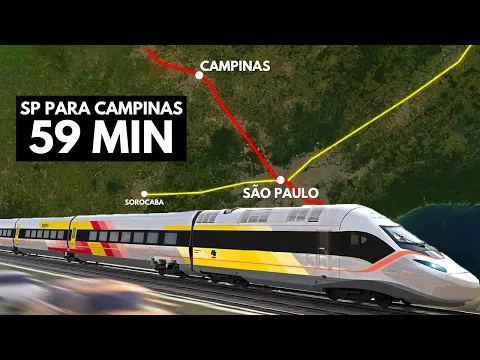
The estimate is that the journey between the capital and São José dos Campos will take 75 minutes, crossing four municipalities and directly benefiting around 2.7 million inhabitants.
This axis is expected to enhance the development of Vale do Paraíba, an important industrial, technological, and academic hub in the state.
Additionally, the project presents itself as a strategic alternative to relieve heavy traffic on the Presidente Dutra Highway (BR-116), the main road connection between São Paulo and Rio de Janeiro, currently overloaded with light and heavy vehicle traffic.

Mobility, Sustainability, and Challenges for Implementing the Intercity Train
In addition to representing an advance in urban and regional mobility, the Intercity Train promises to contribute to sustainability by encouraging the use of high-capacity public transport.
The migration of passengers from individual road transport to the rail system should result in lower emissions, reduced congestion, and improved quality of life for residents of the benefiting areas.
However, the project faces significant challenges, such as the need for integration between different modalities, adaptation of existing rail infrastructure, and negotiation of segments used for freight transport.
Environmental issues, expropriations, and the high initial cost are also on the radar of the authorities responsible for the initiative.
The execution of the Intercity Train is contingent upon the completion of technical studies, resource acquisition, and alignment between state, federal governments, and private companies involved.
The success of the project could place São Paulo at a new level of regional mobility, bringing strategic cities closer, fostering tourism, and expanding access to economic opportunities.
In light of this scenario, how do you believe the implementation of the Intercity Train could impact the development of coastal and inland cities in São Paulo in the coming years?








A China em 30 anos fez mais de 5.000 quilômetros de Linhas de alta Velocidade. São Paulo vai demorar 30 anos para fazer 200km?