






 Portuguese
  Spanish
  13 min of reading
  1 comment




The Largest Secret Operation in History: How Scientists, Military Personnel, and Workers Built the First Atomic Bomb Without the World Knowing – Manhattan Project.
In the midst of World War II, while soldiers fought in the trenches of Europe and the Pacific, an operation of epic proportions was taking place in absolute secrecy in the United States. Three entire cities were built from scratch in the desert, in mountains and isolated plains. Over 130,000 people worked day and night on a project that even they did not know the details of. The cost? US$ 2 billion in 1945, equivalent to about US$ 30 billion in today’s values. The name of the operation: Manhattan Project. The goal: to build the first atomic bomb in history before Nazi Germany did.
The Manhattan Project started modestly in 1939, but it grew and employed nearly 130,000 people and cost around two billion dollars. Over 90% of the cost went to the construction of factories and production of fissile materials. In total, it is estimated that half a million people worked on the project in some capacity during the war at facilities spread across the country.
The result of this monumental effort changed the course of World War II, ushered in the nuclear era, and forever transformed global geopolitics. But how was it possible to carry out such a gigantic undertaking in absolute secrecy? And what were the consequences of this desperate race against time?
-
Survivor of 1966 SS Daniel J. Morrell Shipwreck in Lake Huron Recounts 38-Hour Ordeal in Extreme Cold

-
The Greatest Hoax in World Cup History? The Film That Denied Brazil’s 1958 Victory and Exposed How Fake Evidence Can Seem Convincing on TV
-
Fake South Korean Online Stores Offer Shopping Thrill Without Spending Money or Receiving Products
-
The War of Jenkins’ Ear: How a Severed Ear Sparked One of the 18th Century’s Most Unusual Conflicts


The Letter Signed by Albert Einstein and Leo Szilard That Changed Everything
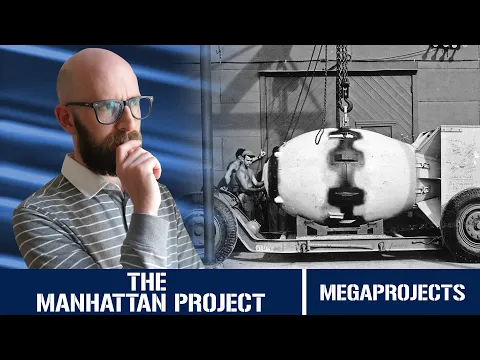
In August 1939, one month before the start of World War II, U.S. President Franklin D. Roosevelt received a letter that would change history. Signed by Albert Einstein and Leo Szilard, but largely written by the latter, the letter warned of an imminent danger: German physicists had discovered nuclear fission and could be developing a bomb of unimaginable destructive power.

The concern was real. Nazi Germany had some of the world’s best physicists and access to uranium from the occupied Czechoslovakia. If Hitler obtained the atomic bomb before the Allies, the war would be lost.
Roosevelt took the warning seriously. In August 1942, the Manhattan Project was formally established. Its mission: to construct a fully reliable atomic bomb as quickly as possible. Military leadership was assigned to Major General Leslie Groves of the U.S. Army Corps of Engineers, while physicist J. Robert Oppenheimer was appointed as scientific director.
Marshall, one of the generals involved in the early stages of the project, later admitted: “I had never heard of atomic fission, but I knew we couldn’t build much of a factory, let alone four of them, for 90 million dollars.”
A single TNT factory that Colonel Nichols had recently built in Pennsylvania had cost 128 million dollars. The project would be much larger than anyone could imagine.
Three Secret Cities Born in the Desert
To maintain secrecy and carry out the complex operations required, the U.S. government made an unprecedented decision: to build three entire cities from scratch in remote locations. About 125,000 people would be needed to build an atomic bomb, and all would need to live and work in total secrecy.
The chosen cities were Los Alamos in New Mexico, Oak Ridge in Tennessee, and Hanford (near Richland) in Washington state. Everything was done in absolute secrecy. They did not appear on any maps, and nearly none of the residents knew they were working on a new type of bomb, only in some kind of war effort.
Oak Ridge, Tennessee: The Secret City
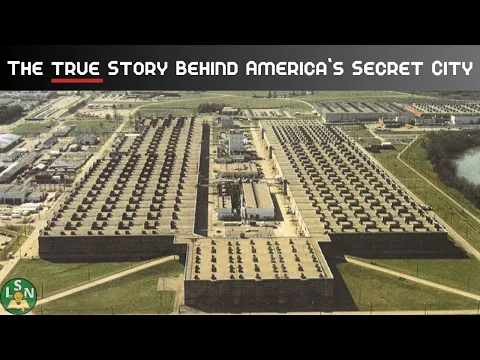
In 1942, Oak Ridge, Tennessee, became a “Secret City” self-sufficient built to enrich uranium for the atomic bomb. Built in record time, this site housed 75,000 people in residential, industrial, and scientific districts.
Some families were notified with only two weeks’ notice to vacate farms that had been their homes for generations. The final cost of land acquisition in the region, which was not completed until March 1945, was only 2.6 million dollars.
When Tennessee Governor Prentice Cooper was presented with the public proclamation declaring Oak Ridge a total exclusion zone in which no one could enter without military permission, he tore up the document in anger.
Oak Ridge was designed by the firm Skidmore, Owings & Merrill — now a corporate giant, but then a little-known firm asked to do things that architectural firms had never attempted before.
They not only dealt with the overall planning of the city, but also developed nomenclature for the streets, supervised the civil engineering of the community and general designs of prefabricated housing produced in quantity. They even helped design the school curriculum.
Oak Ridge housed the K-25, Y-12, and S-50 uranium enrichment plants, as well as the pilot plutonium production reactor, the X-10 Graphite Reactor. The massive K-25 plant was one of the largest buildings in the world at the time.
Los Alamos, New Mexico: The Brain of the Operation
While production was the focus in Oak Ridge and Hanford, the Los Alamos Laboratory in New Mexico was the intellectual core of the Manhattan Project. Under the direction of J. Robert Oppenheimer, the Los Alamos laboratory would conduct most of the remaining research and construction of the bomb.
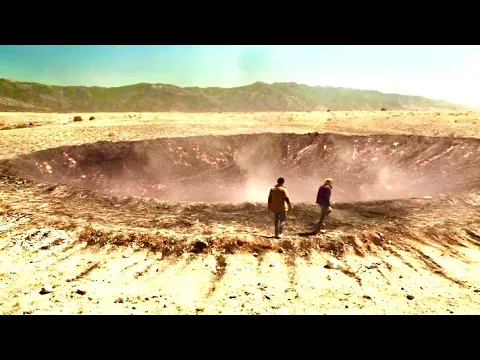
Physicists, chemists, metallurgists, explosives experts, and military personnel converged on the secret city, which grew to become home to thousands of project workers. The central laboratories were flanked by residential and community facilities to encourage collaboration between scientists and their families.
To a casual observer, these cities were normal places with occasional oddities: every baby born in Los Alamos, for example, had a post office box in Santa Fe listed as their birthplace.
The simple, functional design emphasized the imperative mission, ensuring rapid construction and facilitating smooth collaboration. Los Alamos became a prototype for campus-style research facilities where the workplace was integrated with community life. This model of isolation and collaboration had a considerable impact on the design of innovation hubs, university campuses, and research centers around the globe.
The technical team at Los Alamos of approximately 1,700 staff designed, built, tested, and helped deliver the world’s first nuclear weapons into combat just 27 months after the laboratory held its first major technical conference.
Hanford, Washington: The Plutonium Factory
Equally important was the site in Hanford, Washington, where the full-scale plutonium production plant, the B Reactor, was built, eventually accompanied by other reactors.
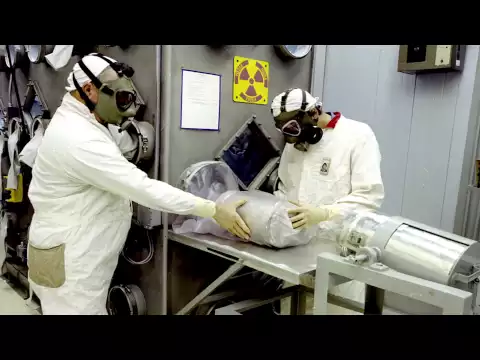
The selected locations exploited natural barriers to increase security and secrecy. “All of them were about 25 to 35 miles from existing population centers, far enough that in the 1940s you could stay away from people, but not so far that you couldn’t get people to nearby train stations,” explained one historian.
The official reason given for the relocation was the construction of a demolition field, likely to encourage people to leave for fear that their homes would be damaged.
Once the cities and facilities were built, several other false rumors circulated, including one attributing developments to ammunition production.
The Level of Secrecy: Even the Vice President Didn’t Know
The “Manhattan” project was so secret that very few people were aware of its objectives. The level of secrecy was so high that most workers did not understand what they were actually working on.
U.S. Vice President Harry Truman was only informed about the matter after he took office in April 1945, following the death of President Roosevelt. Experts estimate that only a few hundred people in the country knew about the bomb before it was dropped.
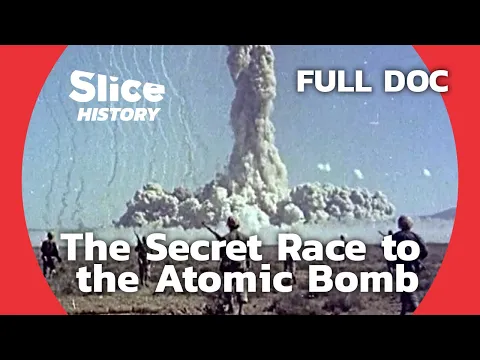
Among the thousands of men and women who worked on it, only a relatively small handful knew what they were trying to achieve. Security was so tight that knowledge of the project was kept even from Vice President Harry S. Truman until he became president.
According to Life magazine in an article written shortly after the end of World War II, during the battles, few people had knowledge of the project’s existence, even though there were almost a hundred thousand employees actively working to complete the final objective.
Experts point out that U.S. intelligence operated with “subtlety” in censoring, stating that if anyone who knew of the plan revealed it to the public, they would be subject to ten years in prison plus a fine.
Workers at the bottom of the production pyramid observed tons of natural and artificial resources entering and leaving actively at an industrial scale, but did not know for what purpose.
The Astronomical Costs
In total, the U.S. invested approximately US$ 2 billion, at then-current values. According to more recent estimates, this amounts to about US$ 30 billion in today’s values, considering inflation and purchasing power.
All of this while the country faced virtually two major wars: one in Europe and another in the Pacific against the Japanese. The investment represented a significant portion of the American GDP at the time.
More than 90% of the cost went to the construction of factories and production of fissile materials. The K-25 uranium enrichment plant alone in Oak Ridge covered 77,000 square meters and cost hundreds of millions of dollars.
When cooperation with the United Kingdom was resumed after the Quebec Agreement, the progress and spending of the Americans surprised the British. The United States had already spent over one billion dollars, while, in 1943, the United Kingdom had spent about 500,000 pounds sterling.
The Brilliant Minds Behind the Bomb
The Manhattan Project brought together some of the brightest minds of the 20th century. It is estimated that 31 participants in the project were awarded the Nobel Prize, both before and after the event.
J. Robert Oppenheimer — Known as the “father of the atomic bomb,” Oppenheimer was the scientific director of the Manhattan Project. His leadership and experience in theoretical physics were vital for the successful development of the atomic bomb.
Enrico Fermi — Fermi was an Italian physicist who made significant contributions to the development of nuclear energy. He played a key role in the construction of the first nuclear reactor, which was a crucial step in creating the atomic bomb.
Niels Bohr, Otto Frisch, Klaus Fuchs, Rudolf Peierls, and Ernest William Titterton — Scientists who arrived in the United States in December 1943 as part of the British mission.
In addition to these figures, more than 130,000 people worked directly on the project, often without knowing the true purpose of what they were helping to build. This massive collaboration involved several facilities.
Racial Segregation in the Secret Cities
Not everything in the Manhattan Project was progressive. Racial segregation was incorporated into the planning from the outset.
“It happened not only in Oak Ridge, located in the South, but also in Los Alamos and Hanford, very different parts of the country, culturally,” said a historian. “In all three cases, the general assumption was that segregation was a given. Thus, particularly in Hanford, not only African American workers but also Latino workers were segregated.”
In Oak Ridge, many African American workers lived in plywood shacks that were very different from the comfortable housing built for most white workers. Of the 130,000 people employed, 85,000 worked only in civil construction, often under precarious conditions.
Trinity: The First Test
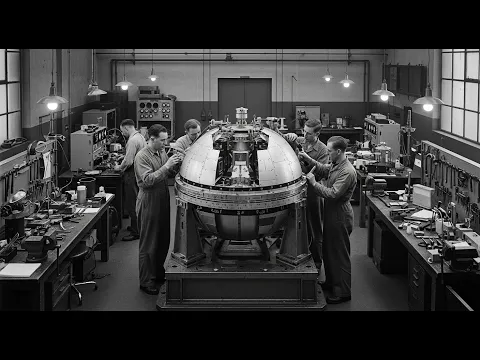
On July 16, 1945, the atomic age officially began when the first atomic bomb in the world was tested at the Trinity site in the New Mexico desert, about 160 kilometers from Los Alamos.
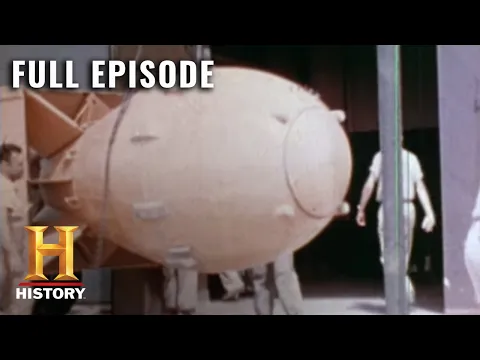
Robert Oppenheimer called it the “Trinity” test and used it to verify the functionality of a more complex weapon design that would later be used for the bomb dropped on Nagasaki.
The plutonium bomb “Gadget” exploded with about 20 kilotons of force and produced a mushroom cloud that rose eight miles high and left a crater ten feet deep and over a thousand feet wide.
During “a very brief but extremely long time,” the surrounding landscape remained in absolute and dreadful silence as everyone gazed in shock at the expanding fireball. The immediate comparison of the experience was with a volcanic eruption, but on a much more terrifying scale.
Oppenheimer, witnessing the explosion, reportedly quoted the Hindu sacred text Bhagavad Gita: “Now I am become Death, the destroyer of worlds.”
Hiroshima and Nagasaki: The End of the War
The “success” of Trinity impressed both negatively and positively those involved in the project. Many scientists, including Einstein and Szilard, were shocked by the outcome and repudiated the final decision of the U.S. military command to drop two more bombs from the project on Hiroshima and Nagasaki.
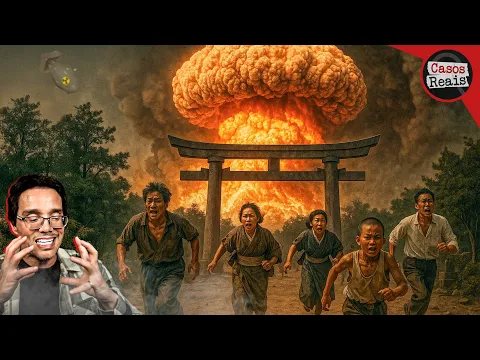
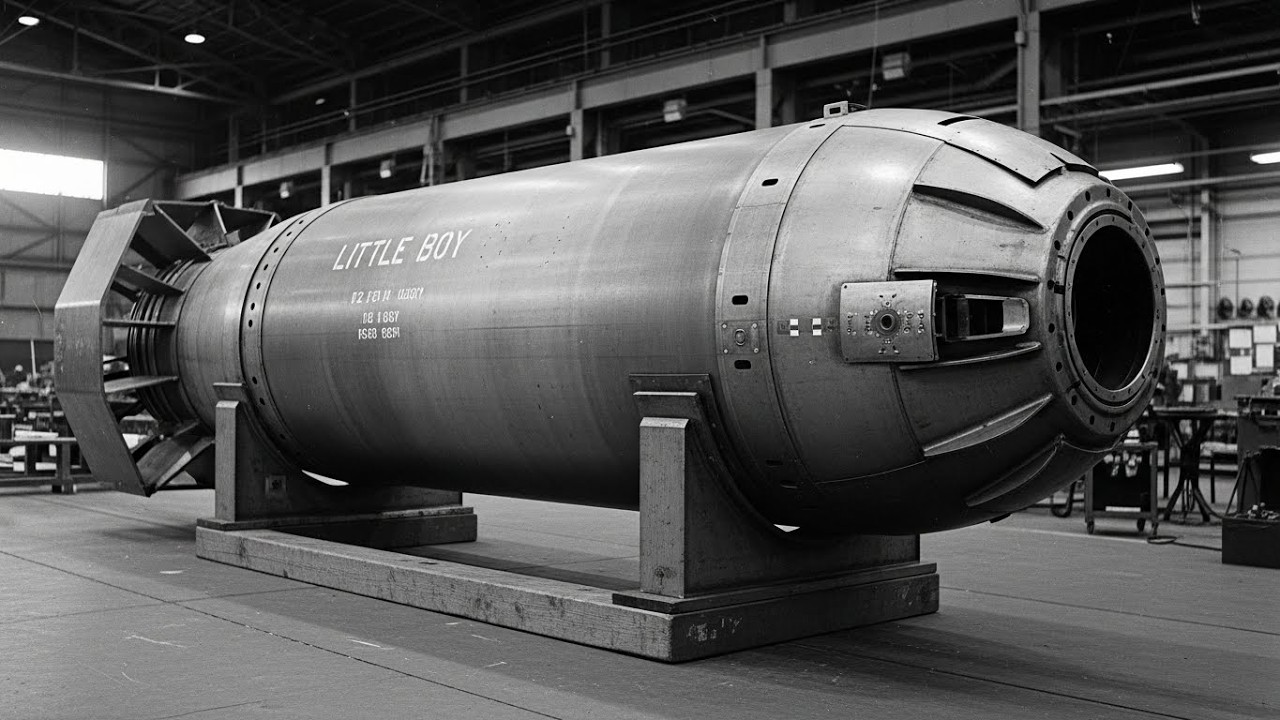
On August 6, 1945, when the bomb nicknamed “Little Boy” was dropped on the Japanese city of Hiroshima by the B-29 bomber Enola Gay, the true nature of these secret cities was revealed to the world and to the people living in them.
Little Boy contained 15 thousand tons of TNT in explosives. The Japanese city was devastated and suffered high radiation levels among the population.
Three days later, on August 9, the “Fat Man” bomb was dropped on Nagasaki. The atomic bombings of Hiroshima and Nagasaki killed hundreds of thousands of people immediately, and many more in the years following due to radiation.
Among the curiosities that surround the issue is that Harry Truman was indecisive about the use of such a weapon. He was convinced by his military advisors when one of them asked him, “Mr. President, what are you going to tell Congress and the American people when they know that you could have avoided the death of hundreds of thousands of American soldiers and ended the war, and did not do it?”
The Controversial Legacy
The Manhattan Project had a profound impact on world history by ushering in the atomic age and forever changing the nature of war. Although the bombings hastened the end of the war, they also raised ethical and moral questions about the use of nuclear weapons that persist today.
Even among the members of the Manhattan Project, there were divisions regarding the military use of nuclear bombs. It is also important to remember that after the end of World War II, a new mode of warfare began, the Cold War, particularly involving the U.S. and the Soviet Union, which, although it did not materialize into direct conflict, posed a terrible threat to humanity.
After the attacks in Japan, the world began a scientific quest to develop nuclear weapons as a form of defense, marking one of the darkest moments in human history when capitalists and socialists threatened to push the red button that would trigger weapons capable of destroying the world in a matter of days.
What Remains of the Secret Cities
The three main sites exist today as the Hanford Site, Los Alamos National Laboratory, and Oak Ridge National Laboratory.
Oak Ridge, once a secret city, has become an active research center, while facilities remain operational at the Hanford Site, although parts of the site are partially deactivated and under environmental cleanup to reduce decades of industrial pollution.
The adaptive reuse of these sites highlights the potential of sustainable architecture. By reusing existing structures, architects have the capability to preserve significant historical heritage while reducing environmental impact.
In 2014, through an act of Congress, the Manhattan Project National Historical Park was authorized and officially established in 2015 in Oak Ridge, Los Alamos, and Hanford. The new park works to interpret the history and legacy of the Manhattan Project for our world today.
Among the three locations, the park offers a chance to explore the science and technology behind this massive operation, along with the lives of those who made it happen. More importantly, it helps preserve key facilities across all three sites, ensuring that an essential part of American history — indeed, the world’s history — does not fade from view.
The park is a partnership between the Department of Energy and the National Park Service; the DOE continues to operate active facilities in both Los Alamos and Oak Ridge. The extensive Y-12 complex, for example, still handles nuclear material for the National Nuclear Security Administration of the DOE.
The Unexpected Scientific Advances
Overall, the scientific advances of the Manhattan Project revolutionized our understanding of nuclear physics and had far-reaching implications for both military and civilian applications of atomic energy.
Among the three locations, inventions and discoveries that we still count on today emerged, including the field of nuclear medicine, which uses radiation for diagnosis and treatment. The nuclear reactor technology developed during the project paved the way for civilian nuclear power.
The project also laid the groundwork for modern multidisciplinary architecture. Architectural firms learned to integrate urban planning, civil engineering, residential design, and even educational curriculum, an approach that has become the standard in the industry.
An Unprecedented Accomplishment
I wonder what other country would have the capability to accomplish all of this. To build three cities from scratch, employ 130,000 people, spend the equivalent of 30 billion dollars, coordinate hundreds of facilities across the country, maintain absolute secrecy, and deliver the bomb in working order in just three years.
After everything was ready, they still had to adapt the B-29 bombers to drop the bombs. Before that, they had to ship them disassembled across the world, only to then drop them with 100% success.
It was an extraordinary military, scientific, and technological feat despite the horror of any war, atomic or not.
Conclusion: The Project That Changed the World
The Manhattan Project remains a controversial subject to this day. The proposal for an Enola Gay exhibition at the National Air and Space Museum in 1995 was canceled due to controversy. However, the establishment of the National Historical Park in 2015 shows recognition of the historical importance of the project.
Three years, US$ 2 billion (US$ 30 billion in today’s values), 130,000 people working in absolute secrecy, three entire cities built from nothing — and the world was never the same.
The Manhattan Project was the largest secret operation in history. It demonstrated what humanity can achieve when science, industry, and determination come together. But it also showed the destructive power that this same humanity can create.
As Oppenheimer said after witnessing the Trinity test: “Now I am become Death, the destroyer of worlds.” This phrase encapsulates the paradox of the Manhattan Project — an unprecedented scientific and industrial triumph that ushered in the most dangerous era in human history.
The three secret cities that did not exist on any map changed the course of history. And their legacy for better and for worse continues with us to this day.





O ser humano foi um projeto que não deu certo !!!