Portuguese
  Spanish


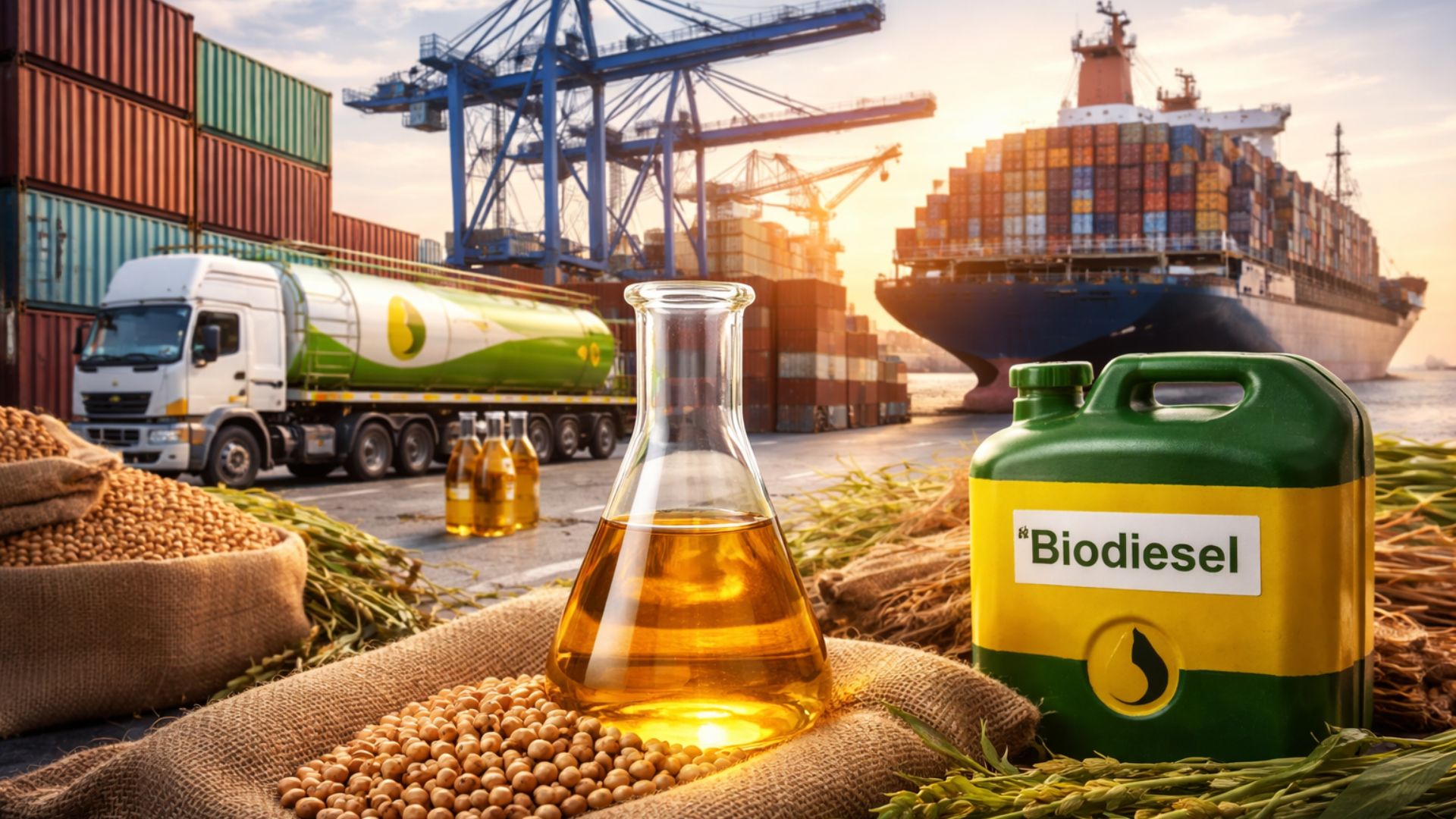

Debate On Biodiesel In Brazil Raises Alarm For Rural Jobs, Risk Of Billion-Dollar Losses, And Import Impacts, While Sustainable Biofuels Gain Importance In The National Energy Matrix.
The possible importation of biodiesel to make up the mandatory blend with diesel has returned to the center of the Brazilian energy debate and is already provoking a strong reaction from agribusiness entities, parliamentarians, and industry representatives. Estimates from the Biodiesel Parliamentary Front indicate that the measure could generate a billion-dollar loss exceeding R$ 60 billion and directly impact over 200,000 jobs in the field. According to an article published by Notícias Agrícolas on February 16, the warning is not limited to fuel: it involves agricultural income, the soybean chain, energy security, and the future of sustainable biofuels in the country.
Biodiesel And Importation At Risk Of Billion-Dollar Loss In The Field
The topic has gained relevance because Brazil has a consolidated productive structure and sufficient industrial capacity to meet domestic demand. Nevertheless, the opening to foreign products raises doubts about regulatory predictability and the effects on public policies for productive inclusion. For sector experts, the discussion is not merely economic, but strategic, as it interferes with national energy autonomy and job creation in agricultural regions.
The Biodiesel Parliamentary Front claims that the opening for importation could cause a significant contraction in the economic activities related to biodiesel. Projections indicate a reduction of R$ 43.3 billion in sectoral activity and a decrease of approximately R$ 10 billion in industrial investments. These figures reinforce the fear of a billion-dollar loss that would spread throughout the production chain.
-
Brazil Advances with JetBio’s Megaproject to Build the World’s Largest Ethanol-Based Sustainable Aviation Fuel Plant, Aiming to Become a Global Exporter

-
Brazil on Track for Record 40.7 Billion Liters of Ethanol in 2026/27 Season, Driven by Corn Ethanol
-
Petrobras Approves $1.2 Billion Refinery in Brazil to Produce Aviation Fuel and Diesel from Plants
-
US$ 7 billion, green hydrogen, and steel with up to 95% less CO₂: the first green steel plant on the planet emerges in Sweden and targets Brazil as the next chapter



Moreover, the entity estimates that around 57,000 families in family agriculture could be affected by the decline in demand for national raw materials. This social impact heightens concerns about the preservation of jobs and economic stability in municipalities dependent on agribusiness. For sector leaders, the risk lies not only in loss of competitiveness but also in the disintegration of public policies built over two decades.
Another highlighted point is the idleness of Brazilian plants, currently estimated at 40% to 50%. This data indicates that there is internal productive room to increase supply without needing to resort to the external market. In this context, importation could displace local production and worsen the scenario of billion-dollar loss predicted by sector entities.


Brazilian Industrial Capacity And The Advancement Of Sustainable Biofuels
Data from the National Agency of Petroleum, Natural Gas, and Biofuels shows that Brazil has an industrial capacity of nearly 15 billion liters of biodiesel annually. In 2025, plants produced about 9.84 million cubic meters, a volume that demonstrates considerable room for growth without the risk of shortages. This scenario strengthens the defense for the expansion of sustainable biofuels produced domestically.
Since the inception of the National Biodiesel Production and Use Program in 2005, the country has accumulated over 76 billion liters produced, maintaining its position among the three largest global producers and consumers. For industry executives, this history proves technological maturity and continuous innovation capacity. The increased use of national biodiesel is likely to generate qualified jobs and stimulate regional development.
Environmental entities also highlight climate benefits. Sector estimates indicate that over the years, the continuous use of sustainable biofuels has prevented the emission of more than 270 million tons of carbon dioxide, reinforcing the strategic role of the fuel in Brazil’s energy transition.
Soybeans, Rural Jobs, And The Cascading Effect Of Biodiesel Importation
The soybean chain is one of the most affected by the debate. If up to 20% of the biodiesel demand is met by importation, Brazil would stop processing about 7 million tons of soybeans. This volume represents a lower supply of oil for fuel and a reduction of approximately 5.6 million tons of meal, an essential input for animal feed.
With less domestic crushing, the final stock of the oilseed could reach 16.3 million tons, compared to the 9.2 million projected without opening to foreign products. This increase tends to pressure prices paid to producers and reduce their profit margin. The reflecting impact directly reaches rural jobs, acquisition of machinery, and investments in agricultural technology.
The National Supply Company projects a record harvest of 176 million tons, which historically causes a drop in derivatives. In the previous cycle, the price of biodiesel saw a reduction of 15% from February to the peak of the harvest. In early February of the following year, prices were 8% below the same previous period. Importation, in this context, could intensify instability and increase the risk of billion-dollar loss.

Social Seal, Family Agriculture, And The Protection Of Jobs
The Social Biofuel Seal is one of the pillars of Brazil’s policy on sustainable biofuels. Currently, about 80% of the mandatory volume must be supplied by certified plants, integrating approximately 57,000 families into the raw material supply. The program guarantees formal contracts, technical assistance, and income predictability, strengthening jobs in the field.
Industry representatives warn that importation without equivalent social requirements could create unfair competition. If the foreign fuel does not follow the same rules, local producers may lose space and contracts, compromising public policies for productive inclusion. The concern is that this imbalance may result in an indirect billion-dollar loss and weaken entire rural communities.
In addition to the social impact, the seal contributes to the adoption of good environmental practices and greater professionalization of the agricultural chain. The continuity of domestic biodiesel production is seen as essential to preserve income, stability, and innovation in the field.
Energy Sovereignty, Technical Quality, And Global Competitiveness
Brazil has built a robust biodiesel chain over two decades, with its own technology and international recognition for quality. Since 2005, the sector has produced approximately 87 billion liters and consolidated high technical standards. Partial substitution by importation may increase vulnerability to international price fluctuations and availability.
From the environmental viewpoint, associations highlight that each 1% increase in the mandatory blend can save about 300 lives, due to improved air quality. These figures reinforce the role of sustainable biofuels as a public health tool and economic development instrument. At the same time, experts caution about the risks of predatory competition from countries practicing dumping, which would increase the potential for billion-dollar loss.
There are also voices favoring the regulated opening of the market, advocating for greater competition and possible cost reductions for consumers. The challenge is to balance economic efficiency with job preservation and the maintenance of energy autonomy.
What Is At Stake For The Future Of Biodiesel And Jobs In Brazil
The discussion about importation of biodiesel involves long-term strategic choices. On one side are the arguments related to job protection, appreciation of family agriculture, and strengthening of national sustainable biofuels. On the other hand, there are proposals for controlled opening to stimulate competition and reduce costs for consumers.
The data on industrial capacity, accumulated production, and social impact indicate that the country has a solid structure to meet its own energy demand. However, the final decision will require a balance between competitiveness, regulatory stability, and protection of the national productive base. The future of biodiesel influences food prices, transportation costs, air quality, and income generation, making the debate essential for Brazil’s economic and environmental development.