Portuguese
  Spanish


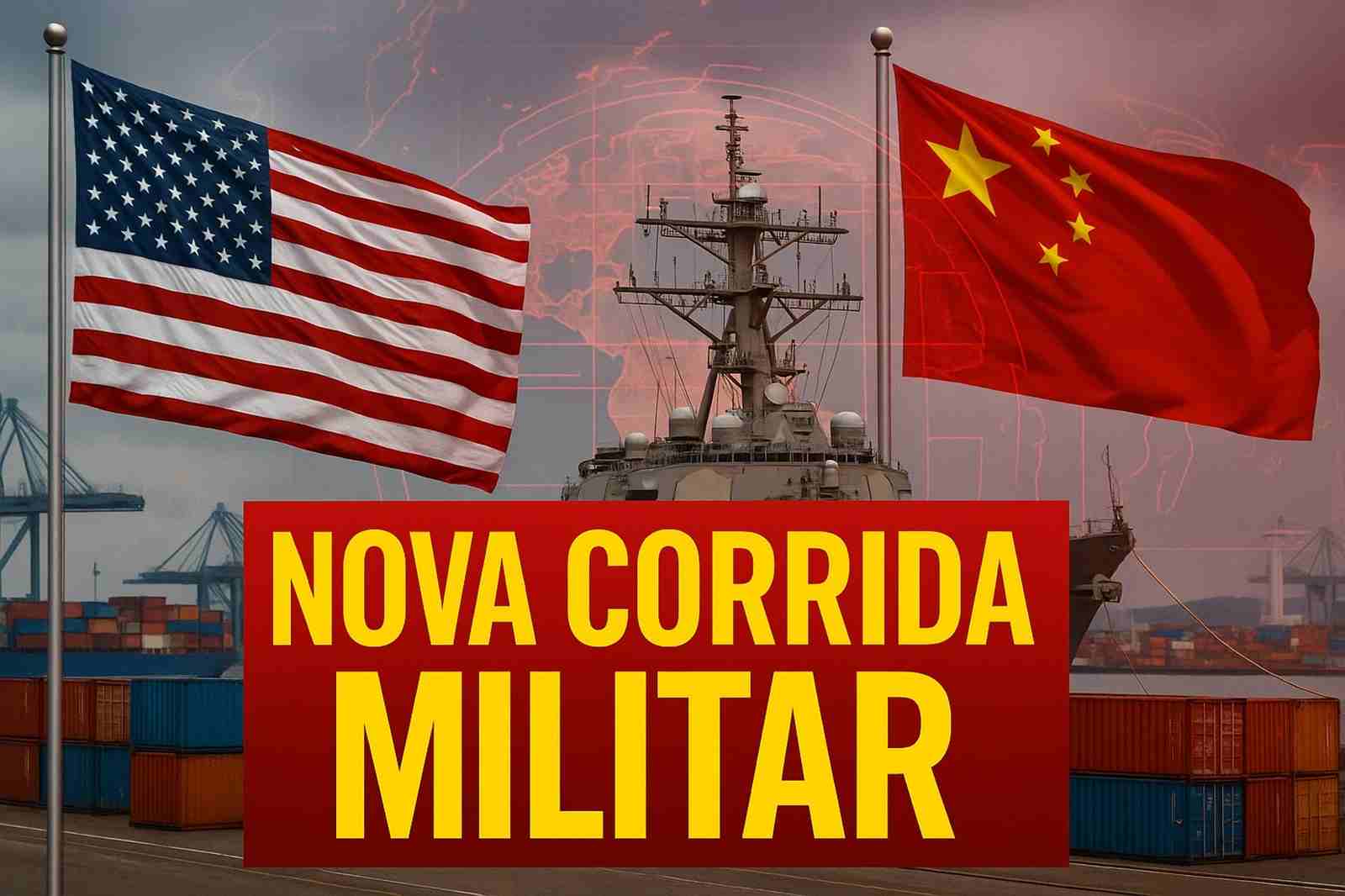

Partnership Between US, Philippines, And South Korea Transforms Subic Bay Into Strategic Military Hub, Increasing Naval Production And Strengthening American Presence In The Indo-Pacific.
The United States is advancing plans to transform Subic Bay in the Philippines into the world’s largest arms manufacturing center. The region was once home to the largest American naval base in Asia during the Cold War. Now, this movement responds to China’s military growth in the Indo-Pacific.
The push came when Philippine President Ferdinand Marcos Jr. inaugurated the new shipyard of HD Hyundai Heavy Industries Philippines. The facility occupies the former Hanjin complex, now renamed Agila Subic by American Cerberus Capital Management.
With investments from the US and South Korea, the expectation is that the shipyard will double the country’s naval capacity to 2.5 million tons per year. The site is expected to employ over 4,000 workers by 2030.
-
The Trap of Modern Technology: How Screen Overload and Digital Connections Can Impact Your Mental Health and Well-being

-
Wyoming Couple Grows Tropical Fruits Year-Round in -40°C Using Geothermal Greenhouse, Demonstrating Earth’s Heat Can Produce Oranges and Lemons in Snow Without Traditional Heating

-
Ship Returns from Brazilian Coast with Thirty Newly Discovered Life Forms
-
Nigerian Professor Invents Electricity-Free Refrigerator Using Clay Pots and Wet Sand, Extending Shelf Life of Vegetables to 27 Days; 7,000 Units Distributed in Energy-Deprived Villages



Military And Commercial Capacity
Although the ceremony highlighted the commercial sector, officials emphasized that the shipyard will have a direct impact on the modernization of the Philippine navy.
HD Hyundai has already provided frigates and patrol boats to Manila and is now positioning Subic as a regional hub for military vessel production.
According to the South Korean ambassador in Manila, the shipyard is the result of a triple partnership: technology from Korea, funding from the US, and labor and location from the Philippines.
Defense Strategy
The plan connects to the installation of advanced American missile systems in the Philippines. Marcos Jr. called the initiative part of a “self-sufficient defense” and a direct response to China in the South China Sea.
During a meeting in Washington, US President Donald Trump stated that the Philippines will have “more ammunition than any other country,” including long-range and anti-ship missiles.
Recently, US Marines discreetly rented a 57,000 square feet warehouse within the former Subic Naval Supply Depot.
Strategic Location
Subic Bay is about 90 kilometers from Manila and strategically positioned facing China. The distance to Shenzhen and Taipei is 1,100 kilometers.
It is 1,800 kilometers to Shanghai and 2,800 to Beijing. All within the range of Chinese ballistic missiles.
The plan calls for large-scale ammunition production and storage. This will allow for rapid joint responses in the event of conflict.
In 2023, Manila had already expanded access for American military forces from five to nine bases. It also agreed to host the intermediate-range “Typhoon” missiles and the anti-ship “Nemesis.”
Unprecedented Investment
The move signals a shift from a rotational presence to a permanent US installation in the Philippines. According to the US Naval Research Laboratory, this is the largest defense investment in the country since the Cold War.
Base History
Subic Bay was a key point of US operations during the Cold War. In 1992, following a vote in the Philippine Senate, the Americans withdrew.
In the years that followed, the area became an economic zone and began to host shipyards. However, the absence of the US allowed China to expand activities in the South China Sea, including the construction of militarized artificial islands.
The Philippines, in response, renamed its maritime area in 2012 as the “West Philippine Sea.”
Political Reversal
Since Marcos Jr. took office in 2022, the country has strengthened ties with Washington, reversing the approach towards Beijing taken by former President Rodrigo Duterte.
Despite this, the project faces internal resistance. Vice President Sara Duterte warned that the Philippines might become a “bullet shield” for the US.
The International Center for Human Rights in the Philippines classified the plan as an extension of the “American military-industrial complex” and called for its rejection.
Increasing Tensions
In June, the US House of Representatives approved a feasibility study for the project, with a deadline of 2026. The goal is to fill the gap in advanced ammunition production in the Indo-Pacific, including nitrocellulose and nitroglycerin.
China has already shown open opposition. Beijing officials warned that the increased presence of US military forces in the Philippines could exacerbate regional tensions.
Last month, the Chinese government accused Manila of “playing with fire” after Marcos Jr. declared that he would not remain neutral in any potential conflict over Taiwan.
Additionally, six Chinese nationals were recently arrested in Subic on suspicion of espionage, further heightening the atmosphere of distrust.
Strategic Shift
If pursued, the center at Subic Bay will profoundly transform Philippine defense policy. It will also reinforce the American strategy to contain China’s advance in the Indo-Pacific.
The measure is expected to directly influence security in the South China Sea over the coming decades.