Portuguese
  Spanish





Unified National Public Competition 2025 Offers 3,652 Vacancies in 32 Federal Agencies, with Exams in 228 Cities. Learn Everything About Registrations, Quotas, Stages, and Complete Schedule.
The long-awaited announcement for the second edition of the Unified National Public Competition (CPNU) was published this Monday (06/30) in an extra edition of the Federal Official Gazette. With 3,652 vacancies distributed among 32 federal public administration agencies, the exam reaffirms the commitment to decentralization, equity, and professionalization of public service. Registrations will be open from July 2 to July 20, 2025, with a single fee of R$ 70 and various possibilities for exemption.
The exams will be held in 228 cities across the country, reaching all 27 federative units and promoting broader and more democratic access. The second edition brings significant improvements compared to the first, with an expansion of affirmative actions, greater security in the exams, the inclusion of new phases, and the mandatory confirmation of interest for appointment and training.
Thematic Blocks and Distribution of Vacancies
The 3,652 opportunities are distributed across nine thematic blocks, predominantly for higher education positions (3,144), including 1,172 for immediate provision. The 508 intermediate-level vacancies complete the overall picture.
-
City Hall opens selection process with free registration, salaries up to R$ 3,622.31, and positions for teacher, driver, speech therapist, assistant, and other roles in education in Juazeiro.

-
Work as an Enem exam supervisor and earn R$ 864 per day: Inep opens national selection for Enem, PND, and Enamed 2026 certifiers with applications from June 8 to 28 and strategic roles in exam supervision throughout Brazil.
-
Navy opens competition for the Technical Corps of Naval Ratings with strategic positions in military submarines and nuclear facilities, expanding the technological role of the naval force in 2026 with highly specialized training and impact on Brazilian defense.
-
Attention exam candidates: Maranhão accelerates public competitions in 2026 after the announcement by Governor Carlos Brandão with 3,350 confirmed vacancies, the definition of the organizing committee, and expected notices, expanding opportunities in security, education, and administration with a direct impact on the state economy.



The Federal District concentrates the largest share of vacancies (2,089), reflecting the location of most federal public agencies. Other states have been allocated vacancies distributed among the North (135), Northeast (165), Southeast (814), South (54), and Central-West (4, excluding the DF). An additional 391 vacancies will be allocated according to administrative demands.
Inclusion and Robust Affirmative Actions
CPNU 2 makes a leap in social inclusion by adopting the new Quota Law (Law No. 14,723/2023), which expands and qualifies the system of affirmative actions. Now, 35% of the vacancies are reserved, with 25% for black and brown people, 3% for Indigenous people, 2% for quilombolas, and 5% for persons with disabilities (PwD).
Moreover, for the first time in large-scale federal competitions, the rule of gender parity in the call for the second phase (discursive) will be applied. If there are not 50% women among the classified based on scores, other female candidates with minimum scores will be called until the balance is achieved — without taking away any vacancy from those approved.
For positions with fewer than five vacancies, an electronic draw ensured the proportional implementation of affirmative actions. The verification procedures for quotas have also been refined: there will be recorded video interviews, specialized and centralized panels, ensuring standardization, transparency, and the right to defense.
Stages of the Competition: Exams on Two Dates
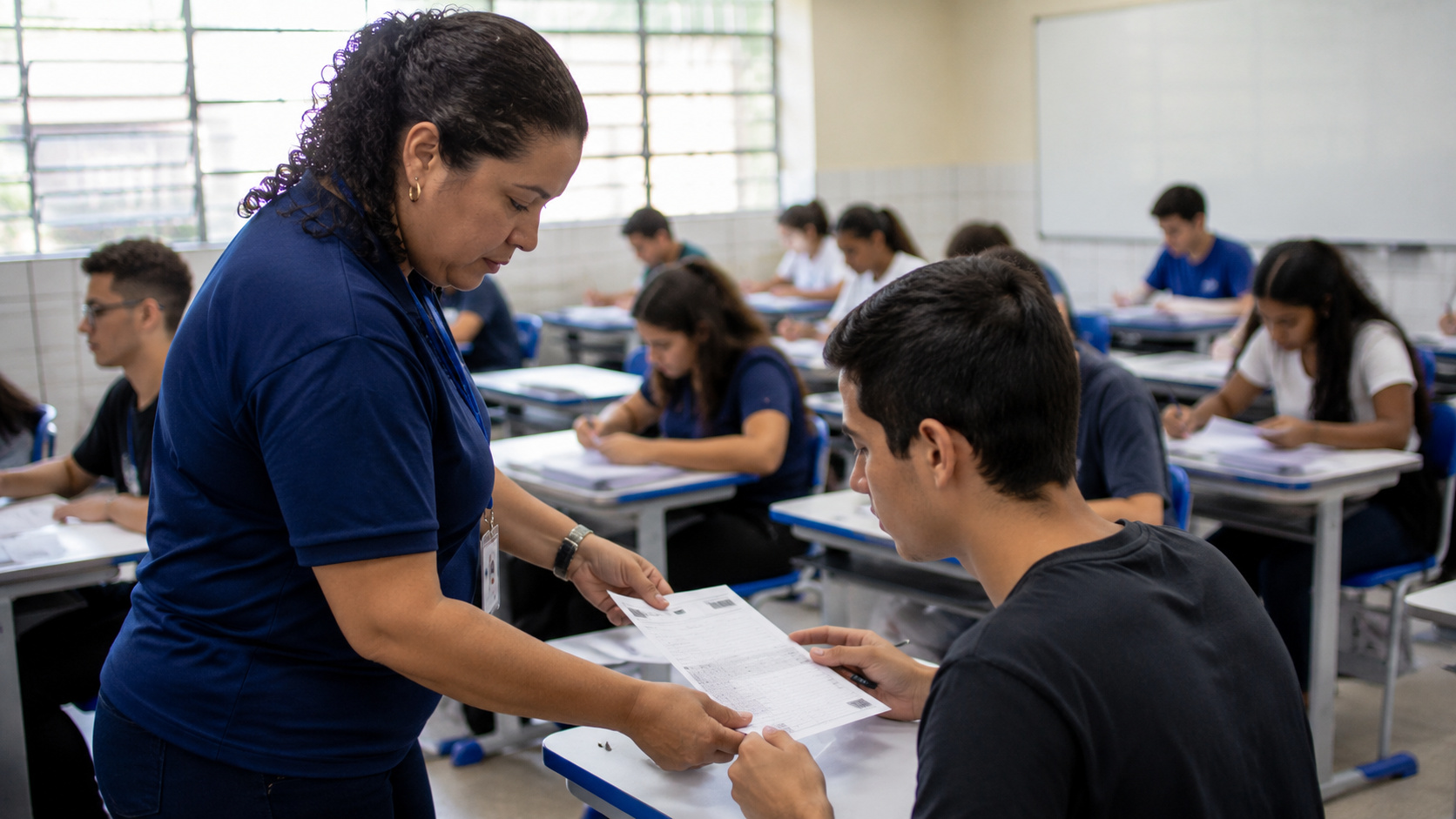
Another relevant innovation of CPNU 2 is the division of the exams into two distinct dates. The objective test is scheduled for October 5, 2025. For higher-level positions, there will be 90 questions (30 general and 60 specific); for the intermediate level, 68 questions (20 general and 48 specific). The discursive test will take place on December 7, 2025, with two questions for the higher level and one essay for the intermediate level.
The third phase will be the submission of titles (November 13 to 19) for positions that require it. The subsequent phases include:
- Quota Confirmation (11/30 to 12/8/2025)
- Social and Functional Investigation (for specific positions)
- Defense of Memorial and Oral Test (specific cases)
- Training Course (eliminatory and classificatory, according to the position)
Enhanced Security and Improved Governance
The security of CPNU 2 has been significantly enhanced. All exams will have an individual barcode per page, eliminating the old system of marking the type of exam. The collection of fingerprints, signature in one’s own handwriting, and graphological examination are also maintained, along with the support of federal and state security forces.
The management will be conducted by Enap (National School of Public Administration), with the strategic support of the Ministry of Justice and Public Security. A crisis group is mobilized to supervise, monitor, and resolve any potential irregularities throughout all phases of the exam.
Comparison Between CPNU 1 and CPNU 2
Although offering fewer vacancies than the first edition (6,640 against 3,652), CPNU 2 is considered more structured and inclusive. The main differences are:
- Guarantee of 50% female participation in the discursive phase
- Inclusion of quotas for Indigenous people (3%) and quilombolas (2%)
- Exams on two dates
- Mandatory confirmation of interest for appointment and training
- Proportional draw of quotas for positions with fewer than five vacancies
- Modernization of security criteria
CPNU 2 Schedule
- Registrations: July 2 to July 20, 2025
- Fee Exemption: July 2 to July 8, 2025
- Payment of Fee: until July 21, 2025
- Objective Test: October 5, 2025
- Disclosure of Objective Results: November 12, 2025
- Submission of Titles: November 13 to 19, 2025
- Discursive Test: December 7, 2025
- Quota Confirmation: November 30 to December 8, 2025
- Expected Final Result: January 30, 2026
With CPNU 2, the federal government bets on a new model of public competition that is more transparent, secure, inclusive, and efficient — an important step towards the professionalization and modernization of the State.
Click here and find out how to register