Portuguese
  Spanish


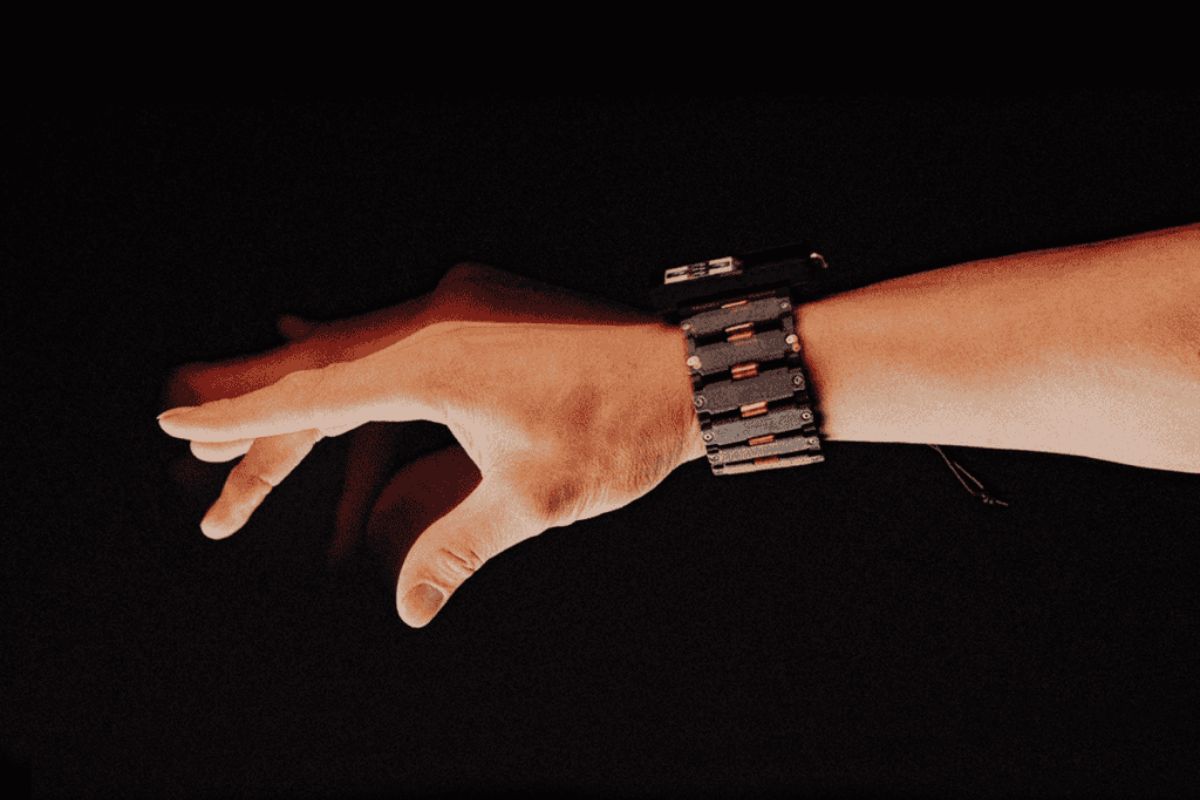

New Technology Detects Muscle Impulses From The Forearm And Allows Control Of Cell Phones And Computers Just With The Intention Of Movement
The Meta bracelet is in advanced testing phases and promises to transform the way we interact with devices. The accessory uses electromyography (EMG) sensors and artificial intelligence to read electrical signals from the forearm muscles, without physical touch or the need for screens.
According to Meta Reality Labs, the Meta bracelet can identify commands even before the body actually moves, relying only on muscular intention. With this, users can move cursors, open apps, or even type “in the air,” just by discreetly activating certain muscle fibers.
Technology That Reads Movement Before It Happens
Research on the Meta bracelet started years ago at the startup Ctrl Labs, which was acquired by Mark Zuckerberg’s company in 2019. Since then, data from over 10,000 people have been collected to train the AI algorithms responsible for accurately interpreting neural impulses. The complete study was published in the journal Nature.
-
In Ghana, Makafui Awuku Turns 250-300 Water Sachets Into Each 30-Year-Lasting School Desk, Lifting Children Off Classroom Floors

-
In September 2035, Mars to Shine Brightest Since 2003, Aligning with NASA and China’s Planned Human Mission to the Red Planet
-
Robots Descend Four Kilometers to Operate in the World’s Deepest Mine, Unbearable for Humans

-
Brazilian Students Develop Membrane to Clean Contaminated Water for Just $0.01 Per Use, Removing Oil, Dye, Turbidity, and Microorganisms, Reusable 20 Times, Offering Affordable Treatment to Communities Without Potable Water




The bracelet uses non-invasive electromyography technology, which reads electrical signals directly from the skin. Unlike brain chips — such as those from Neuralink — it requires no surgery and can be used by anyone. The system is also being tested with augmented reality glasses and is expected to integrate future Meta products focused on spatial computing.
Potential For Accessibility And Screenless Work
In addition to its futuristic promise, the Meta bracelet has shown to be particularly promising in accessibility applications. In tests with people with spinal cord injuries, it was possible to perform basic digital tasks using only minimal muscle commands. The expectation is that the technology will offer new alternatives for digital inclusion for those with motor limitations.
The company claims that the device can replace the traditional use of mouse and keyboard in many contexts. The project also reinforces Meta’s bet on immersive environments and natural interfaces — part of efforts to expand its ecosystem beyond social networks.
Would you use the Meta bracelet to replace your mouse and keyboard? Do you think it could actually revolutionize digital interaction? Leave your opinion in the comments!