






 Portuguese
  Spanish


Best Car Engines Seen in the National Market: Meet 4 Engines That Gained Admiration and Respect from Several Generations for Their Reliability and Durability
In Brazil, where vehicles often stay in the hands of owners for many years, engine durability is an essential criterion when purchasing. In a scenario where expensive repairs and unexpected mechanical failures are frequent headaches, some car engines stand out for resisting the test of time, intense use, and even neglect. In this article, we will present the four best engines ever available in the Brazilian automotive sector, known for their robustness, ease of maintenance, and ability to run hundreds of thousands of kilometers with few mechanical problems. These “monsters of endurance” are considered by many experts and consumers as the best engines ever produced in Brazil.
AP Engine (Volkswagen): A True Tank on Wheels
Launched in 1985 and produced until 2013, the AP (High Performance) engine from Volkswagen is a legend in national automotive mechanics. Present in models like the Gol, Parati, Santana, Saveiro, and Voyage, this engine gained fame for its extreme durability.
With versions ranging from 1.6 to 2.0 liters, the AP was synonymous with resilience. Its simple and robust design allowed for easy maintenance and high tolerance to severe use. Many units easily surpassed 300,000 km with the engine still in good working condition — something rare in many modern engines, especially considering the minimal maintenance required.
-
Banco do Brasil and Uber Launch Cashback Program Offering Up to 3.5 Loan Installments Back, Drivers Gain Access to New Cars Worth Up to $30,000 Through Move Brasil Initiative

-
Looking for a Car for Dirt Roads? Fiat Uno, Strada, and Volkswagen Gol Offer Durability and Affordability

-
MG Motor to Produce Two Electric Cars in Brazil with $75 Million Investment, Creating 600 Jobs
-
Nissan Kicks S Direct 2018: Affordable Used SUV with Over 13 km/l Fuel Efficiency, 432-Liter Trunk, and CVT Automatic Transmission


According to data from Sindipeças (National Union of the Automotive Components Industry), it is estimated that over 10 million units of the AP engine remain in circulation in Brazil. This shows its longevity not only in terms of operation but also in acceptance in the secondary market for parts and services.
In addition to its durability, another differentiator of the AP engine was its versatility, being used in both urban vehicles and in sports or modified applications. To this day, enthusiasts value the engine in old cars or in performance projects.
Fire Engine (Fiat): The Simplicity That Won Brazil


If the AP engine is synonymous with robustness, the Fire engine from Fiat is an example of efficient simplicity. Launched in 2000, the Fire (Fully Integrated Robotized Engine) was produced for over two decades, equipping popular vehicles like Palio, Uno, Siena, Strada, Punto, Mobi, and others.
With 1.0 and 1.4 versions, the Fire engine was economical, reliable, and easy to maintain. Even with relatively simple technologies, it updated over the years to comply with emission and fuel consumption standards. Its highlight of durability lies in the fact that, even under severe use and irregular maintenance, this engine hardly presented critical failures.
In a survey conducted by Inmetro in partnership with the Brazilian Vehicle Labeling Program (PBEV), various models equipped with the Fire recorded low consumption and maintenance rates, reinforcing its reputation as one of the best national engines. In 2023, Stellantis announced that Fire production will end by 2025, with the arrival of Proconve L8 emission standards. Nevertheless, its legacy remains alive in millions of vehicles.
In the used car market, vehicles with the Fire engine retain their value, precisely because of the trust they convey to buyers. Mechanical shops also highlight the ease of obtaining parts and performing repairs.
Family I Engine (Chevrolet): Durability with Global DNA
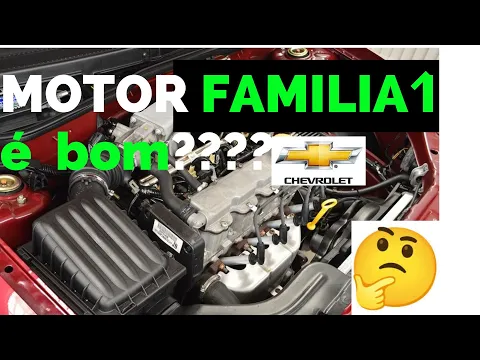
General Motors introduced the Family I engine in Brazil in 1994, initially in the Chevrolet Corsa. This engine, originating from the German Opel, quickly won the market for its combination of performance, economy, and resilience. For over two decades, it has been present in models like Prisma, Celta, Montana, Meriva, and Onix.
Produced in 1.0, 1.4, and 1.6 versions, the Family I engine remained competitive for years even against new generations of more modern engines. Part of its success lies in GM’s global standardization, which ensured manufacturing quality and easy access to components.
The simple maintenance and positive performance history under various conditions (from urban to rural use) made this engine a safe choice for both fleet operators and private drivers. This demonstrates not only the engine’s longevity but also its acceptance and trust among Brazilians.
CHT Engine (Ford): The Resilient from the 80s and 90s

Initially developed by Renault and later improved by Ford in Brazil, the CHT (Compound High Turbulence) engine started being used in the 1980s and equipped vehicles like Corcel II, Escort, Del Rey, Pampa, and Belina.
With a simple design focused on fuel economy, the CHT surprised by its durability. Many models with this engine have endured decades of use with little to no overhaul, as long as the basic maintenance intervals were followed.
While not powerful, the CHT had torque at low revs and mechanical reliability, characteristics especially valued in work vehicles. Even after its production ended in the 90s, many vehicles remain in circulation, particularly in rural areas.
The CHT may not be among the most modern engines, but it undoubtedly deserves its place among the most resilient car engines that Brazil has ever seen.
The Engines That Marked Generations
Choosing a car is not just about design or power. In Brazil, where road conditions are not always ideal and maintenance costs weigh on consumers, mechanical reliability is an essential factor. The car engines highlighted in this article — AP, Fire, Family I, and CHT — represent the best in terms of longevity and robustness in the Brazilian automotive sector.
These engines have survived decades of technological evolution and are still remembered as the best engines in their categories. No wonder many models using them continue to be valued in the used car market, proving that sometimes, the engine lasts longer than the owner.





Pois é. Falam mal. Não vale nada na venda etc,etc… mas com 312000km minha RENAULT SCENIC 2.0 2002 continua bombeando. Não quebra, não baixa oleo. Não fuma. É espaçosa, confortável,
Esqueceram Renault 1.6 sce
Atualmente dirijo viajo motor esta 550 mil km nunca mexeu nele só manutenção troca de óleo e motor parece como novo Parabéns a Ranalt por esse motor que ninguém fala mais mecânicos detestam não quebra. meu logan 2019 550km só alegria
E olha que eu ja tive cinco carros motor AP um fire e 1 cht também muito bons
Jamais deveriam esquecer dos motores dos Opalas e dos dodge v8 318…
Falha **** da matéria….