Portuguese
  Spanish


Discover how Renault’s new engine increases fuel efficiency, reduces diesel consumption, and enhances the economy of heavy fleets.
Renault Trucks has introduced a significant update to its T, T High, C, and K lines by launching a new powertrain set that promises to improve the operational efficiency of transport companies. The innovation combines the new DE13 R engine, a new generation of the Optidriver transmission, and intelligent driving technologies capable of reducing fuel consumption and CO₂ emissions by up to 4% compared to the previous generation.
According to a publication by Renault Trucks on June 4, 2026, the launch comes at a time when transport companies are facing increased operational costs and growing pressure for more sustainable solutions. In addition to reducing diesel consumption, the system is designed to offer more driver comfort, greater productivity, and better performance on the roads.
According to Antoine Duclaux, president of Renault Trucks, the manufacturer’s strategy involves different paths for the decarbonization of road transport, including the advancement of electric vehicles and the improvement of the energy efficiency of combustion-powered trucks.
-
China to Drill 15 Kilometers into the Earth, Set to Break Russia’s Record for Deepest Man-Made Hole

-
Researchers Use Algae to Enhance 3D-Printed Walls, Boosting Strength by 25% and Speeding Construction by 33%

-
Drill Uncovers Freshwater Rivers Hidden Beneath the Ocean Floor
-
3,000-Ton, 81-Meter Attack Submarine Begins Sea Trials, Equipped with Heavy Torpedoes and Anti-Ship Missiles


Renault bets on fuel efficiency to reduce transport company costs
In heavy transport operations, small reductions in diesel consumption can make a big difference in the budget over the year. Therefore, the search for more fuel efficiency has become one of the priorities of the logistics sector.
Renault developed its new powertrain set precisely to meet this demand. The manufacturer claims that the combination of engine, transmission, and intelligent systems allows for a reduction of up to 4% in fuel consumption, generating direct gains for fleet profitability.
Besides the savings, the technology helps reduce CO₂ emissions, assisting companies in advancing their environmental goals without compromising productivity.
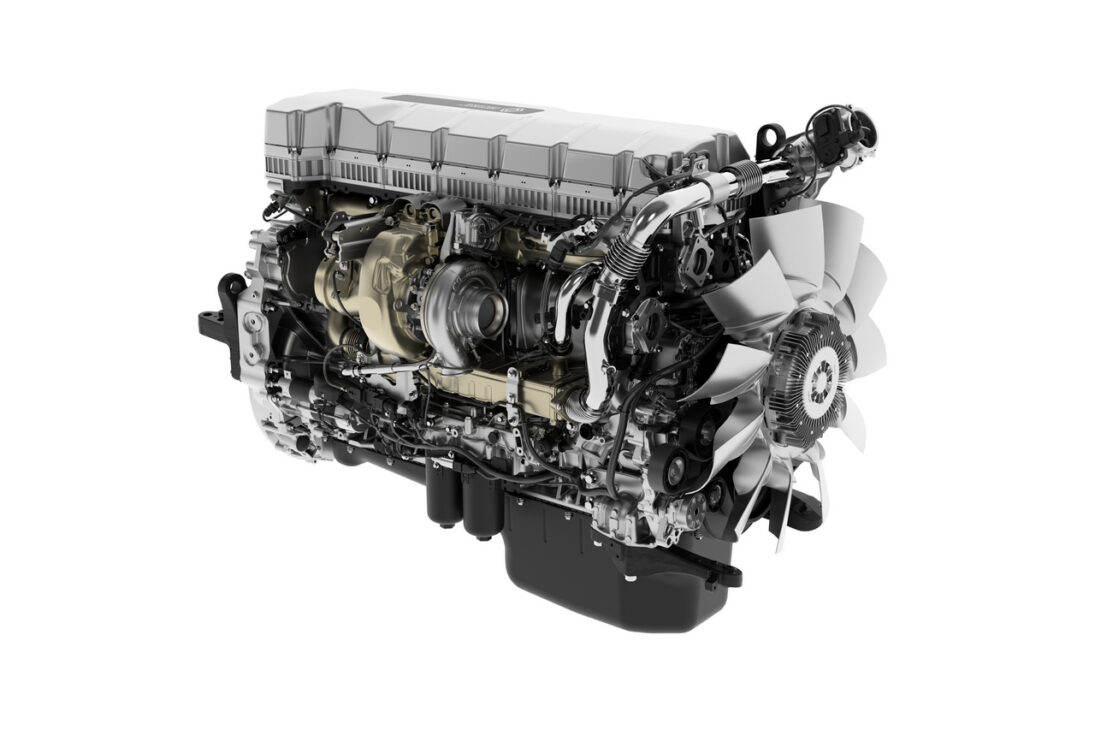
New DE13 R engine delivers up to 540 hp and 2,800 Nm of torque
The new DE13 R engine was designed to combine power, durability, and energy efficiency. Available in versions reaching 540 horsepower and 2,800 Nm of torque, the engine received a series of structural improvements.
Among the new materials used are high-strength gray cast iron and compacted graphite iron, which increase the robustness of the assembly.
The Renault engine also incorporates technical advancements aimed at optimizing combustion and reducing energy losses during operation. Among them are:
- Maximum pressure in the cylinders of up to 250 bar;
- New external high-pressure fuel pump;
- Greater precision in electronic injection;
- Better energy utilization of combustion.
These improvements allow for more performance to be extracted from the consumed diesel, favoring fuel efficiency in different operating conditions.
How the Renault engine uses technology to consume less diesel
One of the differentials of the Renault engine is the way it manages energy consumption. The system was developed to reduce waste and make better use of each combustion cycle.
The new architecture allows for faster responses and greater stability during the transport of heavy loads. This is especially important for companies that operate on long routes and face constant terrain variations.
Another highlight is the Optibrake+ engine brake, installed as standard. In addition to increasing driving comfort, the feature offers more vehicle control on descents and rough terrains.
The result is a more efficient experience for the operator and greater savings over the truck’s lifespan.
New Optidriver transmission reinforces economy and improves driving
Renault has also updated the Optidriver transmission, which now integrates the brand’s new generation of trucks.
According to the manufacturer, gear changes are up to 20% faster than in the previous generation. The change allows the engine to operate in more efficient RPM ranges, reducing fuel waste.
Additionally, the transmission software received new management algorithms that make the changes smoother and more precise.
In practice, this means a more comfortable drive for the driver and an important contribution to the vehicle’s fuel efficiency.
Intelligent systems enhance fuel efficiency on the roads
The new powertrain also uses advanced technologies to optimize performance during trips.
One of the main innovations is Optivision+, a predictive cruise control system that uses topographic information and road data to automatically adjust speed, acceleration, and gear changes.
Features include:
- Reading of route characteristics;
- Automatic speed adjustment;
- Intelligent gear shift strategies;
- Better utilization of available energy.
Another innovation is the Predictive Engine Stop Start. The system can automatically turn off the engine during certain phases of travel when the truck is using the Optiroll coasting mode.
According to Renault, the technology helps reduce consumption without compromising vehicle operation.
Enhanced aerodynamics strengthen operational economy
The improvements are not limited to the mechanical set. Renault has also invested in aerodynamic enhancements to reduce drag and improve airflow around the truck.
Although often unnoticed, these changes can generate significant gains in long-distance operations, where air resistance represents a significant portion of energy consumption.
The manufacturer also offers the Smart Racer2 version, which includes the complete package of technologies aimed at energy efficiency.
The model includes optimized aerodynamics, Optivision+ system, low rolling resistance tires, and advanced predictive powertrain control.
Renault expands alternatives with compatibility for renewable fuels
Another important point is the compatibility of the new engine with alternative fuels.
The system can operate with HVO (Hydrotreated Vegetable Oil) and B100, expanding the possibilities of emission reduction without requiring radical changes in company infrastructure.
This flexibility allows transport companies to adopt decarbonization strategies gradually, taking advantage of technologies already available on the market.
For many operations, this combination of fuel efficiency and renewable fuels can represent a practical solution to reduce environmental impacts.
More comfort, safety, and productivity for drivers
Innovations also reach the cabin. Renault sought to improve the daily experience of professionals who spend hours behind the wheel.
The new powertrain offers a quieter and smoother drive, thanks to the combination of the DE13 R and the updated transmission.
In addition, the trucks now feature advanced driver assistance resources, including Intelligent Driving and systems capable of assisting with lane keeping and automatic following distance control.
These technologies increase safety during trips and reduce the physical strain on drivers during long journeys.
Renault technology shows that efficiency and economy continue to drive transportation
Even with the advancement of electrification, combustion engines continue to play a fundamental role in freight transport. Therefore, initiatives focused on energy efficiency remain strategic for the sector.
With the launch of the new DE13 R engine, the new Optidriver transmission, and intelligent driving systems, Renault reinforces its commitment to reducing operational costs and CO₂ emissions.
The gains of up to 4% in fuel efficiency may seem modest at first glance, but they represent a significant difference when applied to large fleets that travel thousands of kilometers every month.
By combining innovation, performance, and economy, Renault seeks to offer a solution capable of increasing the competitiveness of transport companies while contributing to more efficient and sustainable logistics.