Portuguese
  Spanish


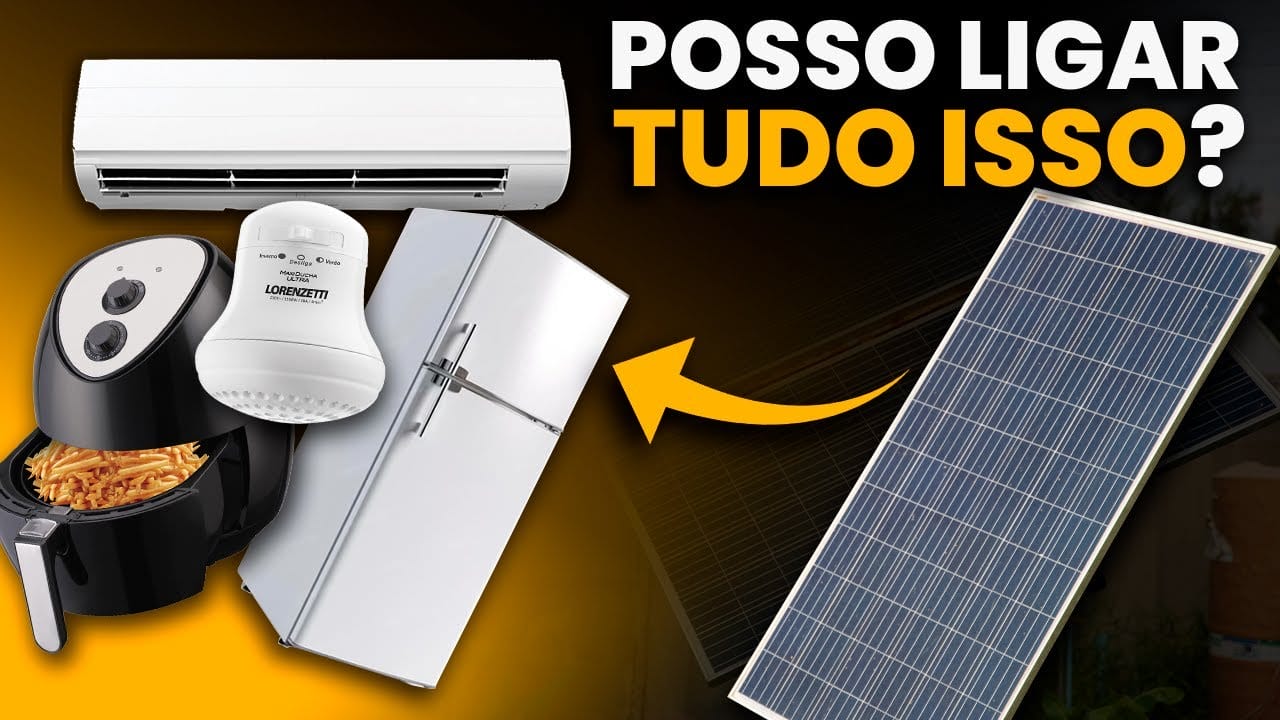

Save Energy with 550W Solar Panels by Connecting Air Conditioners, Electric Showers, and Other Devices. Learn How to Optimize Consumption
Have you ever wondered if it’s possible to run an air conditioner or a shower using solar energy with just a single panel? In this article, we will explore together what can be connected to a solar panel in a simple and straightforward way. To do this, we will divide our mission into two main steps.
In the first step, we will discover how much energy a solar panel can generate in a day. In the second step, we will analyze the consumption of different devices to check if the energy generated by the solar panel is sufficient to keep them running. Let’s go!
What Can Be Powered by a 550W Solar Panel?
To calculate the energy generated by a solar panel, we need a few pieces of information. The first is the wattage of the solar panel, which in this case will be 550 peak watts. It’s worth noting that there are various models of solar panels with different wattages available on the market. Next, we need the average solar irradiance of the area where the solar panel will be installed. This irradiance represents the power of the sun that reaches the solar panel. In this example, we will consider the city of São Paulo, which has an average irradiance of 4.64 kWh per square meter per day. To obtain this information, we consulted the Cresesb database.
-
Solar energy can increase property value by up to 10% and become a selling point.

-
Solar and wind energy surpass natural gas for the first time in the world and accelerate energy revolution

-
Africa has about 500,000 cell towers and most still burn diesel to operate, while companies rush to cover antennas with solar energy and avoid signal blackouts.
-
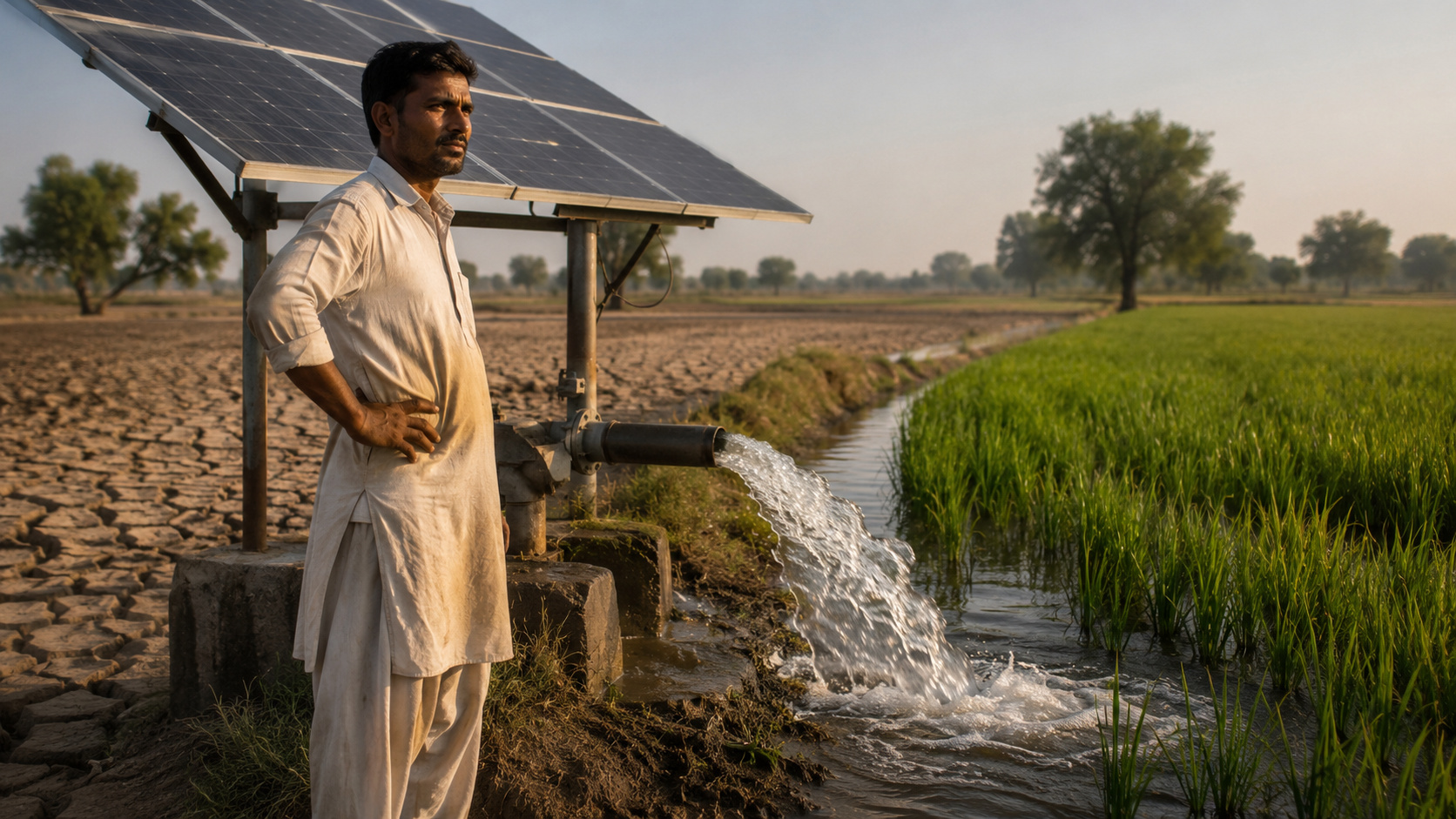
Farmers swapped diesel for solar panels in Pakistan, powered irrigation pumps almost cost-free, expanded rice fields, and now groundwater has become a red alert in the countryside.


Finally, we must take into account the efficiency of the photovoltaic system, which considers losses such as dirt, deviation from the ideal tilt angle, and losses in cabling, among other factors. In this case, we will consider an efficiency of 75%, accounting for a conservative average loss of 25%. Now that we have all the information at hand, we can calculate the energy generated daily by the solar panel. Using the formula: daily energy generated (in kWh) = panel wattage (in watts) x average daily solar irradiance (in kWh/m²) x system efficiency, we find a result of 1.914 kWh per day.

Analyzing Equipment Consumption
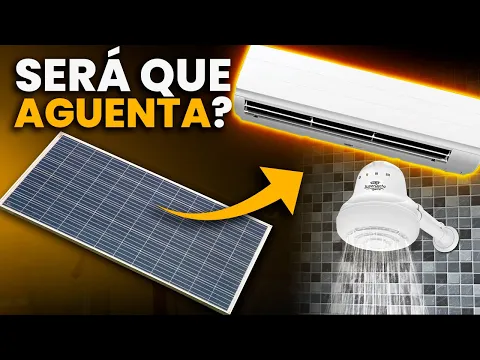
In the second step, we will analyze the consumption of different devices and check if the energy generated by the solar panel is sufficient to keep them running. Let’s start with an example of a 9000 BTU air conditioner. According to Procel, this model of air conditioner consumes 17.1 kWh per month when running for 1 hour per day. Dividing, we arrive at a consumption of 0.57 kWh per hour. Since our solar panel generates 1.914 kWh per day, it would be able to keep this air conditioner running for approximately 3 hours and 21 minutes per day.
Now, let’s analyze the consumption of a shower. Considering a shower with a wattage of 5500 watts and a 20-minute daily use, the consumption would be 1.815 kWh. Since the solar panel generates 1.914 kWh per day, it would be able to cover the consumption of this shower.
It’s important to note that these calculations can be applied to any device you want to connect to the solar panel, such as refrigerators, microwaves, or AirFryers. Just replace the device wattage and usage time in the previously mentioned formula.
Planning Your Solar Installation
In this article, we explored the possibility of connecting different devices to a solar panel. Using the calculations of energy generated by the panel and the consumption of devices, it was possible to verify if the solar panel would be able to meet the demand of these devices. However, it’s important to emphasize that to use the solar panel in practice, it is necessary to install a complete solar energy system, including an inverter, protections, and mounting structure.
Remember, solar energy is a renewable and sustainable source that can provide savings and energy autonomy. By using a solar panel, you will be contributing to a cleaner and more sustainable future.
Source: E4 Renewable Energies