Portuguese
  Spanish


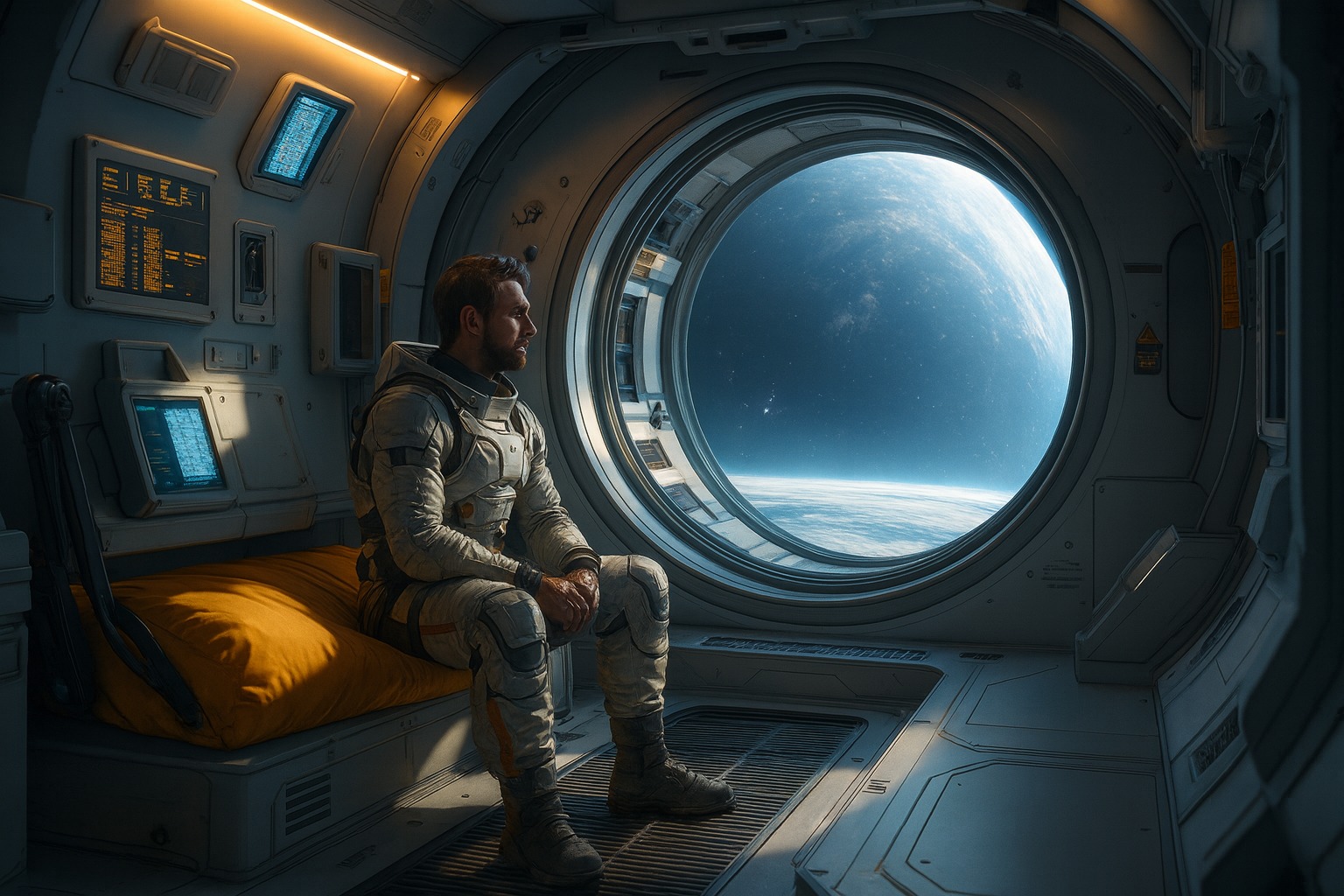


German Experiment Seeks Six Volunteers to Live 126 Days Confined in Replica of Space Station, Assessing Physical Health, Psychological Effects, and Behavior, with Payment of R$140 Thousand to Participants Who Complete All Stages
Would you accept to stay months isolated in a closed environment because the proposal promises to simulate a real space mission? The German study SOLIS1000 seeks six volunteers willing to face 126 days inside a replica of a space station built in Cologne.
Objective of the Experiment
The research aims to observe physical and emotional effects during long periods of confinement. Daily behavior will be closely monitored, so the routine of participants will serve to understand human limits.
Additionally, well-being will be assessed in stages, which is seen as essential for future missions.
-
Netherlands Reports First Child Euthanasia Case Since Rule Expansion for Minors

-
Brazilian Innovator Survives Homemade Submarine Dive in Paraty Despite Hatch Leak and False Oxygen Alarm

-
China Develops Custom 140-Ton Electric Mining Truck with 770 kWh Swappable Battery, Deploys 290 Units in Xinjiang’s Largest Zinc Mine
-
Meta to Launch Arena, a New Prediction App Targeting 3.56 Billion Users, Competing with Polymarket and Kalshi




“More important than ever to prepare astronauts for psychological and physical challenges“, states the official announcement.
The proposal aims to show the public what it is like to live as an astronaut, something highlighted in a report from UOL.
Phases of Isolation
The complete cycle totals 126 days. Before that, there will be 16 days of preparation, starting on April 7, 2026.
The hundred days of confinement will follow until August 7, 2026. Then there will be a week of recovery, during which each person will undergo final evaluations.
Financial Reward
The study, funded by the European Space Agency and conducted by the German Aerospace Center, pays 23,000 euros to those who complete all stages.
The amount is around R$140 thousand. It is considered an attractive sum, although the isolation demands discipline and resilience.
The announcement emphasizes that future missions will go beyond low Earth orbit because they seek destinations like the Moon and Mars. Therefore, understanding human reactions in extreme environments is part of the planning.
Selection Criteria for the Study
The German Aerospace Center emphasizes that the selection of candidates will be careful. The responsibility of the experiment requires clear and strict criteria.
Being between 25 and 55 years old is the first condition. Good health and regular exercise are also necessary.
Another requirement is proficiency in English. Therefore, those who do not master the language will not be able to proceed to the next phases.
The Institute of Aerospace Medicine reminds that missions to the Moon and Mars require resilience, autonomy, and adaptability, reinforcing the desired profile.
Education and Elimination Exams
Interested parties must have a higher education degree, preferably in Medicine, Software Engineering, Technology, or related fields.
This point aims to bring the study closer to real situations, as crews usually consist of technical professionals.
The selected individuals will also undergo psychological, physical, and medical tests. Only after this rigorous filtering process will each participant be confirmed, forming the small group that will face prolonged confinement.
With information from Bnewssaopaulo.