Portuguese
  Spanish


BYD Reported 30% Drop in Profits in the Second Quarter of 2025 Amid Price War in the Automotive Sector and Pressure from the Chinese Government.
After a cycle of continuous growth, BYD surprised the market by announcing its first retraction in profits in three years. In the second quarter of 2025, the Chinese automaker reported a 30% decline, totaling 6.4 billion yuan — about 772 million euros, as reported this Monday (09/08).
The contrast is even greater because, just in the first quarter of this year, the company had managed to double its profits.
Pressure from the Chinese Government and Price War
The trend reversal did not happen by chance. Analysts interviewed by Reuters indicate that the pressure from the Chinese government to curb the price war in the automotive sector was decisive.
-
Chinese Giant Invests $1.3 Billion in Brazil to Produce 50,000 Cars Annually, Create Jobs, Develop Local Suppliers, and Manufacture Electric, Hybrid, and Combustion Models by 2027

-
Unprecedented achievement in India: a colossal 650-ton, nearly 3,000 hp excavator is transformed into 100% electric, marking a new phase in heavy mining.
-
Frightened by the speed of Chinese manufacturers, Renault decided to mimic the pace, made the new electric Twingo in just 21 months, wants to repeat the feat with 36 models by 2030, and along the way, will cut up to 2,400 engineering positions.

-
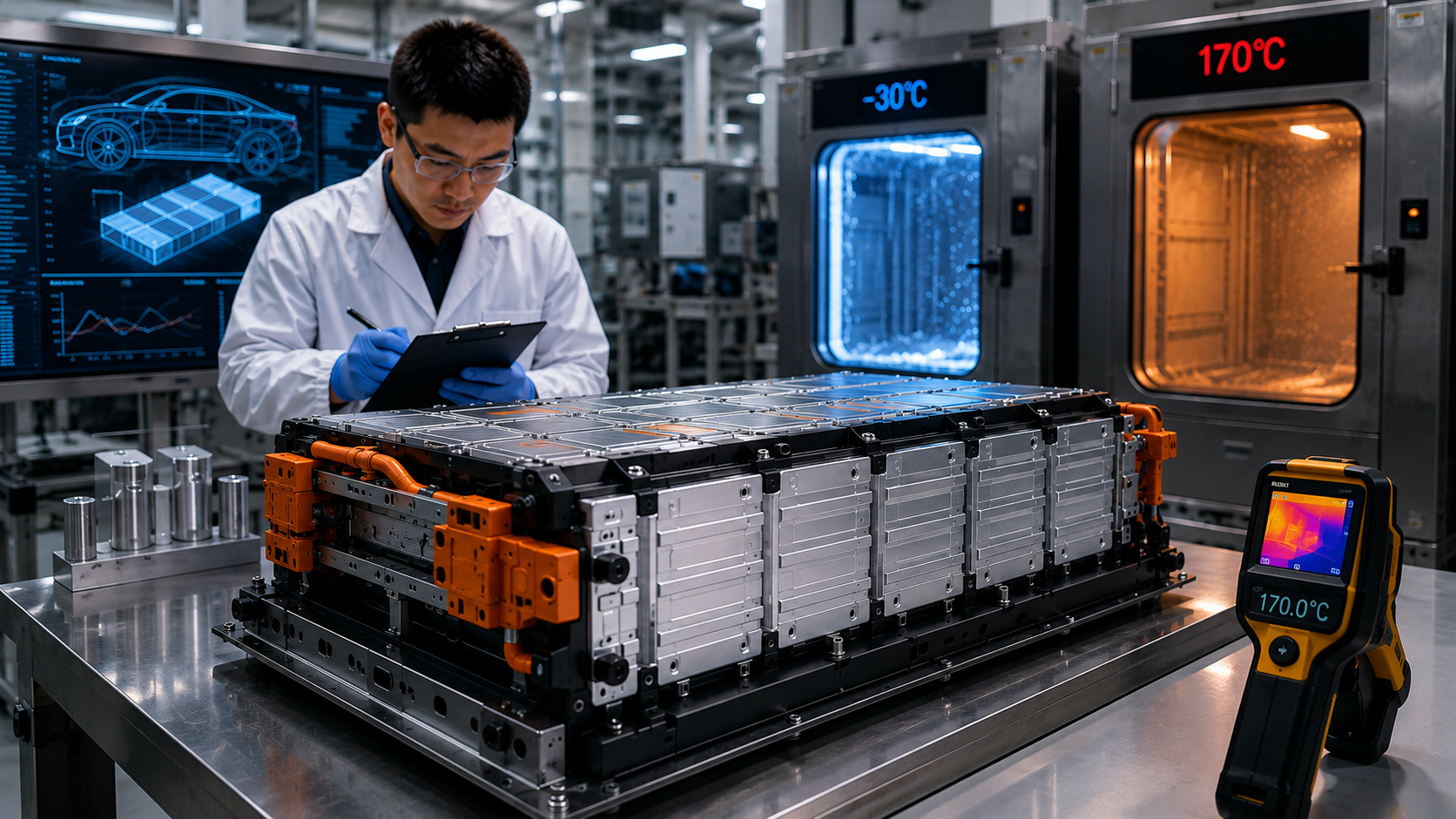
Chinese battery from Dongfeng promises to exceed 1,000 km without relying on liquid electrolyte, and the detail behind the technology could change the electric car competition.

This topic was even discussed in a recent meeting between authorities and executives from the major local manufacturers. Beijing’s concern lies in the excess production and the risks of instability that this scenario may cause in the national economy.
Rising Domestic Competition
Another noteworthy point is the accelerated advancement of competitors in the domestic market. BYD, which until recently dominated significant sales shares, has been losing ground to other Chinese automakers.
According to consulting firm Jefferies, July marked the third consecutive month of declining sales for the company within the country, which had set an ambitious goal: sell 5.5 million vehicles only in the Chinese market in 2025.
However, by the end of July, 2.49 million units had been sold, equivalent to 45% of the annual target, already accounting for the beginning of the second half.
Experts point out that structural factors are eroding the company’s competitive advantage, which was previously sustained by cost cuts, production scale, and technology leadership. For this reason, consulting firm Jefferies downgraded its earnings forecasts for BYD for the period from 2025 to 2027.
Reactions from the Financial Market
The impact of the news was immediate on the stock exchanges. On the day of the announcement, BYD’s shares in Hong Kong fell by 5.2%. By the next morning, the accumulated decline had reached 8%. This movement reinforces investors’ distrust regarding the company’s ability to recover in the short term.
Even in light of this retraction, BYD remains among the most successful Chinese automakers in the world. In 2024, it was one of the few electric vehicle manufacturers to show consistent profit, which kept it as a benchmark in the sector.
Still, the recent performance serves as a warning for the international automotive market. Experts assess that the brand has lost some growth momentum and may fall short of projections until it finds new energy.