






 Portuguese
  Spanish


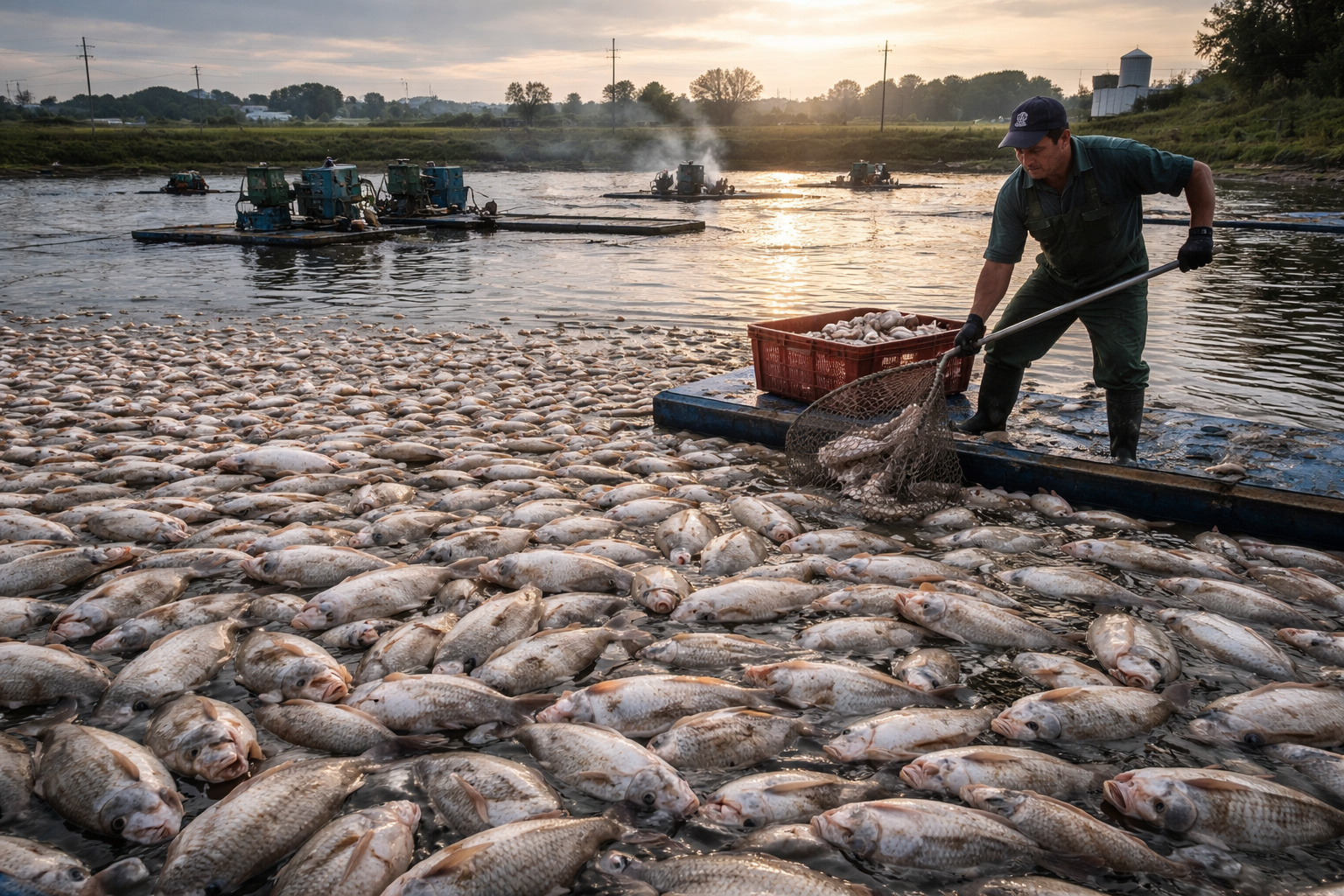


Power Outages That Began in January Compromised Aerators, Reduced Water Oxygenation, and Caused the Death of About 900 Tons of Tilapia Ready for Slaughter in Western Paraná
A power supply failure killed approximately 900 tons of tilapia in Tupãssi, in Western Paraná.
The incident occurred on Thursday, the 26th, as reported by the farmer Paulo Michelon to the Banda B portal.
Before the incident, the property maintained about 1.1 million fish distributed across six reservoirs, all at the ideal phase for slaughter, which increased the financial impact.
-
Brazil to Issue “Panda Bonds” in China, Aiming to Raise Up to 5 Billion Yuan at Lower Interest Rates Than Dollar Debt
-
NATO Faces Internal Tensions as U.S. Pushes for Increased Defense Spending, Targeting 5% of GDP by 2035, with Warnings for Countries Near 2% Level

-
Brazil to Introduce B16 Diesel with Increased Soybean Oil Content for Trucks by 2026
-
Brazil’s July Bolsa Família Payments May Include Extra $150 and $50 for Families with Children, Pregnant Women, and Updated CadÚnico Registration


The losses reached R$ 9 million, as the animals were ready for sale.
Power Failures Compromised Oxygenation System
According to the farmer, fluctuations in supply began in early January and recurred over the following weeks.
Power outages damaged essential equipment for aquaculture and interrupted the operation of the aerators.
Without the aerators, the water rapidly lost oxygenation.
As a direct result, the fish could not withstand the inadequate conditions.
Mortality surged on a large scale and affected nearly the entire production of the property.

Expert Report Indicates Voltage Below the Minimum Required by Aneel
After the incident, the farmer hired a technical expert to identify the cause of the problem.
The report found that the electric voltage supplied to the property was below the minimum limit required by the National Electric Energy Agency (Aneel).
The measurement indicated voltage lower than the 220 volts required for the proper functioning of the equipment.
Based on these findings, the farmer decided to seek judicial relief.
Court Orders Normalization of Service Within 48 Hours
In light of the evidence presented, Judge Luiz Fernando Montini ordered the Paranaense Energy Company (Copel) to normalize the power supply to the property.
The decision established a 48-hour deadline for normalization. If the company fails to comply, it will be subject to a daily fine of R$ 2,000, initially capped at R$ 60,000.
With this, the judge sought to ensure adequate technical conditions for the operation of the aquaculture activity.
Copel Comments on the Process
In an official statement, Copel informed that the lawsuit is under judicial secrecy. The company declared that it has not yet received formal notification of the decision.
According to the company, as soon as official notification occurs, it will analyze the content of the determination.
Then it will take the necessary actions within the legal processes.
Economic Impact and Developments
Meanwhile, teams from the property continue to remove the dead fish from the reservoirs. The incident shows how failures in power supply directly impact aquaculture production.
Furthermore, it reinforces the importance of meeting the technical standards defined by Aneel to ensure stability in service.
The case remains under judicial analysis, and the normalization of supply may determine the future of the activity on the property.
In light of this scenario, what preventive measures should take priority to avoid similar electrical failures causing losses in rural production?





