Portuguese
  Spanish


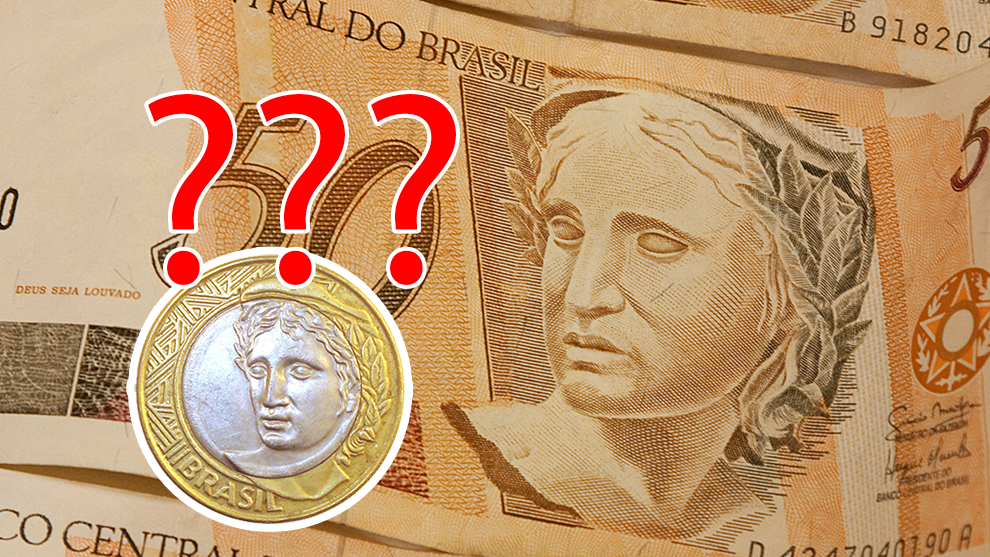


Have You Ever Wondered Who Is the Woman Depicted on the Real Bills? Discover the Origin and the Meaning of This Enigmatic Figure That Embellishes Our Money.
The implementation of the Real Plan in 1994 brought very important changes to the Brazilian economy and also to the appearance of money in the country. The new bills, which replaced the cruzeiro real, presented to the public a familiar but little understood face: the female figure engraved on the front of all the notes, surrounded by elements that appeared to be sculpted in marble.
This figure, often referred to as “effigy of the Republic“, carries a rich history that spans centuries, cultures and revolutions.
A Star Before the Real
The effigy of the Republic, before adorning the real bills, was already part of Brazil’s monetary history. Its debut took place in 1989, on the 200 new cruzados notes, during the Summer Plan, implemented under the government of José Sarney.
-
Brazil’s 2026 Tax Refund: Record 9.58 Million Filers in Largest Payout Ever, But a Key Detail on Priority Recipients Draws Nationwide Attention

-
Itaú Alters Hybrid Work Model, Increasing Office Days from 2028, Prompting Employees to Adjust to New Routine
-
Facing Labor Shortage, Japan Plans to Invest $34 Million to Attract Foreign Workers in Construction, Healthcare, Industry, and Commerce

-
Brazilian City Makes Remarkable Leap, Becomes 4th Wealthiest in the Country with GDP of R$ 134.1 Billion




Even with the change of currency to the cruzeiro in 1990, the notes continued to circulate, merely with a stamp indicating the adjustment.
When the real was created, the effigy ceased to be exclusive to a single value and began to appear on all the bills, accompanied by emblematic animals of the Brazilian fauna, such as the red macaw, the grouper, and the maned wolf.
Its design was updated, but the essence remained: a woman with wavy hair, a crown of leaves, and a serene expression.

Who Is the Effigy?
Although known as “effigy of the Republic”, the figure does not represent a real person. The term “effigy” refers to any image or sculpture with human characteristics used on coins or bills.
This includes everything from American presidents on dollar bills to monarchs on pound sterling. In the Brazilian case, the effigy is an allegory of the Republic, inspired by symbols of freedom and equality.
The origin of the effigy dates back to the proclamation of the Republic in 1889. Its initial representation was influenced by similar figures in France and Portugal, such as Marianne, symbol of the French Revolution.
In Brazil, it became established as a republican symbol and was depicted in works by artists such as Décio Villares, who, in 1919, created a version that would influence future designs.

The Influence of Marianne
Marianne, the inspiration for the Brazilian effigy, is an icon of freedom. Emerging during the French Revolution, she represents the ideals of “Liberty, Equality, and Fraternity”.
Her face appears on coins, statues, and paintings, the most famous of which is “Liberty Leading the People”, by Eugène Delacroix, from 1830.
In the Brazilian version, Marianne is adapted to reflect elements of our culture. Her Phrygian cap, a type of hat, is a symbol used by French revolutionaries and refers to Phrygia, an ancient region where people would not allow themselves to be enslaved. This same adornment is part of Brazil’s coat of arms.
Curiosities and Mysteries
Over the years, rumors have emerged about the possible real identity of the Brazilian effigy. Some speculated that the face was inspired by famous actresses of the time, such as Tônia Carrero, or by anonymous women who served as muses for the engravers of the Central Bank. However, none of these theories has been confirmed.
What is known for sure is that the effigy was designed to symbolize the Republic, incorporating values such as democracy, freedom, and unity.
The engraver Benedicto Ribeiro, responsible for some of the representations, sought to balance classical and modern traits, creating an image that was both timeless and familiar to the Brazilian people.
The Effigy Around the World
The use of effigies is not exclusive to Brazil. In Portugal, for example, the Republic’s coins featured similar engravings, designed by artists such as Cândido da Silva.
In the United States, presidents are depicted on the bills, while in the United Kingdom, banknotes and coins display the image of the reigning monarch.
This practice reflects the cultural and historical importance of these symbols. They not only give identity to the coins but also serve as a means of telling the story of the countries they represent.
The Effigy on the Real Bills
With the creation of the real, the effigy began to be accompanied by animals from the Brazilian fauna. This decision aimed to highlight the country’s biodiversity and reinforce the connection between money and national values.
Each bill received a specific animal, such as the sea turtle on the R$ 2 bill and the jaguar on the R$ 50 bill.
More recently, in 2020, the effigy returned to prominence in the new R$ 200 bill, which features the maned wolf as its symbolic animal. This launch reignited interest in the history and significance of the effigy, showing that, even after decades, it remains relevant.