






 Portuguese
  Spanish


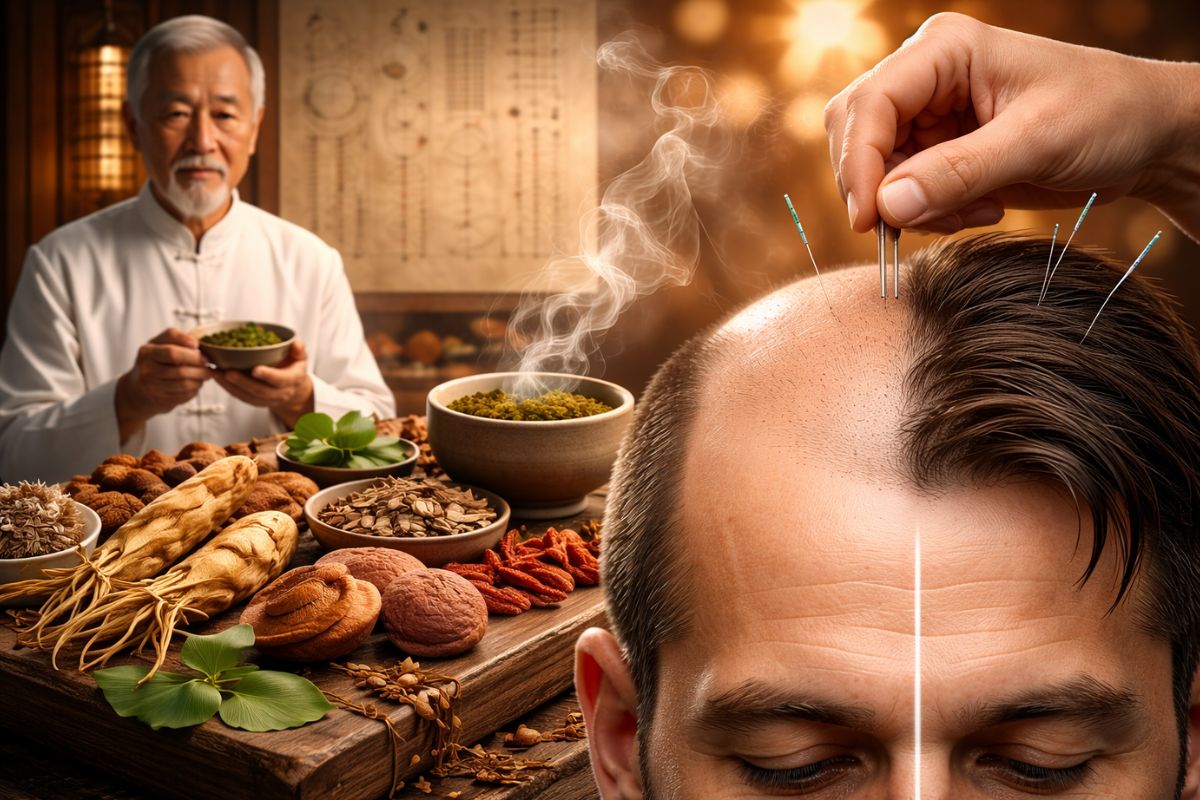


Root Used for Over a Thousand Years in Traditional Chinese Medicine Reappears in Recent Studies as a Possible Ally Against Baldness by Acting on Multiple Biological Mechanisms, Influencing DHT, Promoting Circulation in the Scalp, and Rekindling the Debate Between Traditional Knowledge and Contemporary Applied Science
Baldness remains one of the most common and emotionally sensitive aesthetic conditions, affecting both men and women at different stages of life. Even with established medications on the market, results vary, side effects generate controversy, and the search for alternatives remains active.
In this scenario, traditional Chinese medicine returns to the scientific radar as one of its traditional roots is analyzed under modern methods. What was once described in ancient texts is now beginning to be confronted with biological explanations, raising questions about the real origin of some advancements in hair treatment.
Why a Root from Traditional Chinese Medicine Has Drawn Scientific Attention Again

The root known as Polygonum multiflorum appears in records of traditional Chinese medicine for over a thousand years, associated with vitality and hair maintenance.
-
Berries, Strawberries, and Blueberries Could Transform Agriculture in Northeastern Brazil, New Tests Reveal

-
Danish Resident Discovers Six Viking Gold Bracelets Weighing 762.5 Grams, Third Largest Gold Treasure in Denmark

-
Over 200 Cities in Southern Brazil on Storm Alert as Cyclone Near Uruguay Brings Heavy Rain, Hail, and Winds Up to 100 km/h

-
Archaeologists Discover 2,300-Year-Old Beer in Sealed Bronze Vessel from Ancient Chinese Tomb




For centuries, its use was described empirically, without validation by current scientific criteria, which kept the plant out of the conventional medicine circuit.
This scenario began to change when recent reviews started to cross historical accounts with laboratory studies.
Researchers identified that ancient descriptions coincide with processes now known in hair biology, something that has reopened academic interest in the role of this root in hair regeneration.
What Studies Indicate About Baldness and Hair Regeneration
According to recent analyses, the distinguishing feature of the root studied within traditional Chinese medicine is its ability to act on more than one biological pathway at the same time.
Rather than focusing only on an isolated mechanism, it seems to interfere in complementary processes related to the health of the hair follicle.
Among the observed effects are the reduction of DHT action, a hormone associated with the progressive thinning of hair, the protection of follicle cells against premature death, and the activation of systems related to hair growth.
This combination of actions helps explain why the plant was described as regenerative, and not merely as an agent that halts hair loss.
Circulation, Oxygenation, and the Forgotten Role of the Scalp
Another noteworthy point in the studies is the influence of the root from traditional Chinese medicine on the blood circulation in the scalp.
The improvement in local flow favors the transport of oxygen and nutrients, an essential condition for the follicles to maintain their activity over time.
This aspect often receives less attention in modern treatments, which prioritize hormonal control.
By also acting on the vascular base of the scalp, the plant broadens the understanding of why some treatments fail, even when they manage to partially block DHT.
Limits, Caution, and the Clash Between Tradition and Modern Medicine
Despite the enthusiasm, the authors themselves highlight that there are still few large clinical trials to define doses, safe forms of usage, and possible adverse effects.
Traditional Chinese medicine offers clues, but does not replace the rigorous clinical protocols required today.
This point exposes a recurring conflict: traditional knowledge only gains space when it can be translated into the current scientific language.
Until then, they are viewed with caution, even when they present biological coherence and a history of prolonged use.
The rediscovery of this root from traditional Chinese medicine does not represent an immediate cure for baldness, but opens up a larger question: how many potential solutions have remained on the margins for not fitting into the dominant research models? By uniting tradition and science, the debate shifts from miracle to method.
Would you trust a treatment inspired by traditional Chinese medicine if it showed effectiveness similar to current medications, even coming from an ancient root? Or do you still prefer modern solutions, even with known limitations?






Yes, I would.who wants to be bald?