Portuguese
  Spanish


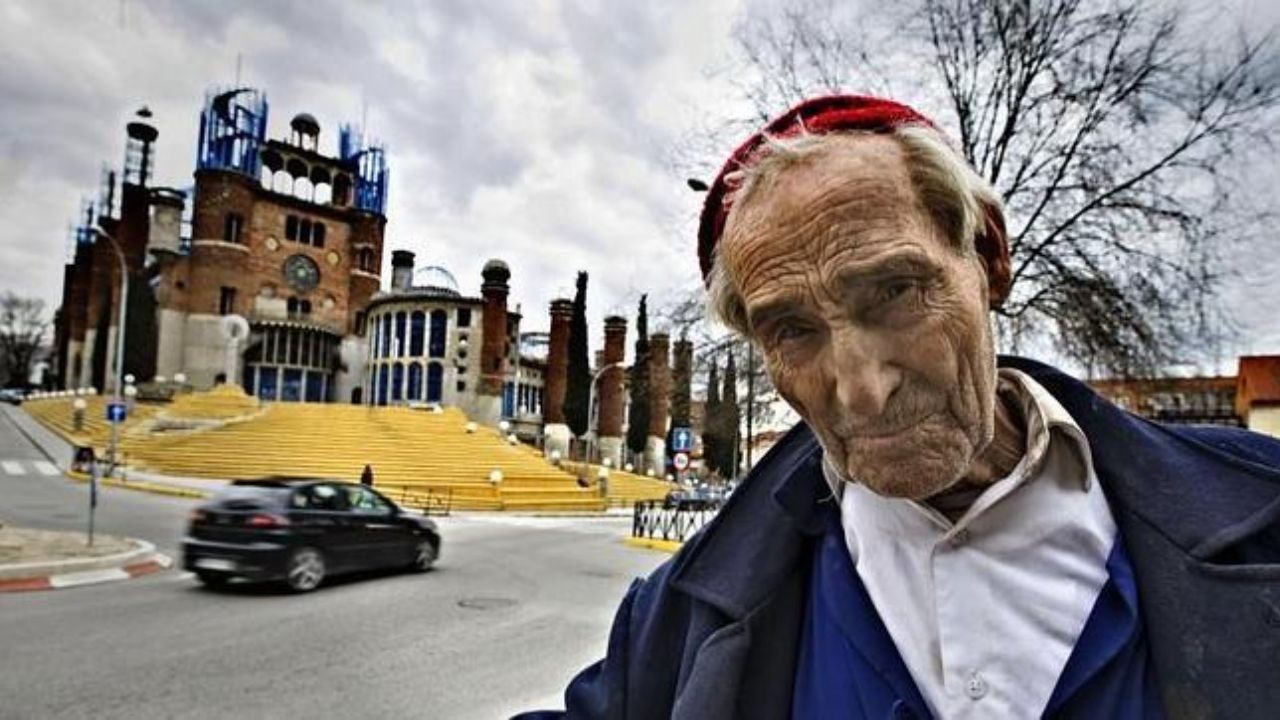


Alone for 60 Years, the Man Who Uses Recycled Trash Challenged Engineering and Logic by Turning Industrial Waste into a Monument of Faith That Now, Under New Management, Faces Religious and Bureaucratic Controversies.
In a demonstration of tenacity that defies construction laws, a man who uses recycled trash built, practically alone, a monumental structure of 4,700 square meters in Mejorada del Campo, Spain. Justo Gallego Martínez, with no academic training in architecture and using materials discarded by society, raised a cathedral with a dome 35 meters high. The feat, started in 1961, is not just a visual curiosity but a case study that today attracts the attention of global engineers and urban planners.
The work, born from a promise after recovering from tuberculosis, outlived its creator, who passed away in 2021. Currently managed by the organization Mensajeros de la Paz, the cathedral is going through a critical phase in 2025: the attempt at definitive legalization and adaptation for safety to welcome the public. What began as the solitary act of a former monk has transformed into a complex debate about faith, structural safety, and the revolutionary use of industrial waste in vernacular construction.
The Genesis of An Accidental Architect
To understand how a single individual decided to dedicate six decades of life to stacking bricks and trash, we must look at trauma and faith. Justo Gallego’s formal education was interrupted at the age of 11 by the Spanish Civil War and later he joined the Monastery of Santa María de Huerta. However, his vocation was tragically cut short in 1961 when he contracted tuberculosis. Expelled from the monastery for the risk of contagion before taking his perpetual vows, Justo returned to Mejorada del Campo depressed and stigmatized.
-
At 17, she hand-painted her first watercolor design for school uniforms; her brand grew without investors, sold 135,000 pieces, and aims for $3 million in revenue by 2026.

-
Shell Discovers Intact Early 19th-Century Wooden Shipwreck in the Gulf of Mexico at Over 1,300 Meters Deep
-
Brazilian Entrepreneur Turns Door-to-Door Jewelry Sales into a Family Business Empire with Over 70 Stores

-
$75 Million Bridge in Brazil Opens to Connect Cities, Create Jobs, and Cut Travel Time from 30 to 2 Minutes; Spanning 1.24 km, It’s Among the Country’s Largest and Ends Decades of Ferry Queues.




It was in this moment of crisis that he made a solemn vow to the Virgen del Pilar: if he survived, he would build a chapel on land inherited from his parents. The “chapel” transformed, in Justo’s mind, into a cathedral of basilica proportions. Without blueprints, without support from the Church, and without municipal permits, he laid the first stone on October 12, 1961. Faith became an act of physical reconstruction, where the monastic discipline of “pray and work” was applied in moving tons of rubble.
Intuitive Engineering: Trash as Structure

The most fascinating aspect for modern engineering is the methodology applied by the man who uses recycled trash. Operating without a budget, Justo redefined the concept of building material, creating an encyclopedia of industrial waste. Oil drums and gasoline cans were stacked to serve as lost formwork for the main nave pillars, filled with concrete, creating a unique industrial aesthetic. Tin cans and plastic containers were used as filling for slabs, while old tires were incorporated into the foundations.
More impressive than the materials was the technique developed to work without cranes. Justo utilized a kind of “self-climbing formwork.” To raise the 35-meter dome, he created lightweight wire frames and applied thin and successive layers of concrete. The concrete hardened quickly, creating a rigid shell that supported Justo’s weight for the application of the next layer. He literally “wove” the cathedral into the air, scaling the very structure he was creating, dispensing with massive scaffolding and heavy machinery.
The Verdict of Science and Stability
For years, the work was viewed with skepticism and fear of collapse. However, after Justo’s death and the transfer of guardianship to the NGO Mensajeros de la Paz, the firm Calter Ingeniería conducted a complete forensic audit with cutting-edge technology. The verdict validated Justo’s “structural intuition”: the overall structure is stable. The oversizing of support sections and the density of pillars ensure the transmission of loads to the ground, although there are serious pathologies like infiltrations and detachments that require immediate intervention.
Specialists compare the work to Gaudí’s Sagrada Familia, but with a crucial distinction: while Gaudí used natural geometry with mathematical precision, Justo used classical geometry through imitation and instinct. The Calter report confirmed that, unknowingly, Justo applied complex stability principles, utilizing shapes that work under compression, like arches and vaults. Today, the challenge is not demolition, but ensuring safety to allow regular public access.
From “The Crazy One” to Global Icon
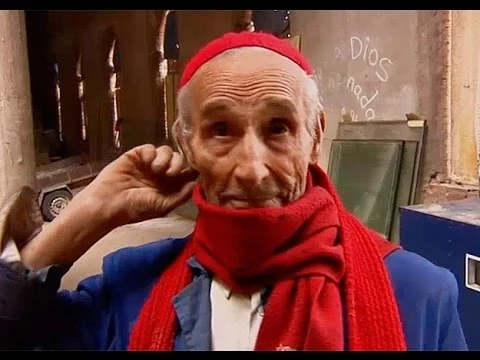

The public perception of the man who uses recycled trash has changed radically over the decades. In the 60s and 70s, he was ridiculed by neighbors as “El Loco de la Catedral.” The turning point occurred in the 21st century, driven by an advertising campaign from the brand Aquarius in 2005, which highlighted his genius and perseverance, and by the inclusion of photos of the work in an exhibition at the MoMA (Museum of Modern Art in New York) in 2006. The construction site became a destination for artistic and tourist pilgrimage.
Despite global fame, the end of Justo’s life had a bittersweet taste. His ultimate wish was to be buried in the crypt of the cathedral he built with his own hands. However, after his death in November 2021, Madrid authorities denied the health permit for burial in an unconsecrated location. Justo was buried in the municipal cemetery, an ending that many considered a bureaucratic betrayal of the visionary who dedicated his life to that work.
New Management and the Controversy of the “Mosque”
Under the management of Father Ángel and the organization Mensajeros de la Paz, the cathedral received investments of around €400,000 until 2025 for security and cleaning works. However, the new leadership brought theological controversies. To facilitate legalization, the building was renamed “Centro Social Catedral de Justo”, ceasing to be a strictly Catholic temple.
Recently, the creation of inter-religious spaces, including a prayer area for Muslims (referred to as “the mosque”) and other faiths in annexes to the complex, sparked outrage among traditionalist sectors. Critics argue that this disrespects the memory of Justo, who built the site as a Catholic Marian ex-voto. The NGO defends itself, stating that ecumenical hospitality reflects the spirit of Christian charity, maintaining Christian iconography in the central nave while seeking the legal and social viability of the project.
Is the decision to transform the cathedral of a devout Catholic into a multireligious center to ensure its legal survival valid, or do you believe this violates the memory of the man who uses recycled trash to honor his original faith? Leave your honest opinion in the comments below, we want to debate the limits between historical preservation and modern adaptation.