Portuguese
  Spanish


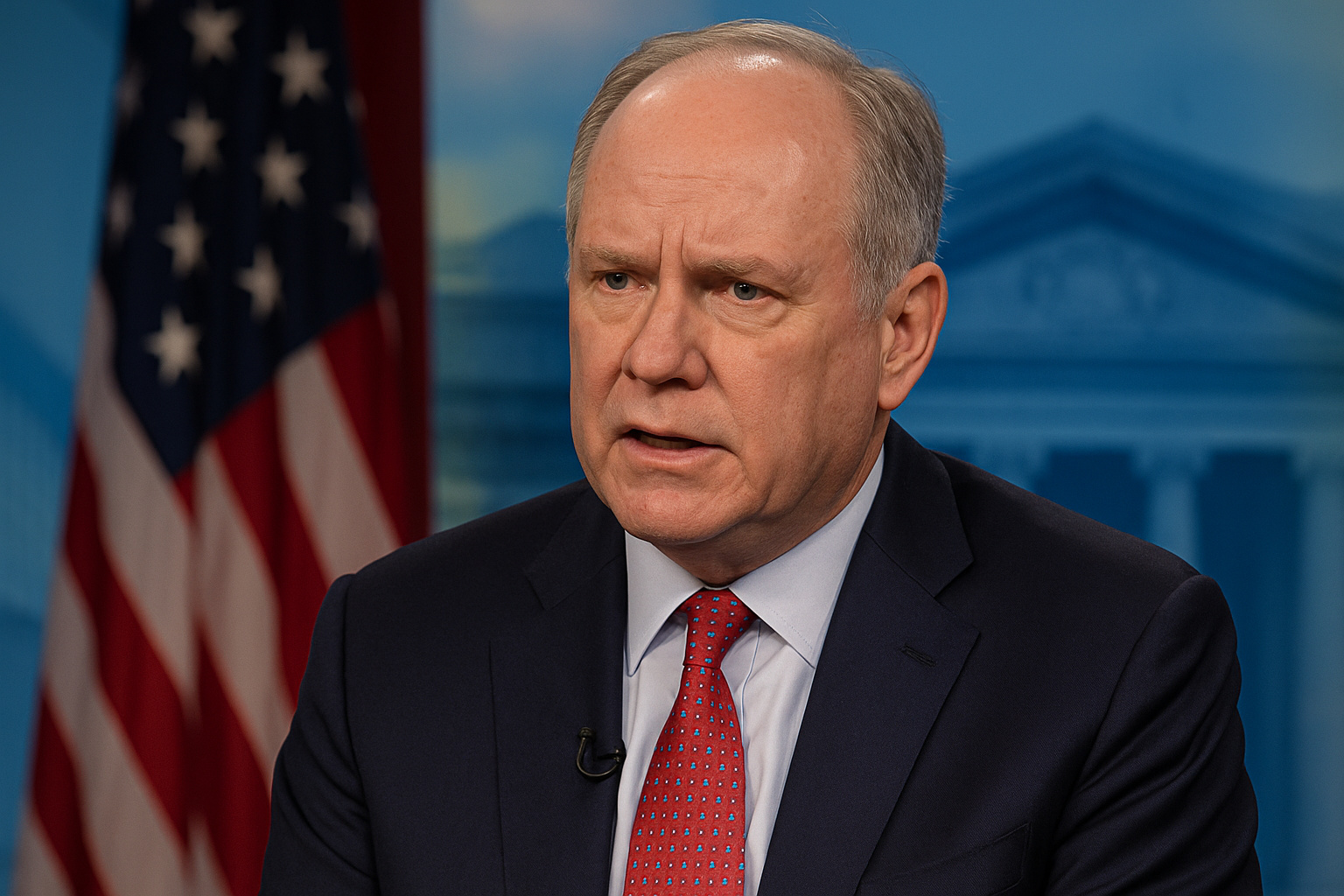

Secretary Points Out Impact of High Interest Rates on the Real Estate Market and Questions the Fed’s Slowness in Reducing Rates More Aggressively
The Secretary of the Treasury of the United States, Scott Bessent, stated on Sunday, November 2, 2025, during an interview on the State of the Union program, that while the American economy shows an overall performance considered solid, some sectors are already facing signs of recession.
The statement comes at a time of tension between the Trump Administration and the Federal Reserve (Fed). The dispute centers on the conduct of monetary policy and decisions regarding interest rates.
Emphatically, Bessent highlighted that, even with growth in some indicators, there are areas of the economy in contraction. He stated, “I think we are in good shape, but there are sectors of the economy that are in recession.”
-
Brazil to Issue “Panda Bonds” in China, Aiming to Raise Up to 5 Billion Yuan at Lower Interest Rates Than Dollar Debt
-
NATO Faces Internal Tensions as U.S. Pushes for Increased Defense Spending, Targeting 5% of GDP by 2035, with Warnings for Countries Near 2% Level

-
Brazil to Introduce B16 Diesel with Increased Soybean Oil Content for Trucks by 2026
-
Brazil’s July Bolsa Família Payments May Include Extra $150 and $50 for Families with Children, Pregnant Women, and Updated CadÚnico Registration


Additionally, he criticized the Fed for, according to him, causing distributive distortions with its interest rate policies. These measures, according to the secretary, directly affect credit, consumption, and the cost of living.
Interest Rate Policy and Direct Impacts
According to the secretary, high interest rates have primarily penalized the real estate sector, considered one of the pillars of the American economy.
The rising cost of credit, he said, reduces access to housing and slows consumption. These elements are essential for maintaining the pace of economic growth.
This concern has been central to Trump’s economic management, which seeks to boost construction and domestic investment.
On October 29, 2025, the Federal Reserve announced the second consecutive cut in the basic interest rate, reducing it by 0.25 percentage points.
As a result, the rate dropped to the range of 3.75% to 4% per annum, the lowest level since November 2022.
However, the decision generated controversies within the Fed’s own committee.
While Stephen Miran, nominated by Trump, advocated for a larger cut of 0.5 percentage points, Jeffrey R. Schmid voted to maintain the rates.
The next meeting of the Fed is scheduled for December 9 and 10, 2025. In this meeting, the central bank will decide whether to continue the monetary easing cycle.
Political Critiques and Expectations
During the interview, Bessent emphasized that the current rate of interest cuts is insufficient to balance the market.
He stated that the slowness could jeopardize the recovery of key sectors, such as real estate and durable goods. Both are directly affected by fluctuations in financing rates.
As a result, the secretary advocated for a more aggressive approach to rate reductions and a broader stimulus plan to accelerate economic activity.
He also indicated that the Trump administration is considering additional measures to alleviate credit costs and encourage investments.
Succession at the helm of the Federal Reserve
In addition to discussing interest rates, Bessent commented on the succession of Jerome Powell, chairman of the Federal Reserve, whose term expires in May 2026.
He revealed the five finalists being considered by the government for the position: Christopher Waller and Michelle Bowman, current members of the Fed’s board; Kevin Warsh, former director of the institution; Kevin Hassett, former head of the National Economic Council; and Rick Rieder, executive at BlackRock.
These names, according to the secretary, reflect Trump’s desire to promote a shift in monetary policy. The aim is to prioritize sustained domestic economic growth and inflation reduction.
Outlook for the End of the Year
As the Fed approaches its last meeting of 2025, the US government intensifies pressure for a more flexible interest rate policy.
Economists from institutions like Goldman Sachs and Moody’s Analytics predict that, if cuts do not accelerate, sectoral slowdown may widen in the first quarter of 2026.
Meanwhile, the debate over Powell’s succession is expected to gain momentum in the coming weeks.
The choice of the new Fed chairman could define the direction of the US economy in the coming years.
Amid gradual interest rate cuts, political disputes, and tensions between the Treasury and the Federal Reserve, the main question remains: will the pace of reduction be sufficient to prevent a wider recession in the world’s largest economy?