Portuguese
  Spanish


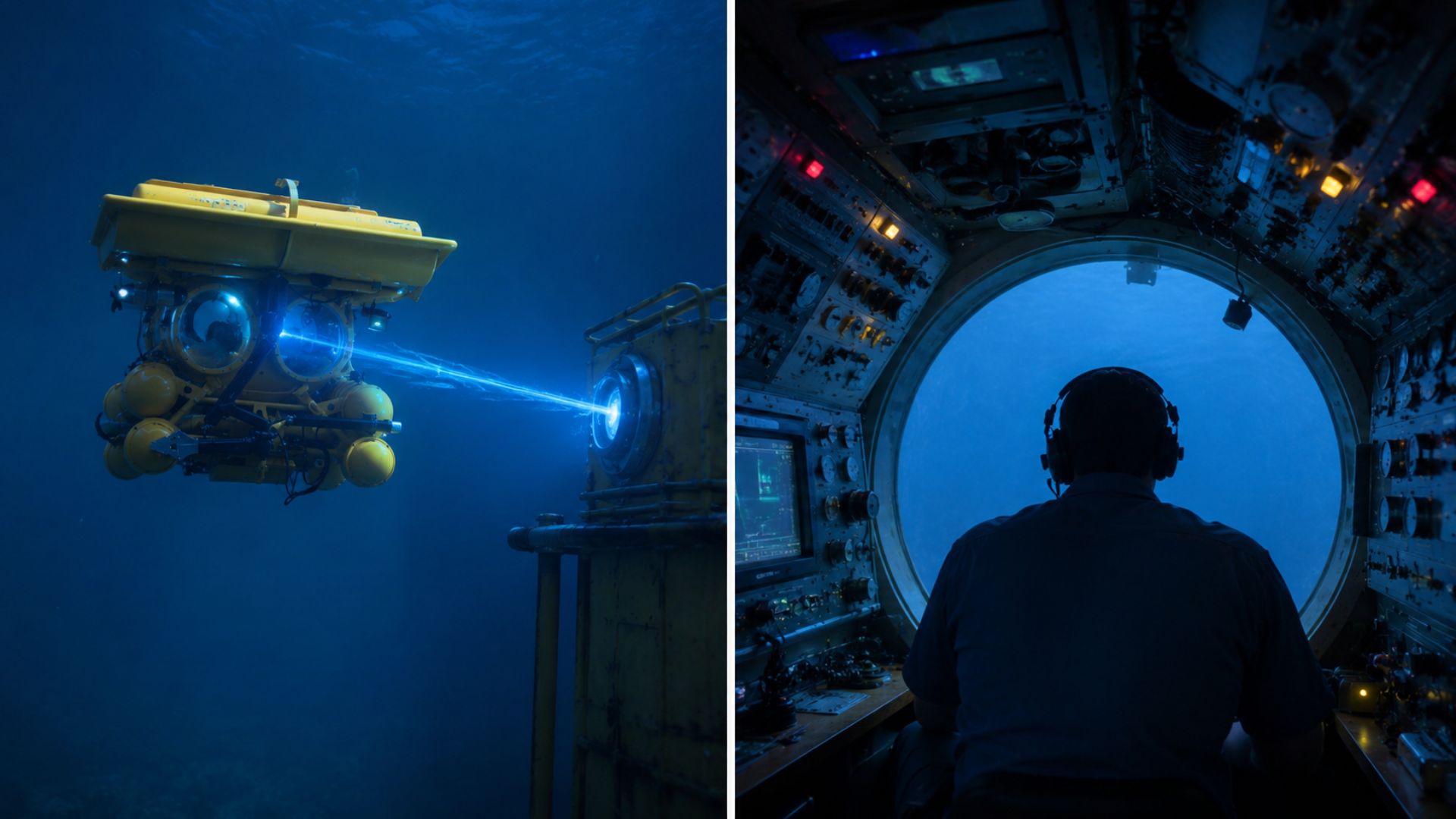


The idea of wirelessly recharging submarines is from NUBURU, from the United States, which will develop the blue laser for the DEEP LIGHT platform, from the Italian SunCubes. The system intends to send energy over dozens of meters, but still depends on agreements, approvals, and technical validation, being a promise in an initial stage.
Recharging submarines on the seabed using a blue laser beam, without wires or docking, is the promise of a new agreement between the American NUBURU and the Italian SunCubes. According to the material released by interestingengineering on 06/12, the idea is to power autonomous underwater vehicles, the so-called AUVs, over dozens of meters away. For this, NUBURU, through its subsidiary Lyocon Srl, will develop the blue laser technology that will be integrated into the DEEP LIGHT platform, from SunCubes.
According to the report, this is the first concrete use of an agreement recently signed between the two companies. The goal is to create an underwater laser energy transmission system, capable of wirelessly providing energy to AUVs and other underwater equipment. The project, however, is still subject to definitive agreements, regulatory approvals, and technical validation.
How the agreement intends to recharge submarines with blue laser
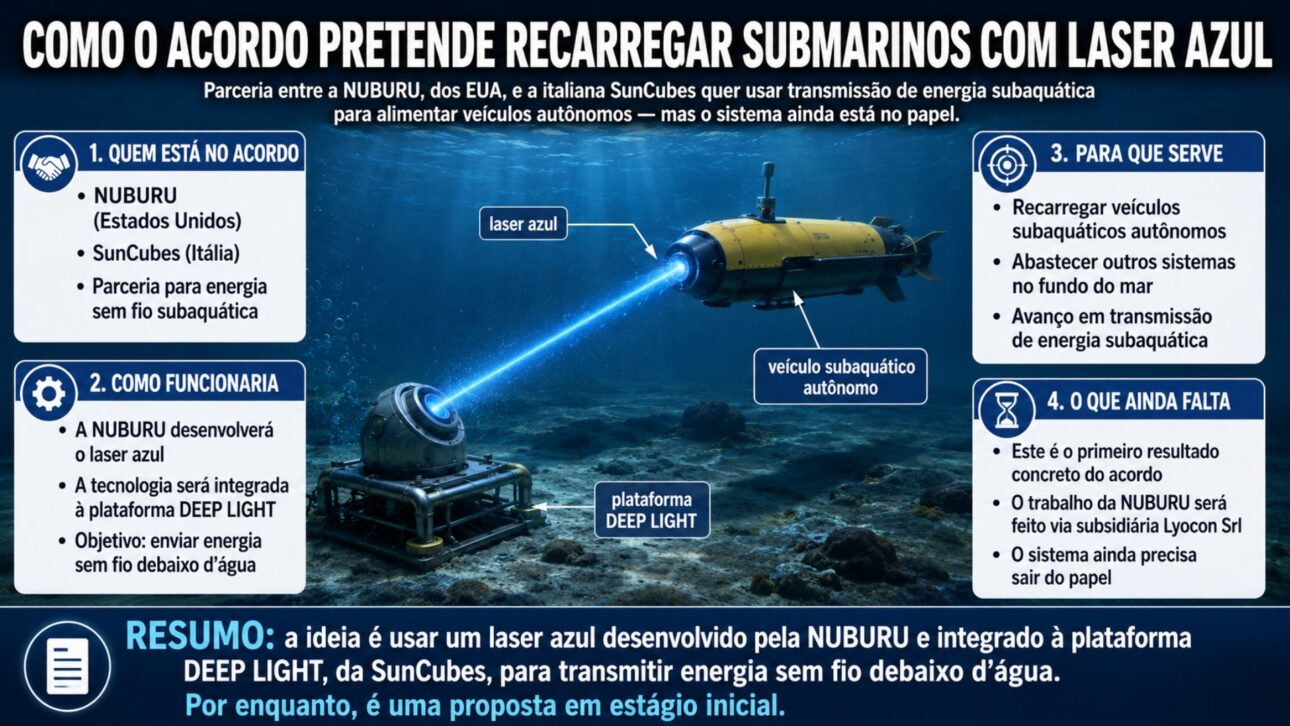
The proposal to recharge submarines stems from a partnership between NUBURU, from the United States, and SunCubes, from Italy. According to the material, NUBURU is a developer of blue laser technologies and photonic solutions aimed at defense, and announced progress in underwater energy transmission through this collaboration. The idea is to wirelessly supply energy to autonomous underwater vehicles and other systems operating on the seabed.
-
AI Video Generator Automatically Creates Subtitles and Animated Captions

-
São Paulo Unveils Latin America’s Largest Underground Reservoir, Holding 900 Million Liters, in the Greater São Paulo Area

-
Chinese Teen Wins Gold in Germany for Invention Turning Air Moisture into Underground Irrigation in Drought-Stricken Areas

-
Desertification Threatens Brazil’s Caatinga: 85% of Semi-Arid Region Affected, 30 Million at Risk, and Efforts Underway to Restore 10 Million Hectares by 2045




In practice, NUBURU’s work will be to develop the blue laser. According to the report, this will happen through the subsidiary Lyocon Srl, with the technology integrated into the DEEP LIGHT underwater wireless energy platform, from SunCubes. This is the first concrete result of the agreement recently signed between the two companies, although the system still needs to come off the drawing board.
The DEEP LIGHT platform and the blue and greenish light
The heart of the project is the DEEP LIGHT platform, designed to transfer energy wirelessly underwater. According to the material, it is built around a high-power laser transmitter and receiver. Unlike traditional submarine recharging methods, which require physical docking or cable connection, the system aims to transmit energy over several dozen meters using laser beams in the blue and green optical spectrum.
The choice of laser color is not by chance. According to the report, blue and greenish light suffers less attenuation in water than many other wavelengths, allowing energy and data to propagate more efficiently in the underwater environment. By leveraging NUBURU’s experience in blue laser, the partnership aims to improve the efficiency, reliability, and scalability of underwater wireless energy systems.
The role of Lyocon and defense interest
Within the partnership, submarine recharging heavily depends on Lyocon. According to the material, the company, acquired by NUBURU in early 2026, will work on the project and integration of the laser source, bringing expertise in laser manufacturing, photonic engineering, and system integration. Under the planned agreement, the expectation is that Lyocon will design and possibly supply the blue laser technology layer necessary for the platform.
The initiative emerges amid growing interest in underwater autonomy. According to the report, this includes the protection of underwater infrastructure, maritime security, and offshore energy applications. NUBURU believes the partnership can open access to a multi-billion market involving autonomous vehicles, underwater sensors, offshore inspection, and underwater communication networks, and sees the technology as an extension of its defense and security portfolio.
Recognition in Italy and what is still missing
The DEEP LIGHT project has already gained some recognition in Italy. According to the material, it was presented in activities related to the National Underwater Dimension Hub, with support from the Italian Navy, and SunCubes attracted investments from entities linked to CDP Venture Capital, reinforcing the strategic relevance of the initiative in the context of Italian innovation.
Even so, laser recharging of submarines is far from a guaranteed reality. According to the report itself, the collaboration still depends on definitive agreements, regulatory approvals, and technical validation. If successful, the technology could enable longer underwater missions, fewer operational constraints, and new capabilities in the defense, research, and commercial maritime sectors, but all this depends on the agreement being finalized and the system working.
The idea of recharging submarines on the seabed with a blue laser beam shows how the race for underwater autonomy is gaining momentum. The agreement between NUBURU and SunCubes, with the laser developed by Lyocon and integrated into the DEEP LIGHT platform, promises to deliver wireless energy to dozens of meters deep. For now, however, it is an initial stage promise, still dependent on agreements, approvals, and proving that it works underwater.
And you, do you believe it’s possible to wirelessly recharge submarines and underwater vehicles using laser beams? Share your thoughts on this technology and exchange ideas with other readers about the future of underwater energy, with respect for different views.