






 Portuguese
  Spanish


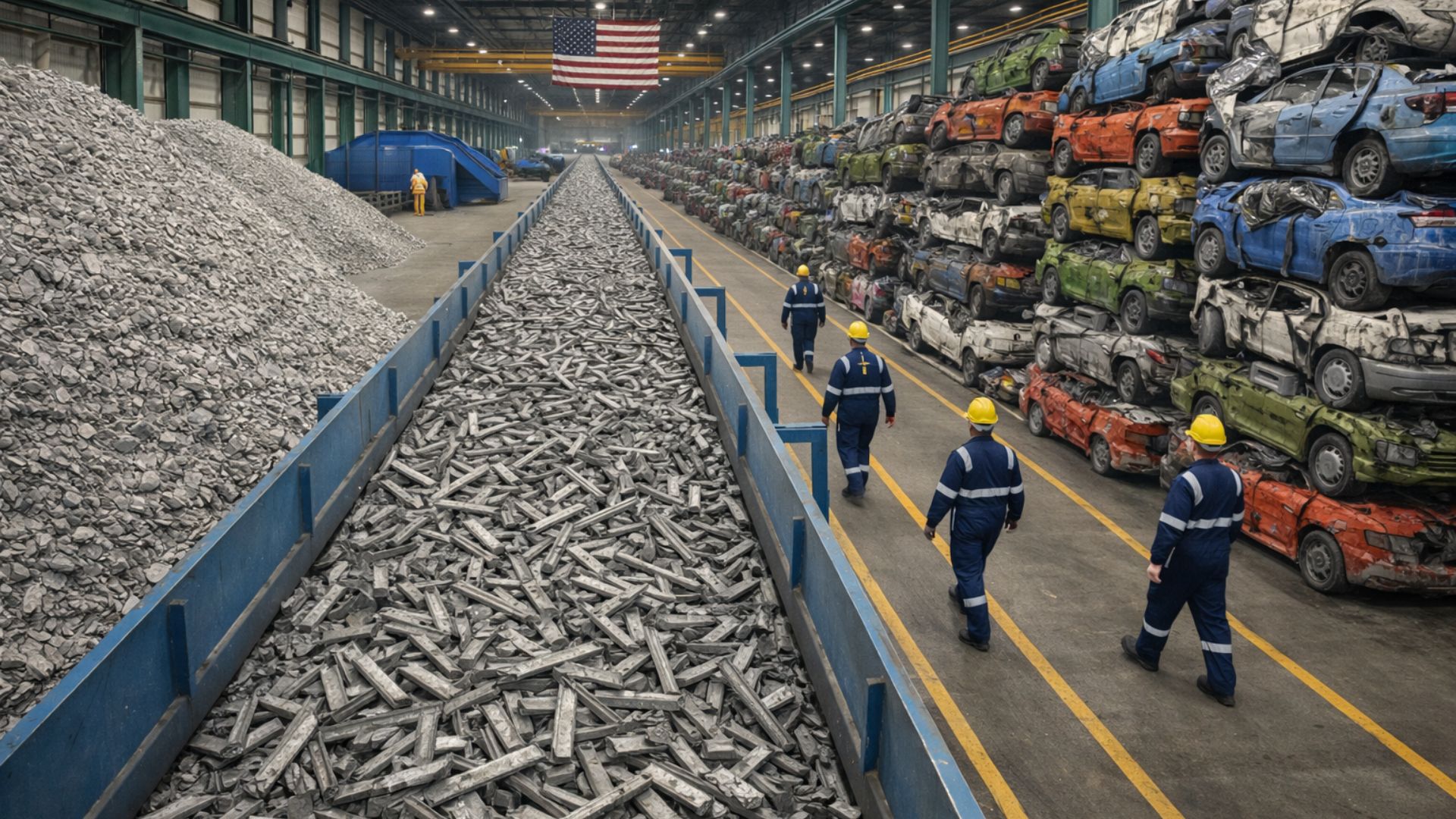


Global Flow Transforms End-of-Life Cars Into Recycled Steel, Reduces Energy Consumption, and Sustains a Multibillion-Dollar Industrial Chain That Reuses Metals, Parts, and Materials on a Large Scale, Connecting Dismantling, Steelmaking, and Construction in a Continuous Cycle.
More than 12 million vehicles reach the end of their life every year just in the United States and mostly enter a structured dismantling and recycling chain that supplies steelworks and manufacturers with metal ready to return to the production cycle.
By replacing part of the “virgin” steel with scrap, the sector reduces energy expenditure.
Estimates used by U.S. federal agencies indicate that steel production from scrap can consume about 74% less energy than the route from iron ore.
-
Inspired by a school lesson on Africa’s water crisis, a young boy raised money through chores to fund a well that transformed a Ugandan community.

-
Brazilian Construction Worker Moves to France, Earns Up to €2,500 Monthly with Home Renovations, Gains Social Media Attention

-
US Navy Sinks USS Oriskany with 230 kg of C-4, Creating World’s Largest Artificial Reef in 37 Minutes

-
U.S. Dumped Tanks, Jeeps, and Coca-Cola into the Pacific in 1945 After British and French Lowball Offer, Creating “Million Dollar Point”




This continuous flow helps explain why automotive recycling is considered the second life of cars.
Each year, the steel industry recycles more than 14 million tons of steel from end-of-life vehicles, a volume equivalent to about 13.5 million automobiles.
Automotive Recycling Chain Begins in the Yard
The entry of a car into a recycling center usually follows a highly traceable process.
Upon reception, teams record data such as vehicle identification, year, and documentation.
Internal codes are assigned, and the information feeds into digital control systems.
This stage is not merely bureaucratic.
It defines what can still be reused as a part and what will go straight to material recovery.

Components such as engines, transmissions, electronic modules, and trim items are usually removed first.
These parts supply the used and refurbished market, which moves billions of dollars.
When the vehicle is heavily damaged, the path is shorter.
In this case, the focus shifts to transforming the body into standardized scrap metal, suitable for industrial processing.
Removing Batteries and Fluids Avoids Environmental Risks
Before any cutting or pressing, risk removal comes first.
In combustion cars, the lead-acid battery is removed early on.
In the United States, this type of battery has recycling rates close to 99%, keeping lead and plastic in industrial circulation.
The procedure becomes more stringent in hybrid and electric vehicles.
Lithium-ion packs require specific protocols for de-energizing, handling, and transportation.
After removing the batteries, fluid draining begins.
Gasoline, oils, transmission fluid, brake fluid, coolant, and air conditioning gas are extracted.
This removal prevents fires, explosions, and environmental contamination.
Part of these liquids can be filtered and reused internally, reducing operational costs.
Dismantling Separates Tires, Glass, and Valuable Metals
With the vehicle safe for handling, dismantling of components that do not follow the steel route begins.
Tires, for example, are not sent for smelting.
They are usually shredded for use in asphalt-rubber or co-processed as alternative fuel.
Glass and plastics are removed to avoid contamination of the scrap metal.
Electrical cables receive special attention.
They contain copper, a valuable metal, but can compromise the quality of recycled steel if not well separated.
Technical studies point to controlling copper contamination as one of the primary challenges of automotive recycling.
At the end of this stage, a predominantly ferrous structure remains, ready for compaction.
Hydraulic Presses Reduce the Volume of Vehicles
The most visible transformation occurs during compaction.
Hydraulic presses reduce entire bodies to dense blocks, facilitating transport and storage.
Depending on the technology, vehicles can be transformed into cubic bales or flattened sheets.
This stage does not finalize recycling, but enables large-scale processing.
After compaction, the material proceeds to industrial shredders.
In these machines, bodies are fragmented in seconds.
Modern equipment can process 100 to 150 tons of scrap per hour.
Magnetic Separation Prepares the Metal for Steelmaking
After shredding, the mixture of materials passes through separation systems. Magnets recover the steel.
Parasitic currents separate aluminum and copper, and plastics, rubber, and fabrics are removed.

In less than an hour, an end-of-life car provides metals ready to return to the industrial cycle.
Industry estimates indicate that about 95% of vehicles taken off the road enter recycling processes.
This makes the automobile one of the most recycled consumer products in the world.
Electric Arc Furnaces Give New Shape to Recycled Steel
The ferrous scrap then proceeds to steelworks. A large portion is destined for electric arc furnaces.
In these devices, graphite electrodes generate temperatures above 1,600 °C, sufficient to melt the steel.
During the process, impurities are removed and the chemical composition is adjusted.
The molten metal goes through continuous casting. Slabs and blooms are formed and proceed to hot rolling.
Industrial rollers transform raw blocks into sheets and coils used in construction, industry, and the manufacture of new vehicles.
It is at this stage that the energy gain consolidates.
The production of recycled steel requires much less energy than manufacturing from ore.
Multibillion-Dollar Industry with Global Impact
The economic weight of automotive recycling varies depending on the perspective.
In the United States, industry estimates point to tens of billions of dollars in annual sales and tens of thousands of direct jobs.
Globally, market reports place the sector in the range of over US$ 50 billion per year, with growth expectations.
At the center of this system is a simple realization. The car that leaves the streets does not disappear.
It transforms into raw material for buildings, bridges, machines, and even new automobiles.





Qual o custo em kwatts x toneladas recicladas?
Excelente matéria.
Aqui no Bostil preferem deixar o carro apodrecer em um pátio de apreensão do que reciclá-lo.