






 Portuguese
  Spanish
  3 min of reading
  0 comments


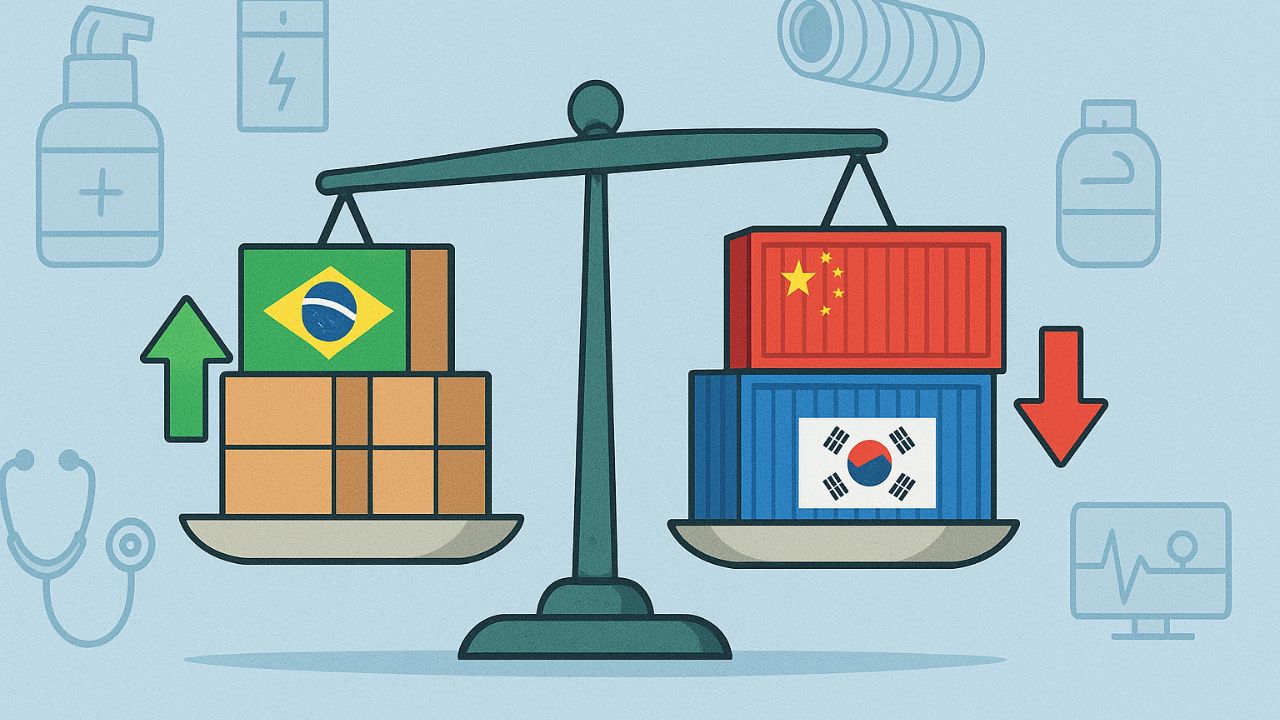
Camex Approves Reduction of Import Tariffs, Strengthens National Industry, and Ensures Balance Against China and South Korea.
The Foreign Trade Chamber (Camex), linked to the Ministry of Development, Industry, Commerce and Services, approved on Tuesday (09/23/25) the reduction of import tariffs for 15 products not manufactured in Brazil.
The decision was made during the 229th ordinary meeting of the Executive Management Committee (Gecex-Camex) in Brasília and aims to strengthen the competitiveness of the national industry by facilitating access to strategic inputs.
According to Camex, the items included are essential for various production chains and will therefore have a direct impact on sectors such as technology, health, and base industry.
-
Bolivian Female Construction Workers Form Association to Combat Discrimination and 38% Pay Gap in the Industry

-
Near Amsterdam, residents buy land and discover they must also build streets, manage drainage, handle waste, and grow food on half their plot.
-
Without a mansion, without high investment, and without a traditional classroom, a teacher living in a 22 m² house taught students to build a 9 m² studio apartment with the equivalent of R$10,000.
-
Without her own home and pressured by rent, a 25-year-old bought a small 15-meter boat, gradually renovated the interior by herself, transformed the interior with paint, new flooring, a larger bathroom, and started living on the canals, paying much less per month.


The measure also reflects the need to balance production costs in the current scenario of international pressure, marked by competition with countries like China and South Korea.
Which Products Will Have a Reduction in Import Tariffs?
Among the products benefiting from the reduction are high-tech and industrial inputs. The list includes:
Lithium Ion Battery – whose import tax dropped from 18% to zero;
Automatic Chest Compression Resuscitation System – which went from 12.6% to zero;
Electrical Connector for Printed Circuit Boards – from 16% to zero;
High-Temperability Chrome-Molybdenum Steel Tubes – from 14.4% to zero.
These items, according to the government, have no equivalent national production and are crucial to ensure the proper functioning of strategic industrial chains.
Reduction of Import Tariffs: Impact on Industry
The main objective of the measure is to reinforce the competitiveness of the Brazilian industry. By reducing import costs of essential inputs, companies will have easier access to technologies that allow them to modernize production, reduce operational expenses, and expand their capacity for innovation.
According to Camex, the tariff reduction also meets the demands of sectors that have been facing challenges to maintain competitive prices in the face of global competition.
Renewal of Trade Protections
In addition to the reduction of import tariffs, Camex approved the renewal of protective measures against import surges that could harm national production.
The increases in import duties for the following will be maintained for another 12 months:
30 types of chemicals;
Two types of cardboard;
One type of passenger car tire.
This strategy aims to safeguard vulnerable segments against fluctuations in the international market.
China and South Korea in Camex’s Focus
Camex also decided to maintain anti-dumping measures that prevent unfair trade practices. Among them, the renewal of protection for:
Low-Carbon Flat Products – against imports from South Korea and China;
Stainless Steel Flat Products – against products from China and Taiwanese products;
Fresh or Refrigerated Garlic from China – except for Chinese companies that committed to selling at prices that do not affect national competitiveness.
These actions reinforce Brazil’s position in protecting strategic sectors against competition from large Asian exporters.
What Changes for Consumers and the Market?
In practice, the reduction of import tariffs is expected to bring positive effects on the Brazilian economy.
The expectation is that access to cheaper imported inputs will stimulate local production, generate jobs, and promote technological advancements.
On the other hand, the renewal of trade barriers protects internal segments against excessive imports, ensuring balance in the market and security for national producers.








Be the first to react!