






 Portuguese
  Spanish


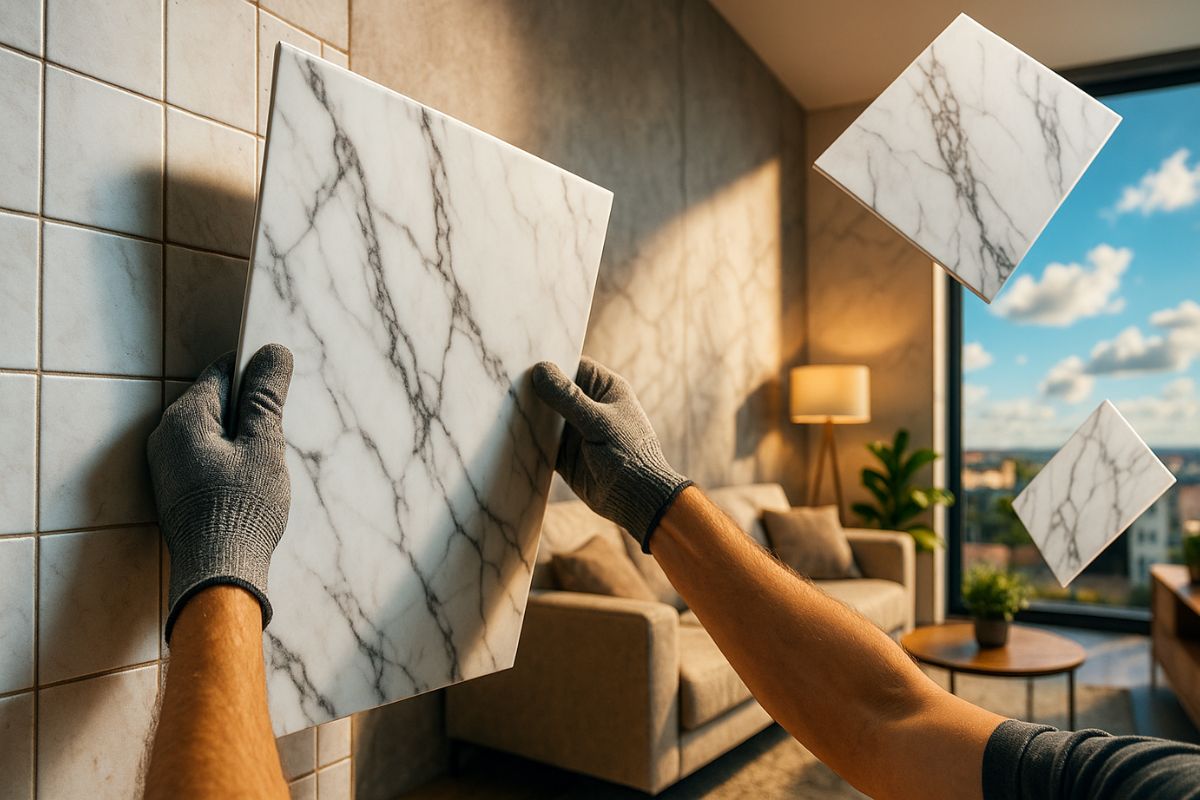

The Vinyl Tiles That Resemble Marble Are Replacing Traditional Tile by Combining Clean Installation, Lower Cost, and Sophisticated Visuals to Renovate Any Environment.
Quick and mess-free renovations have become a priority for those looking to refresh their homes without facing heavy construction. In this scenario, the vinyl tiles that resemble marble are taking the place of traditional tile, offering an elegant finish, a soft touch, and the appearance of high-end coverings without breaking walls or generating debris.
At the same time, the material balances aesthetics and practicality, reducing construction time, facilitating cleaning, and allowing for the transformation of spaces without interrupting the household routine. The lightness and flexibility help explain why so many projects are already starting to set tile aside.
Why Tile Is Losing Space in Modern Renovations
Ceramic tile was for decades the standard covering for kitchens and bathrooms. Today, however, the vinyl tiles that resemble marble appear as a more practical alternative, especially for those wanting to renovate without mess and with speed.
-
Brazil’s 2026 Tax Refund: Record 9.58 Million Filers in Largest Payout Ever, But a Key Detail on Priority Recipients Draws Nationwide Attention

-
Itaú Alters Hybrid Work Model, Increasing Office Days from 2028, Prompting Employees to Adjust to New Routine
-
Facing Labor Shortage, Japan Plans to Invest $34 Million to Attract Foreign Workers in Construction, Healthcare, Industry, and Commerce

-
Brazilian City Makes Remarkable Leap, Becomes 4th Wealthiest in the Country with GDP of R$ 134.1 Billion




While tile requires the removal of the old covering, mortar, and grout, vinyl tiles can be applied directly over smooth surfaces. This drastically reduces renovation time and the amount of mess, making the process accessible to those who want a quick transformation.
Clean and Quick Installation Completely Changes the Routine
The great advantage of this type of covering is the clean installation. The vinyl tiles do not require breaking and do not generate dust, as they can be cut with just a utility knife and precisely adjusted around doors and outlets.
Without debris, excessive noise, and without having to make the house unusable for days, the covering becomes a comfortable solution for those wanting to replace tile without a headache.
Practical Advantages in Daily Life After Replacing Tile
After installation, the most relevant benefits appear. The vinyl tiles are waterproof, resistant to constant use, and very easy to clean, which makes a difference in wet areas.
Since they do not have grout, they accumulate less dirt and make maintenance easier. Additionally, they may provide a more pleasant thermal sensation than tile, making kitchens, washrooms, and service areas more comfortable.
Vinyl Tiles That Resemble Marble Are Truly Resistant
Despite the sophisticated look, the vinyl tiles have layers that reinforce the structure, ensuring durability in daily use. With proper installation, they withstand light impacts, humidity, and moderate heat.
Because they do not have grout, the material also reduces points of infiltration and mold, common issues in old walls covered with tile.
Tile vs. Vinyl Tiles: What Really Changes
The difference between the two coverings appears in the construction process. Tile represents demolition, debris, and days of work, while vinyl tiles prioritize direct and quick installation.
The total cost is usually lower, considering labor, disposal, and execution time. Aesthetics also matter: tiles that resemble marble deliver modernity without relying on expensive materials.
Is It Worth It to Replace Tile with Vinyl Tiles?
For many projects, the swap is worthwhile. The vinyl covering offers a sophisticated result with good cost-benefit, without turning the house into a construction site.
This explains why so many recent renovations abandon tile, especially in compact kitchens, washrooms, and service areas.
Where to Use Tiles That Resemble Marble and Replace Tile
Versatility is a strong point. The material works on accent walls, entry halls, decorative washrooms, modern kitchens, and service areas. The marble-like look enhances the sense of space and refines the environment.
With this, it is possible to renew the style of the house without removing the old tile, maintaining practicality and aesthetics at the same time.
Do you still prefer traditional tile, or do vinyl tiles that resemble marble already seem like a smarter alternative for your next renovation?







