Portuguese
  Spanish


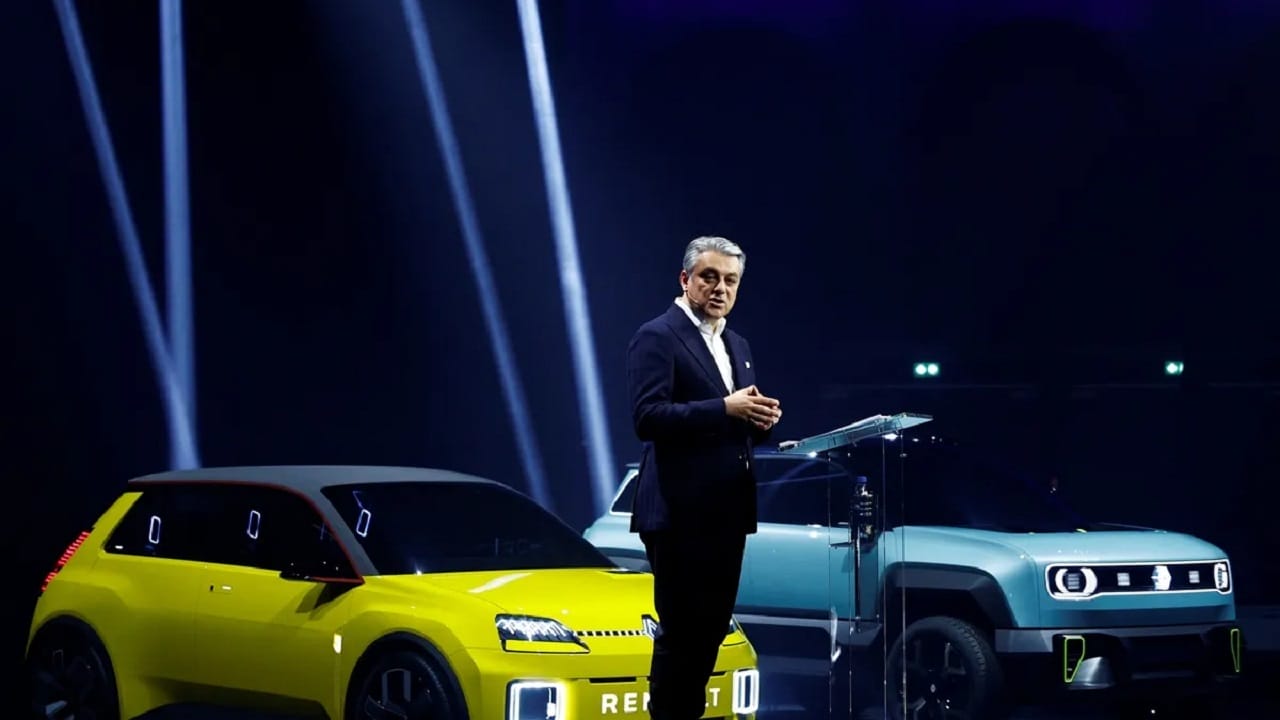

New Electric Car From Renault Will Arrive Soon. Brand Develops Division Focused on Creating Popular Electric Car That Will Change the Course of the Automotive Market.
Ampere, the Renault division responsible for driving the transition to electric cars, detailed its plans for the future during the Investor Day. Under the leadership of Luca de Meo and established in early November, Ampere has become an independent company focused on the production of a popular electric car and software.
Ampere Promises to Launch Popular Electric Car


The new division employs 11,000 people, 35% of whom are engineers who will closely monitor the work at the ElectriCity, Cléon, and Ruitz factories. In total, the company has a capacity for 400,000 vehicles per year, increasing to 620,000 by 2028. These are significant numbers that pave the way for a new electric car from Renault in the near future.
Ampere claims that it wants to democratize electric cars in Europe, achieving price parity between electric and internal combustion models, ahead of its competitors in segments B and C. According to the company, these two categories will account for 75% of the electric vehicle market by 2030, and for this reason, two platforms are already available for the development of Renault’s electric car.
-
Hilux’s little sister: Toyota relaunches the Land Cruiser 70 in the 2027 lineup with over 40 years of production, a 2.8 turbo diesel engine with 201 hp and 51 kgfm, a six-speed automatic transmission, and a renewed retro look.

-
Automatic, economical, and known for reliability: with a 1.5 engine of up to 110 hp, CVT transmission, seven airbags, and fuel consumption of up to 15.9 km/l, this used hatchback appears as a rational alternative to Polo, HB20, and Onix; meet the Toyota Yaris XLS 2020.
-
He surpassed the Tera, Creta, and Tracker: With a TSI engine of up to 150 hp, 6-speed automatic transmission, and a 373-liter trunk, the Volkswagen T-Cross was the best-selling SUV in June, with 11,753 registrations.

-
It looks factory-made, but it came out of a workshop: a mechanic from Pernambuco builds a handcrafted “mini Toyota,” drives it through the streets, and the video goes viral on social media, leaving residents astonished.



The AmpR Small platform for segment B, previously known as CMF-B EV, and the AmpR Medium for segment C, formerly CMF-EV. In addition to launching these architectures, the company will reduce costs to launch a popular electric car. Specifically, by 2028, the company plans to reduce variable expenses between the first and second generations of electric vehicles in segment C by 40% through the following interventions:
Reduction of 25% in the cost of the electric car motor, reduction of 50% in the cost of the battery per vehicle for the same range, reduction of 25% in the cost of the platform per vehicle, reduction of 15% in the cost of the body per vehicle, and operational efficiency resulting in a reduction of 50% in logistical and production costs.
Ampere Wants to Achieve Price Parity by 2027/2028
In this way, Ampere has already partially achieved this goal with the Scenic E-Tech, whose total maintenance, according to the company’s own calculations, is equivalent to that of hybrid vehicles. Overall, the company aims to achieve price parity by 2027/2028 with the second generation, successors to the Megane E-Tech and Scenic E-Tech.
At the same time, the lineup will steadily expand, with the Renault 5 in 2024 and the Renault 4 in 2025, to which the “Legend” will be added, a model from segment A that will be revealed at Ampere’s Capital Markets Day. The lineup will be further expanded with the addition of two electric cars from Renault for the second generation, for a total of seven cars by 2031.
New Popular Electric Car From Renault Expected in 2024
The Scénic E-Tech will be on the market early next year with a starting price of approximately €40,000.
Sustainability is at the core of the design of this electric car from Renault, with up to 95% recyclable materials. The Renault 5 will be unveiled in the first quarter of 2024 and represents the revival of an iconic model. This popular electric car offers a range of 400 km at a starting price of €25,000, putting it in competition with hybrids in segment B.
The Renault 4 will be launched in 2025 and will share several elements with the Renault 5, such as the AmpR Small platform and the infotainment system. Finally, the Legend will be Renault’s electric car focused on urban environments, with an estimated consumption of 10 kWh per 100 km, a 75% reduction in CO2 emissions compared to the combustion models sold in the European market this year.