Portuguese
  Spanish


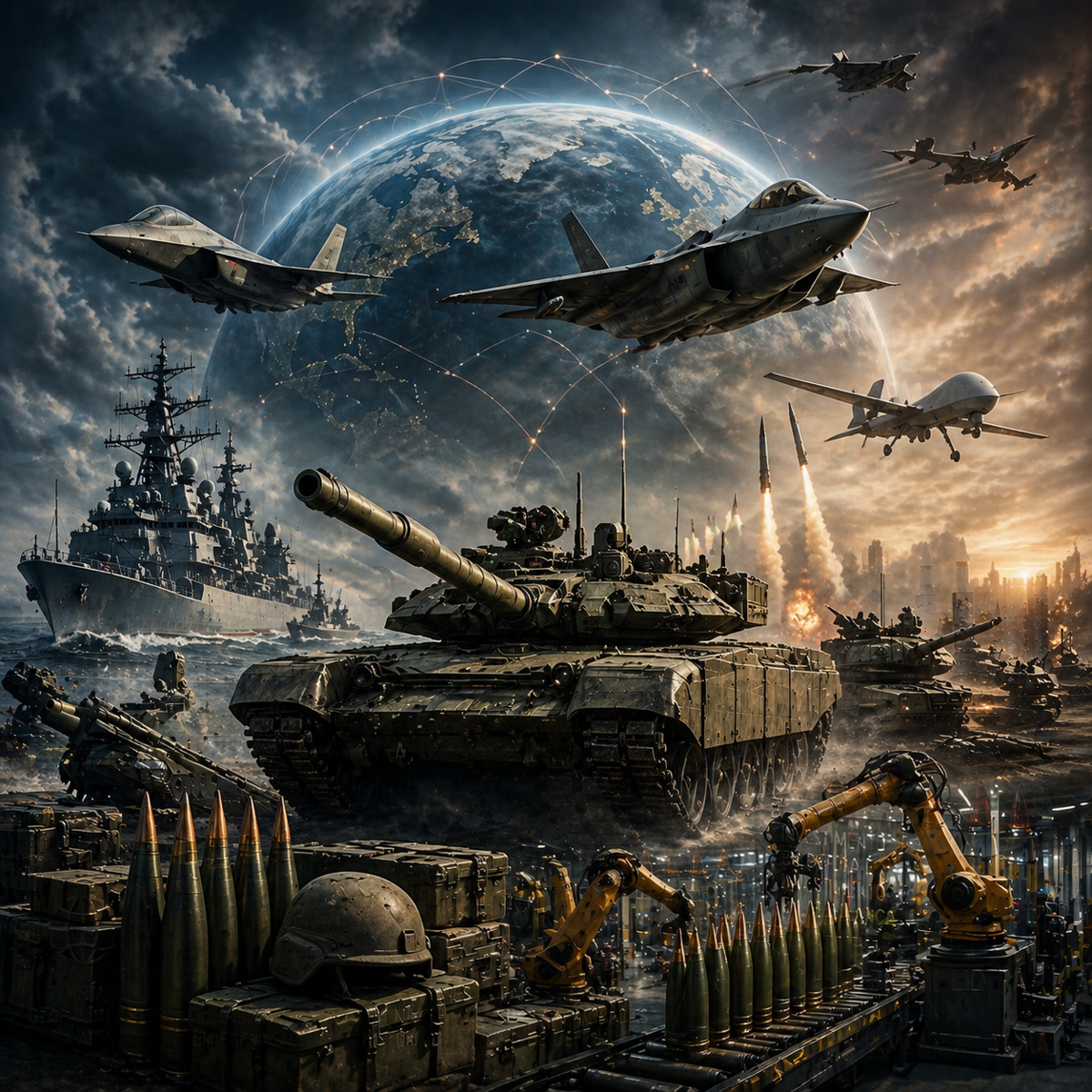

Military spending reaches global record, SIPRI report points out, with advancement of the arms industry and increased geopolitical tensions; Brazil leads regional rise
Global military spending reached an unprecedented level in 2025, totaling US$ 2.9 trillion, equivalent to 2.5% of the world’s Gross Domestic Product. The data is part of the latest report from SIPRI, released on April 27 by the Stockholm International Peace Research Institute, a global reference in defense monitoring.
The survey confirms a scenario of continuous expansion driven by active conflicts, strategic disputes, and the strengthening of the arms industry in various regions.
The increase represents the 11th consecutive year of growth in military spending, consolidating a structural trend that accompanies the worsening of geopolitical tensions. In this context, Brazil stands out by leading growth in Latin America, reinforcing its strategic regional role.
-
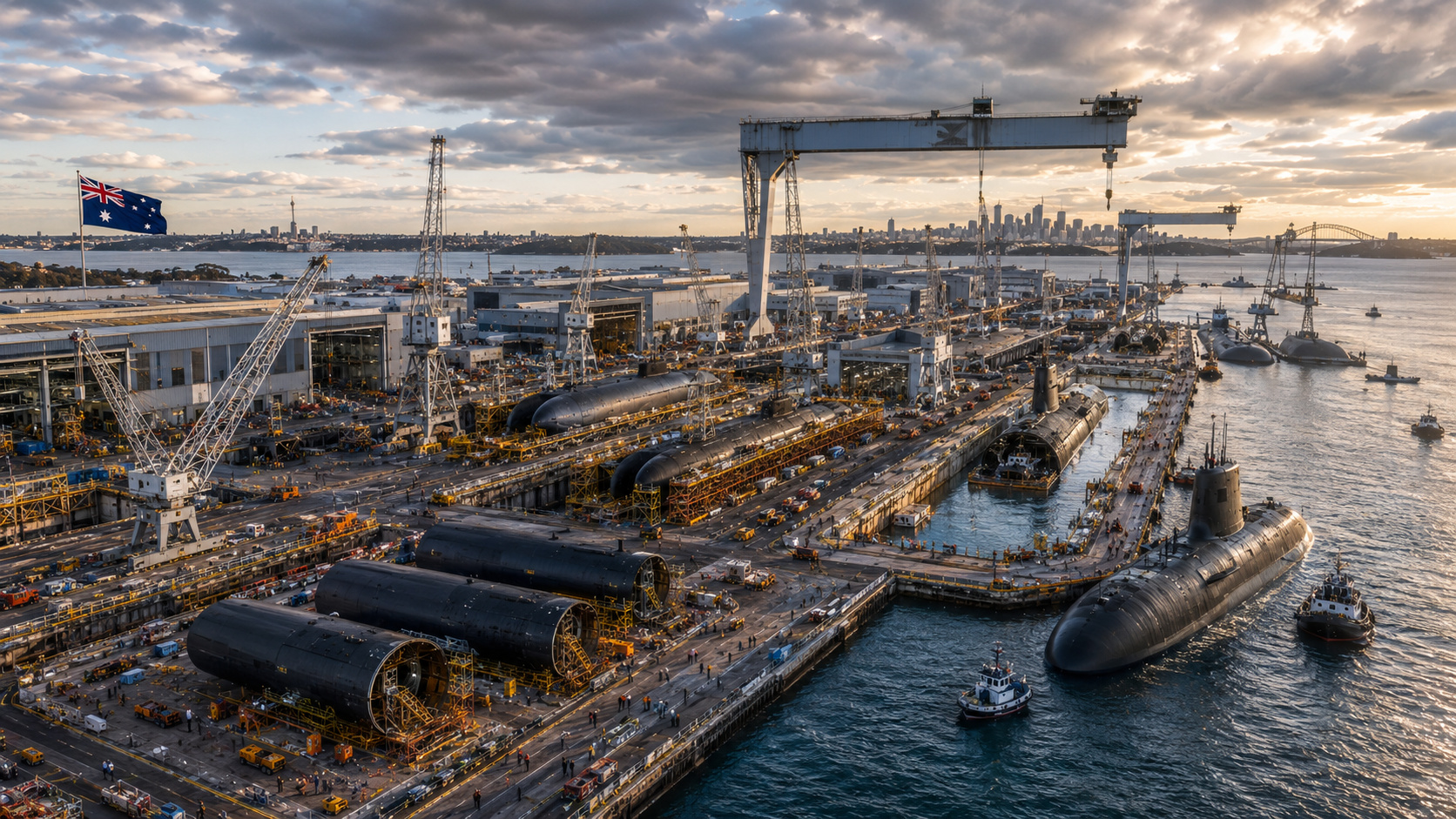
Australia to Deploy Up to 8 Nuclear-Powered Submarines in Indo-Pacific, Establishes Billion-Dollar Naval Chain Through AUKUS, Joining Elite Group Capable of Extended Underwater Missions

-
Indonesia Begins Construction of 2,000-Ton Scorpène Stealth Submarines with Advanced Weaponry and French Steel

-
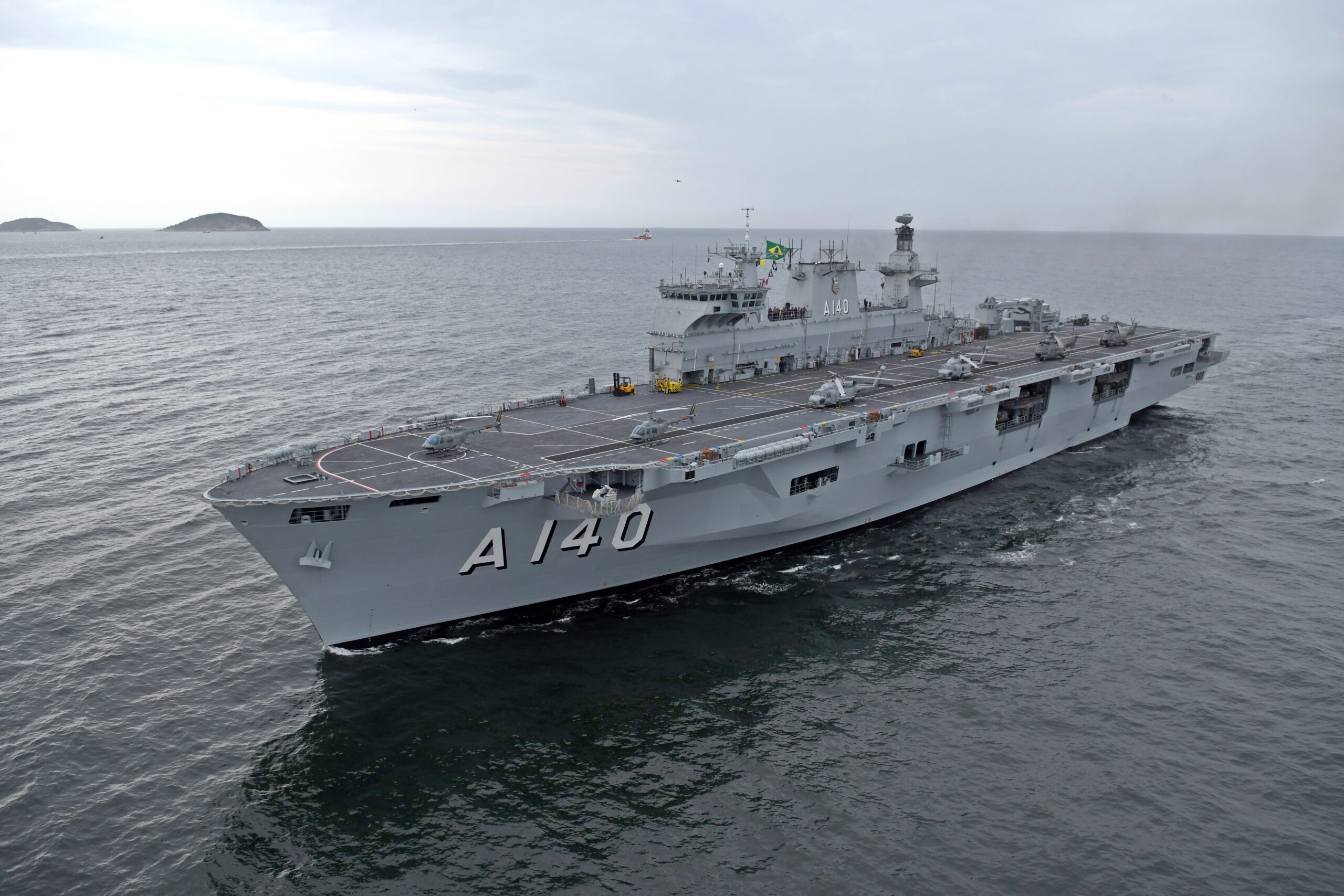
Brazil’s Largest Navy Ship, NAM Atlântico, Transforms into Field Hospital During National Crises

-
Brazilian Navy Demonstrates Strength in Naval Exercise with Over 20 Nations, Deploys Frigate Independência in Anti-Submarine and Air Defense Scenarios, and Joins Historic Formation with 26 Ships from 14 Allied Navies off the U.S. Coast



SIPRI report points to continuous advance of military spending in unstable global scenario
The SIPRI report reveals that military spending grew by 2.9% compared to 2024. Although the pace is slower than the previously recorded jump of 9.7%, the total volume reached the highest level ever documented.
According to the study, the slowdown is directly linked to the United States’ decision not to expand new military aid packages to Ukraine in 2025. Still, the SIPRI report itself highlights that, without this factor, growth would have reached 9.2%, which reinforces the intensity of the current arms race.
The survey also shows how military spending has become a priority for governments in a scenario marked by uncertainties. The combination of prolonged conflicts and strategic rivalries continues to fuel this cycle of expansion.


Geopolitical tensions and arms industry shape new global arms race
The growth in military spending is deeply connected to geopolitical tensions. The war in Ukraine, disputes in the Indo-Pacific, and instability in the Middle East are some of the main factors driving defense investments.
In this environment, the arms industry gains prominence as one of the most strategic sectors of the global economy. Countries seek not only to increase their arsenals but also to invest in technology, innovation, and military autonomy.
This movement creates a clear cycle:
- Conflicts increase geopolitical tensions
- Tensions raise military spending
- Increased investments strengthen the arms industry
- Expanded military capacity fuels new conflicts
This cycle reinforces the perception that the current arms race is not punctual, but rather structural and long-term.

United States leads global ranking as powers increase military spending
According to the SIPRI report, the United States remains the largest military power on the planet, with US$ 954 billion in military spending. This value is greater than the sum of several relevant countries.
Following are:
- China: US$ 336 billion
- Russia: US$ 190 billion
- Germany: US$ 114 billion
- India: US$ 92.1 billion
Together, these five countries account for 58% of all global military spending. This data highlights how military power is concentrated in a few nations, many of which are directly involved in geopolitical tensions.
China, for example, has maintained consistent growth for decades, while Russia is intensifying its investments due to the conflict with Ukraine. Germany, on the other hand, has been undergoing a historic transformation in its defense policy, abandoning a more restrained stance adopted since World War II, a period marked by the defeat of the regime led by Adolf Hitler.
Europe accelerates investments and redefines defense strategy in the face of geopolitical tensions
Europe was the region with the highest growth in 2025, registering a 14% increase and reaching US$ 864 billion in military spending. This is the largest advance since NATO’s creation.
According to the SIPRI report, European countries have been rapidly expanding their defense budgets, pressured by the war in Ukraine and the need for greater military autonomy.
Among the main proportional increases are:
- Belgium: 59%
- Spain: 50%
- Norway: 49%
- Denmark: 46%
- Germany: 24%
- Poland: 23%
- Canada: 23%
This movement also strengthens the European arms industry, which now plays a central role in the production and supply of military equipment. The change reflects a new strategic stance in the face of geopolitical tensions and historical dependence on the United States.
War in Ukraine maintains pressure on military spending and widens imbalances
The war between Russia and Ukraine continues to be one of the main drivers of global expansion. Ukraine allocated about 40% of its GDP to military spending, becoming one of the most committed countries to defense in the world.
As a result, Kyiv moved to the seventh global position, with US$ 84.1 billion in investments. Russia, on the other hand, increased its spending by 5.9%, allocating 7.5% of its GDP to the Armed Forces.
The SIPRI report indicates that both Russia and Ukraine reached historical levels of military spending relative to government expenditures. This scenario reinforces how direct conflicts rapidly impact the global dynamics of the arms industry.
Asia-Oceania expands military spending and intensifies regional strategic disputes
In Asia-Oceania, military spending grew by 8.1%, totaling US$ 681 billion, the largest increase since 2009. China leads this movement, with 7.4% growth and more than three consecutive decades of expansion.
This advance intensifies geopolitical tensions in the region, especially in relation to Taiwan and countries allied with the United States.
Japan increased its spending by 9.7%, reaching US$ 62.2 billion, the highest level since 1958. Taiwan, in turn, registered a growth of 14.2%, reflecting increasing pressure from China.
Other countries, such as Australia and the Philippines, also increased their investments, further boosting the regional arms industry and reinforcing the environment of insecurity.
Middle East, India, and Africa reinforce defense investments
Other regions also showed significant growth. In the Middle East, Saudi Arabia leads with US$ 83.2 billion in military spending. Israel, even with a 4.9% reduction after the ceasefire in Gaza in October 2025, maintains high levels.
Iran, involved in tensions with the United States and Israel, showed an official decrease, but experts indicate that economic factors may mask real growth.
In South Asia, India increased its investments by 8.9%, driven by geopolitical tensions with Pakistan. In Africa, spending grew by 8.5%, with Algeria standing out.
These data show how the arms industry continues to expand in different regions, following local conflict and security dynamics.
Brazil leads growth in Latin America and expands presence in the arms industry
In South America, military spending grew by 3.4%, totaling US$ 56.3 billion. Brazil leads this movement, with a 13% increase, reaching US$ 23.9 billion and occupying the 21st position worldwide.
The Brazilian growth reflects a combination of strategic factors, including modernization of the armed forces, protection of natural resources, and increased regional prominence.
Additionally, the national arms industry has gained relevance, with investments in technology and domestic production. This advancement occurs in a context of regional geopolitical tensions, such as the territorial dispute involving Guyana and Venezuela in the Essequibo region.
What the numbers reveal about the future of global security
The data presented by the SIPRI report indicate that the cycle of expansion in military spending is likely to continue in the coming years. The combination of active conflicts, rivalries between major powers, and strategic changes points to a long-term scenario.
Among the main factors supporting this trend are:
- Prolonged war in Eastern Europe
- Growing rivalry between the United States and China
- Persistent instability in the Middle East
- Reconfiguration of global military alliances
This context reinforces the importance of the arms industry as a strategic pillar and highlights the central role of geopolitical tensions in defining the future of international security.
At the same time, the increase in military spending raises important debates about economic priorities, social impacts, and the risks of an even greater escalation of conflicts.