






 Portuguese
  Spanish


A study by the Luiz de Queiroz College of Agriculture at USP revealed that mercury dumped by illegal mining remains active in the Atlantic Forest soil more than five decades after mining ceased. The contamination reduces microbial diversity, compromises carbon and nitrogen cycles, and poses a risk to human health, but researchers propose the use of biochar as a solution to absorb the toxic metal.
Researchers at USP discovered that mercury deposited in the soil of the Atlantic Forest by illegal mining remains active and toxic 52 years after the cessation of mining activity in the region. The study, conducted at Esalq, investigated how illegal mining practices and climatic variations influence the mobility of the heavy metal in the environment and the structure of bacterial communities in four Brazilian biomes: Amazon, Cerrado, Atlantic Forest, and Pantanal. The most alarming result came precisely from the biome where mining had ceased the longest.
The discovery dispels the idea that abandoning mined areas solves the contamination problem on its own. According to Matheus Bortolanza Soares, author of the study, mercury is not a nutrient for plants or animals: it is an extremely toxic element that, by remaining in the soil for decades, ends up being absorbed by the food chain and can reach human communities living in the region. It is estimated that about 700 tons of mercury are deposited into the environment each year by illegal gold mining in Brazil.
How mercury from mining remains active in the soil for over 50 years

Mercury is used in mining to agglutinate gold dust and form nuggets. In legalized operations, there is an ideal proportion between the amount of metal and the amount of gold to be extracted. In illegal mining, these proportions are not respected because the process is artisanal, with low technology and inadequate tools, which results in a much greater discharge of mercury into the environment than would be necessary.
-
Berries, Strawberries, and Blueberries Could Transform Agriculture in Northeastern Brazil, New Tests Reveal

-
Danish Resident Discovers Six Viking Gold Bracelets Weighing 762.5 Grams, Third Largest Gold Treasure in Denmark

-
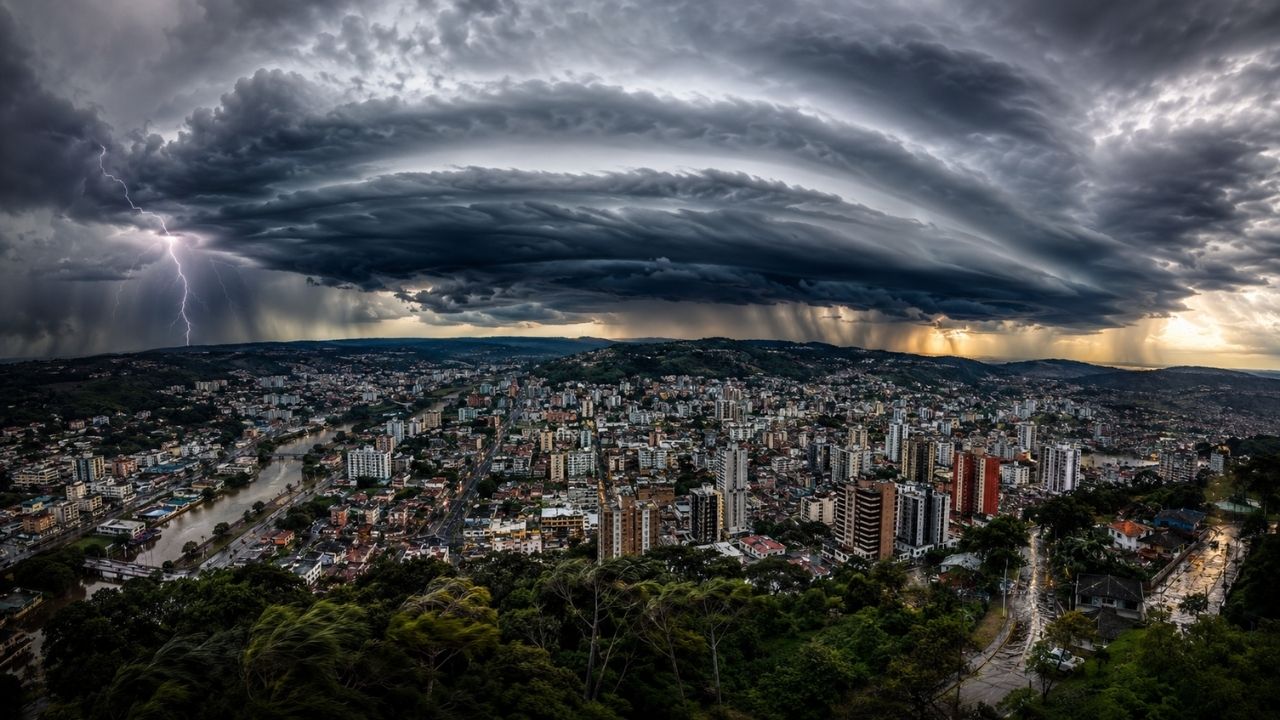
Over 200 Cities in Southern Brazil on Storm Alert as Cyclone Near Uruguay Brings Heavy Rain, Hail, and Winds Up to 100 km/h

-
Archaeologists Discover 2,300-Year-Old Beer in Sealed Bronze Vessel from Ancient Chinese Tomb



Once in the soil, the heavy metal binds to organic matter particles and clay minerals, remaining available for decades. USP’s research showed that, even 52 years after the end of mining in the Atlantic Forest, soil samples still showed significant traces of contamination. Professor Luís Reynaldo Ferracciú Alleoni, supervisor of the study, highlighted that the case of mercury is particularly serious because, unlike other elements that can be nutrients in low doses, it performs no beneficial function for life and is toxic at any concentration.
What happens to life in mercury-contaminated soil
The impact of mercury goes far beyond direct toxicity. Contamination drastically reduces the diversity of microorganisms inhabiting the soil, eliminating sensitive bacterial species and favoring only those that have developed tolerance to the metal. The result is impoverished soil, with less capacity to decompose organic matter, recycle nutrients, and maintain the biogeochemical cycles that sustain the ecosystem.
Soares uses an analogy to explain the effect: imagine that soil microorganisms participate in a society where each has a function. When mining removes carbon from the environment and introduces mercury, it’s like eliminating essential workers from a community, leaving functions without responsible parties. Waste accumulates, balance is lost, and the entire system begins to fail. In the Atlantic Forest, this process of biological degradation continued more than half a century after the last miner left the area.
The difference between the four biomes studied by USP
The researchers collected samples in mining areas of the Amazon, Cerrado, Atlantic Forest, and Pantanal, each with a different history of mining activity. In the Cerrado and Pantanal, the mines remained active and received mercury continuously. In the Amazon, mining had ceased five months ago. In the Atlantic Forest, the interval was 52 years, the longest among all the analyzed biomes.
The climatic conditions of each region created what scientists call “environmental filters,” which determine which microbial communities can survive in each contaminated soil. Variations in rain and drought influence the replenishment of organic matter and the mobility of mercury, affecting the carbon and nitrogen cycles in each biome in distinct ways. The research uniquely quantified the effect of these climatic variations on the soil microbiome, demonstrating that environmental recovery needs to consider the particularities of each region.
The green solution that USP researchers propose for the problem
In light of the persistence of contamination, the researchers propose an approach that combines knowledge about native microorganisms with the application of biochar. Biochar is composed of almost 100% carbon and acts like a sponge that absorbs mercury from the soil, reducing toxicity and the circulation of the metal in the environment. At the same time, it replenishes the carbon that mining removed and retains water, creating conditions for microbial life to begin to rebuild.
Soares explains that this technique would be the basis of recovery strategies because mercury is extremely expensive and difficult to remove from soil by other means. The idea is to identify which native microorganisms have disappeared, understand which ecological functions have been lost, and direct nutrients and inputs to rebuild the functional diversity of the soil. Restoration cannot treat soil as an inert system: it needs to consider the living beings that inhabit it and the functions they perform for the balance of the ecosystem.
The risk to human health and the role of research in the creation of public policies
The mercury that remains in the soil for decades does not stay isolated. It is absorbed by plants and animals that interact with the environment and with local human communities, potentially infiltrating people’s diets through food grown in contaminated areas or fish from rivers that receive runoff from mined regions. Mercury poisoning affects the nervous system, kidneys, and child development, constituting a public health problem that goes far beyond the environment.
Professor Alleoni emphasizes that the study can serve as a basis for formulating new public policies for monitoring and recovering areas degraded by illegal mining. The university and research centers play a fundamental role in demonstrating, with data, that mercury contamination persists for decades and poses a concrete risk to public health, even when mining stopped more than half a century ago. For the Atlantic Forest, a biome that has already lost more than 70% of its original cover, the persistence of toxic metals in the soil adds another layer of threat to an ecosystem that is already struggling for survival.
Did you know that mercury from mining can remain active in the soil for over 50 years, or did you think nature could recover on its own? Tell us in the comments what you think about illegal mining in Brazil and whether you believe biochar could be the solution to clean contaminated soils.






.jpg)